In this edition of #VETSVolunteerVoices, we shift perspective—from the experiences of VETS volunteers to the voice of one of VWB's longest-standing partners in Ghana. Meet Dr. Anthony "Akunz" Akunzule, Executive Director of the Ghana Poultry Network (GAPNET), who has spent more than four decades strengthening animal health systems, empowering rural communities, and mentoring the next generation of veterinary professionals. Through years of partnership with VWB—including the VETS program—he reflects on decades of working alongside farmers, volunteers, local organizations, and international partners to strengthen animal health, advance One Health, and build resilient rural communities.
My First Lessons
When I think back to my childhood in northern Ghana, my memories are not of classrooms or career ambitions. They are of animals.
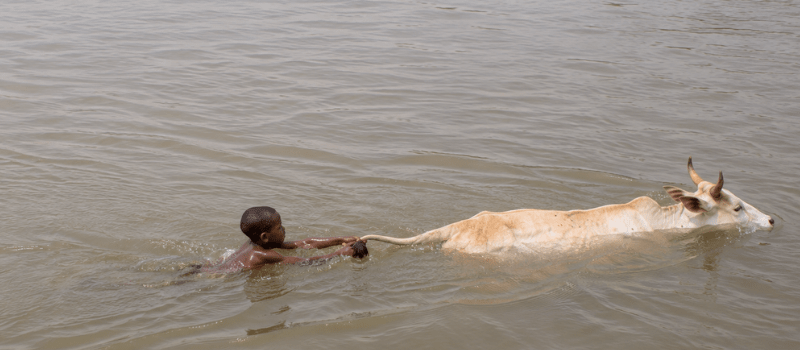
Like many children growing up in rural communities, I spent my early years caring for my family's sheep, goats, and cattle. I remember drinking fresh milk from the cows and goats after taking them out to graze, and I vividly remember holding onto the tail of a cow as it swam across a river, allowing me to cross safely with the herd. At the time, these were simply part of everyday life.
Looking back now, I realize they were also my earliest lessons in responsibility, trust, and the close relationship between people and animals.
Interestingly, becoming a veterinarian was not my original plan. In 1982, I travelled to the former Soviet Union intending to study petrochemical engineering. Once I arrived, however, I realized that my interests lay elsewhere. I changed my studies to veterinary medicine and enrolled at the Kharkov Zoo Veterinary Institute in Ukraine.
That single decision changed the direction of my life, although perhaps the journey had begun many years earlier while following animals through the fields of my childhood.
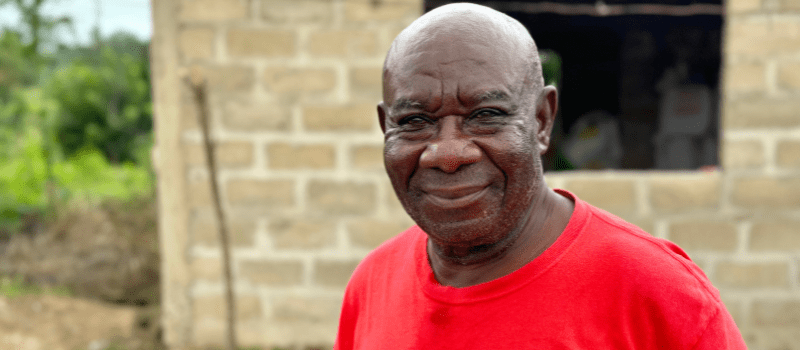
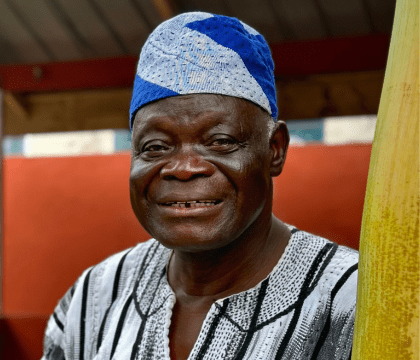 PHOTO: Dr. Anthony "Akunz" Akunzule, Executive Director, Ghana Poultry Network (GAPNET).
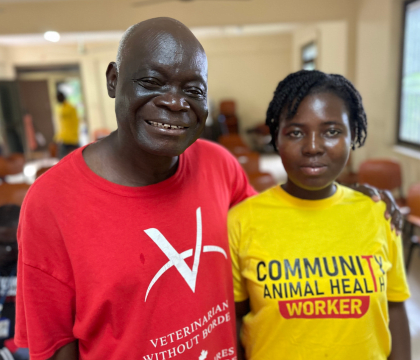 PHOTO: Dr. Akunz smiles proudly beside a Community Animal Health Worker during a July 2023 training in Accra.
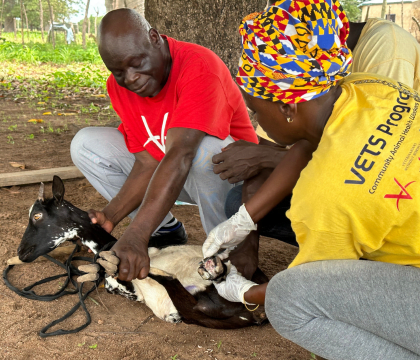 PHOTO: Dr. Akunz assists VETS-trained Community Animal Health Workers to treat a goat's split hoof.
Discovering That Healthy Animals Build Healthy Communities
My career has taken me in many different directions.
Before studying veterinary medicine, I worked as a wildlife ranger, protecting wild animals in Bui National Park. After graduating and returning to Ghana, I served as a veterinarian in both the Accra and Kumasi zoos, while continuing to support wildlife conservation through work with Mole National Park and the Shai Hills Resource Reserve. Those early experiences allowed me to care for both domestic and wild animals while deepening my appreciation for the connections between animals, people, and the environment—connections that today are recognized through the One Health approach.
As my career expanded into government, research, and international development, I came to understand that veterinary medicine extends far beyond treating sick animals. Healthy livestock strengthen household incomes; disease prevention protects public health; and stronger farming systems help entire communities thrive.
I also realized that technical knowledge alone is never enough. Farmers need access to practical training, young professionals need mentors, women's groups need opportunities to organize and lead, and communities need trusted connections with government, researchers, universities, and development organizations.
Looking back, I realize that creating those connections has become one of the defining themes of my career.
Building GAPNET
That belief eventually led to the creation of the Ghana Poultry Network, or GAPNET.
Although poultry appears in our name, GAPNET has never simply been about poultry. From the beginning, I envisioned it as a way of connecting rural communities with the people, organizations, knowledge, and opportunities they needed to improve their livelihoods. Poultry became the starting point because I have long believed that village poultry production offers one of the most accessible pathways for rural families—particularly women—to increase household income while improving food and nutrition security.
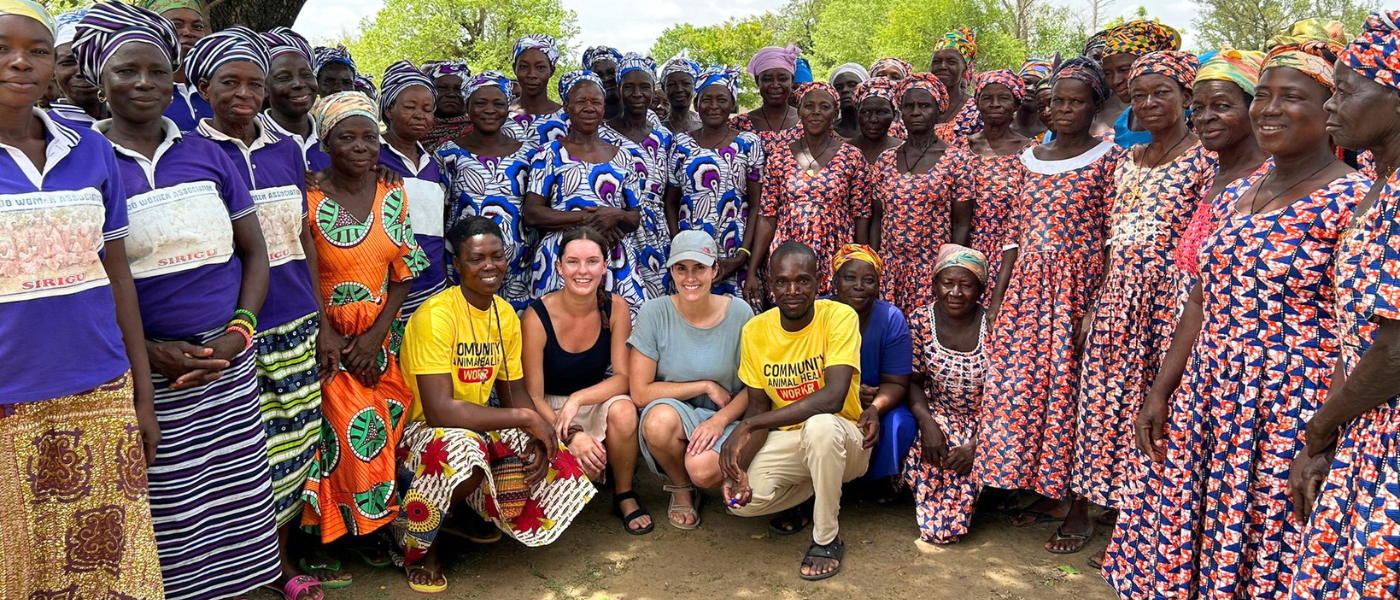 PHOTO: After a GAPNET training session on biosecurity and poultry management, VETS volunteers Blaire Hutton and Paisley Johnson and Community Animal Health Workers gather with members of the Abotikuua Women's Group and Dazongo Women's Association in Ghana's Upper East Region (June 2024).
The idea for GAPNET began while I was completing my Master of Professional Studies at Cornell University. Following my graduation, Professor Jarra Jagne encouraged me to join the FAO International Family Poultry Network, opening the door to new collaborations that reinforced the importance of community-based poultry development.
Soon afterwards, we began working with partners on village poultry production and animal welfare initiatives in my home community of Yua—work that continues more than two decades later. Seeing those relationships endure has reinforced my belief that sustainable development happens when communities, researchers, governments, and development organizations work together rather than in isolation.
That philosophy continues to guide GAPNET today. Whether we are supporting poultry farmers, strengthening Community Animal Health Worker programs, facilitating women's associations, or connecting rural communities with international partners, our objective has always been the same: to create opportunities that communities themselves can build upon and sustain long after individual projects have ended.
A Partnership Built on Shared Values
By the time VWB and GAPNET began working together, it already felt as though we were pursuing the same goal from different directions.
My first discussions with VWB began in 2017. We welcomed our first veterinary student volunteers in 2018, followed by another group in 2019. When GAPNET officially became a VETS partner in 2020, it did not feel like the beginning of a new relationship so much as the continuation of one built on mutual respect, shared values, and a common belief that strengthening local capacity creates lasting change.
The VETS partnership also arrived at an important moment for GAPNET. Having recently completed another major family poultry initiative, we saw VETS as an opportunity to continue strengthening village poultry production while expanding our work in gender equality, Community Animal Health Worker training, One Health, and rural livelihoods throughout northern Ghana.
One of the greatest joys of hosting VETS volunteers has been the opportunity to learn alongside them. Over the years, volunteers have contributed in many different ways—from supporting animal health training, vaccination campaigns, and Community Animal Health Worker initiatives to strengthening communications, strategic planning, and gender integration within GAPNET and the communities we serve.
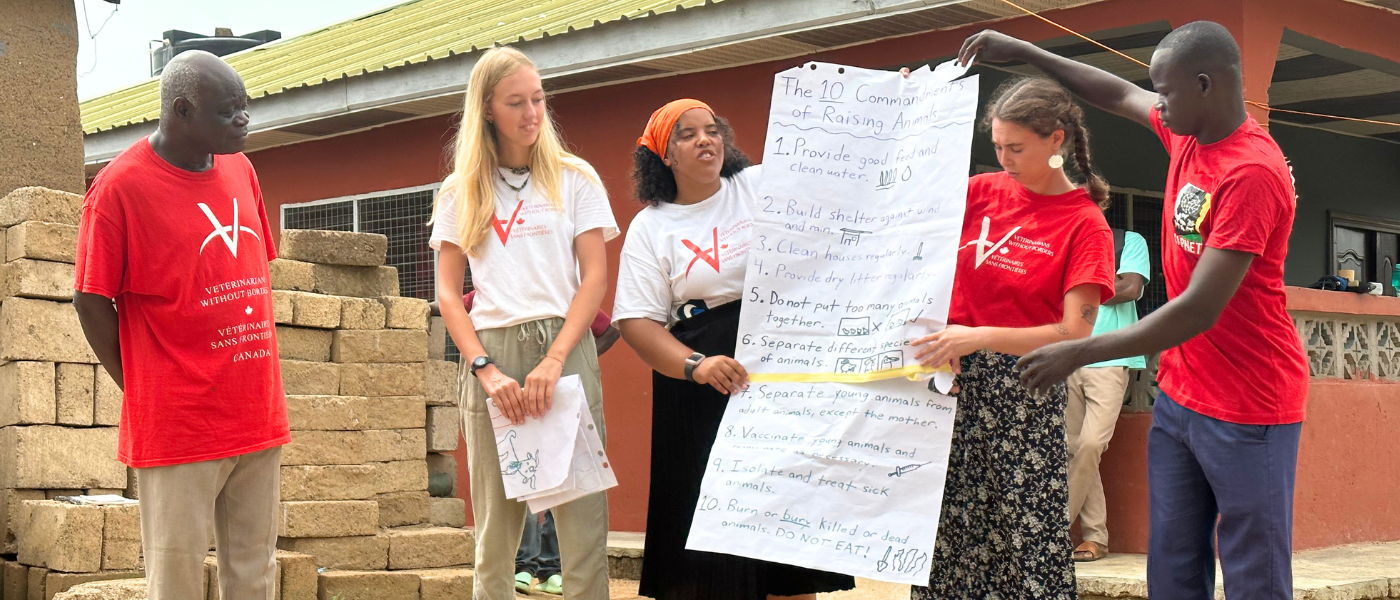 PHOTO: GAPNET Executive Director Dr. Anthony Akunzule (left), VETS volunteers Marley Blok, Keisha Harris, and Sandra Nyman, and GAPNET Field Officer Isaaka Aganda (right) co-facilitate an animal health and biosecurity training session for a local women's group in northern Ghana (August 2023).
At the same time, they have learned from our staff, farmers, families, and local partners, adapting their own expertise to local realities. I have always believed that the strongest partnerships are those in which everyone learns, and that exchange of knowledge remains one of the greatest strengths of our relationship with VWB.
Knowledge Shared Is Knowledge That Lasts
Some memorable collaborations with VWB actually began before the VETS program itself.
In 2018, two veterinary student volunteers, Yuqing Sun and Nima, joined us to investigate one of the greatest challenges facing guinea fowl farmers in northern Ghana: reducing mortality among young keets during their first eight weeks of life. Rather than approaching the issue solely from a scientific perspective, we worked alongside farmers to understand the realities they faced and identify practical improvements in husbandry. Years later, I continue working with those same communities because the knowledge developed during that placement remains relevant today. For me, it demonstrated that research is most valuable when it responds directly to the needs identified by farmers themselves.
The following year, another group of volunteers partnered with GAPNET to study the welfare of working donkeys across seven villages. Their research eventually became a scientific paper that I had the opportunity to present at an international conference, helping draw greater attention to the importance of working animal welfare in Ghana.
For me, these projects illustrate what successful partnerships look like. The volunteers returned home, but the relationships remained. The research continues to inform our work. The communities continue to benefit. That is what meaningful collaboration should achieve.
Creating Opportunities for Others
While I am proud of the organizations and partnerships that have grown over the years, what gives me the greatest satisfaction is seeing other people succeed.
One of the lessons my career has reinforced is that lasting change depends on local leadership. That belief inspired me to help establish organizations such as the Women in Poultry Value Chain (WIPVaC) following the African Union's VETGOV program, and later the Women Poultry and Livestock Association (WOPOLA). My hope was never simply to create new organizations, but to create opportunities for women to organize, learn from one another, access resources, and continue growing long after individual projects had ended.
Through the VETS program, we have continued building on that vision by supporting women farmers, strengthening community organizations, and training Community Animal Health Workers across northern Ghana. Today, many of those Community Animal Health Workers are women who have become respected leaders within their communities. Seeing them gain confidence, provide trusted animal health services, and become role models for others has been one of the most rewarding parts of my work.
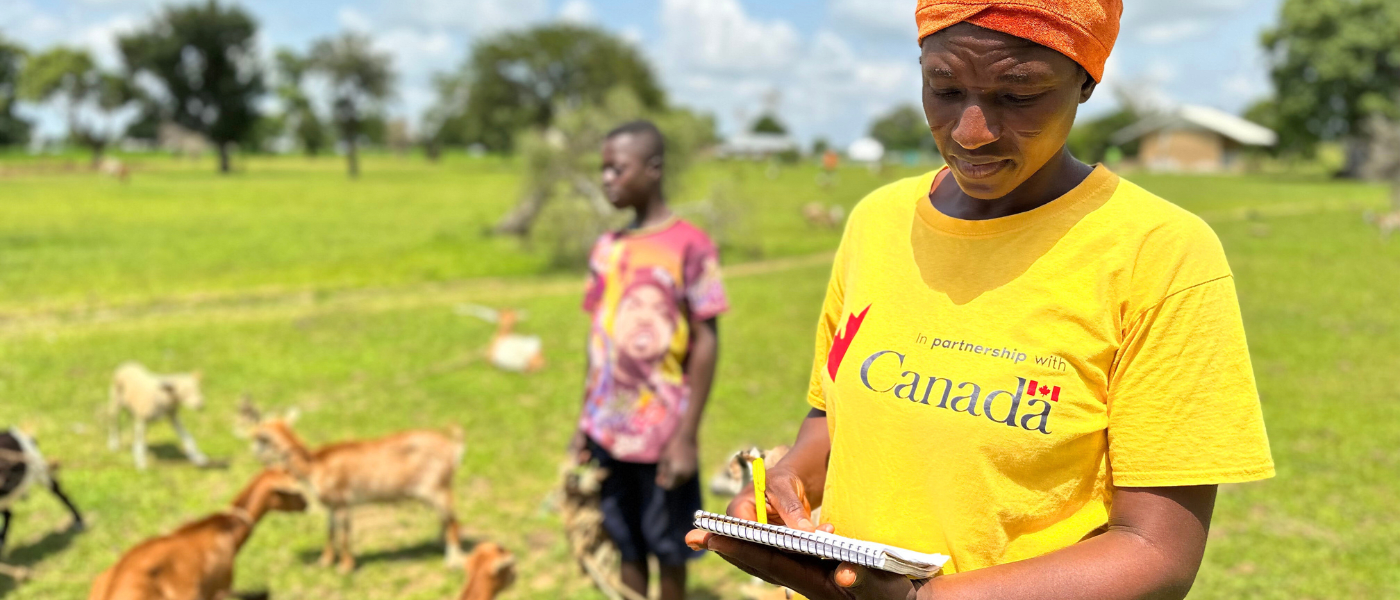 PHOTO: Margaret Aligiya, one of the first women trained as a Community Animal Health Worker through GAPNET and VETS, records farmers and their animals during a vaccination campaign in Sirigu—putting new skills and opportunities to work in service of her community.
The same philosophy has shaped my approach to mentoring young professionals.
One young man in particular comes to mind. Desmond Adumbire was among the first Community Animal Health Workers we trained through VETS in 2022. At the time, he was unemployed, but I saw his commitment and encouraged him to apply to the Animal Health and Production College. I supported him throughout his studies because I believed in his potential. Today, he has graduated and is working as a veterinary technical officer with Ghana's Veterinary Services Directorate. Watching him reach that point has been incredibly rewarding. I continue encouraging him to pursue a Doctor of Veterinary Medicine degree because I know he still has much to contribute to our profession.
Desmond is not the only person whose journey has brought me joy. Over the years, I have had the privilege of mentoring many young veterinarians, including Dr. Francis Anarfo, who first developed an interest in veterinary medicine while working with me. During school holidays, Francis often stayed in my home, giving us time to discuss veterinary medicine, wildlife conservation, and the responsibilities that come with serving both animals and people.
Today, seeing him practicing as a veterinarian reminds me why mentorship matters. When young professionals discover their own potential and begin creating opportunities for others, the impact extends far beyond any one individual.
These experiences have taught me that development is ultimately about people. Projects may begin and end, but when individuals gain confidence, skills, and opportunities, they continue creating positive change within their own communities for many years to come.
Looking Ahead
After more than four decades in veterinary medicine, people sometimes ask what continues to motivate me. My answer is simple. Every time I see a young veterinarian beginning a career, a Community Animal Health Worker gaining confidence, a woman leading her association, or a farmer applying new knowledge to improve a family's livelihood, I am reminded why I chose this profession. Those moments remind me that lasting change happens one person, one family, and one community at a time.
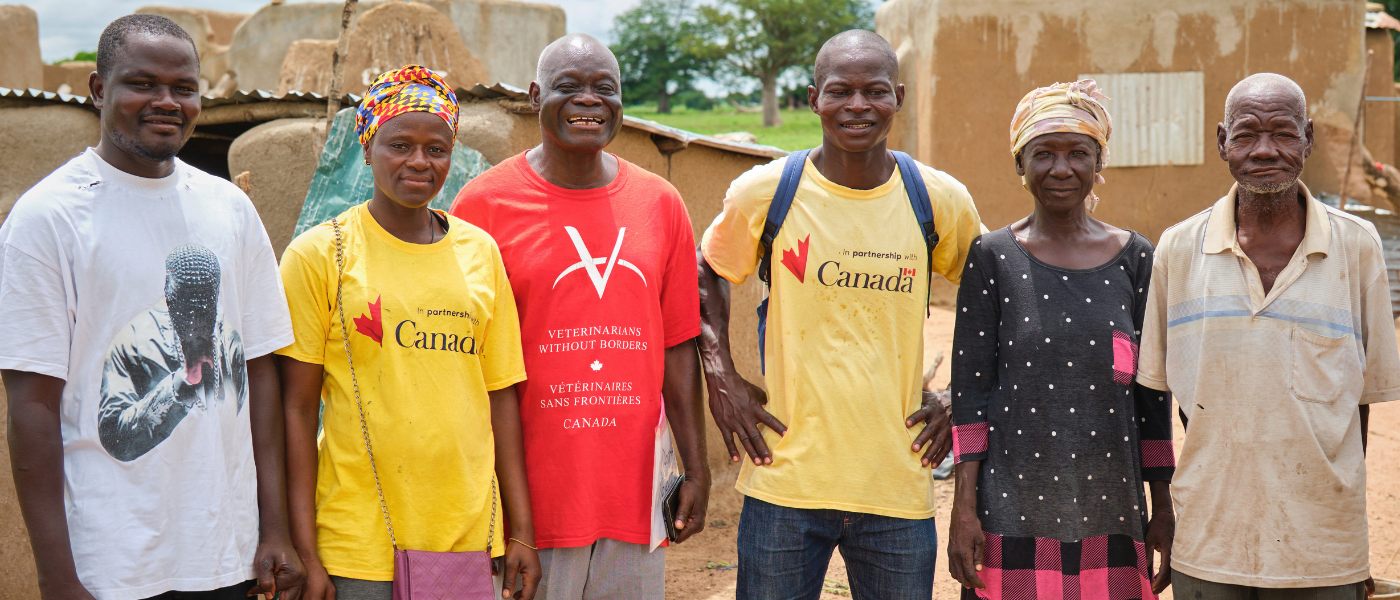 PHOTO: Dr. Anthony Akunzule (red T-shirt) with the Kologo district veterinarian, two VETS-trained Community Animal Health Workers, and a local farming couple—reflecting the partnerships at the heart of the VETS program, GAPNET, and his life's work.
I also remain optimistic about the future of Ghana's livestock sector. Continued investment in village poultry production, stronger local hatcheries, growing recognition of the One Health approach, and partnerships such as VETS all provide important opportunities to strengthen animal health while improving livelihoods across rural communities.
If there is one lesson I hope the next generation carries forward, it is to uphold the integrity of the veterinary profession while recognizing that our responsibility extends beyond the animals we treat. By protecting animal health, safeguarding the environment, and supporting the well-being of communities through the One Health approach, veterinarians have the opportunity to create lasting change that reaches far beyond the clinic.
When I think back to that young boy holding onto the tail of a cow as it crossed a river, I could never have imagined where that journey would lead. It has taken me from wildlife conservation and veterinary medicine to farming communities, universities, international partnerships, and lifelong friendships. More importantly, it has shown me that meaningful progress is built through partnership—when people share knowledge, invest in one another, and create opportunities for others to succeed.
That has been the guiding purpose of my career, and it is the journey I hope the next generation will continue.
VETS is an 8-year initiative (2020-2028) to improve the economic and social well-being of marginalized people, particularly women and girls, in 6 countries across Africa and Asia. In collaboration with local partners, the program is implemented through 190 Canadian volunteers on international assignment and is generously funded by Global Affairs Canada. Learn more.