Each year on September 30, people across Canada mark the National Day for Truth and Reconciliation and Orange Shirt Day — honouring Survivors of residential schools, remembering the children who never returned home, and recognizing the lasting impacts of the residential school system on families and communities.
At Veterinarians Without Borders North America (VWB), our Canadian office will be closed on September 30 in observance of the day, giving our team space to reflect, learn and participate in activities in their own communities.
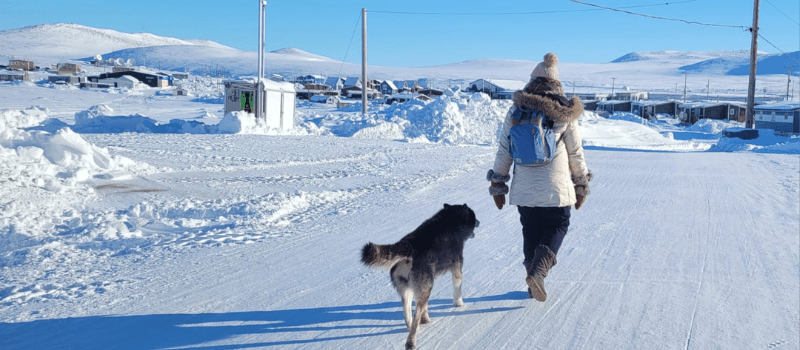
For VWB, this day also carries particular meaning because of the relationships at the heart of our work in northern Canada. Through our Northern Animal Health Initiative, we work alongside remote communities, including Indigenous communities, across Nunavut and the Northwest Territories to strengthen access to animal health care and build local capacity.
That work happens by invitation. We work with communities to understand their priorities and identify approaches that respond to their needs — from veterinary services and rabies prevention to community-based training and locally led animal health capacity. These relationships remind us of the importance of listening first, respecting local knowledge and priorities, and approaching our work with humility.
The National Day for Truth and Reconciliation is also a reminder that reconciliation is not the work of a single day. Learning about the history and ongoing impacts of residential schools, listening to the voices and experiences of First Nations, Inuit and Métis Peoples, and reflecting on our own roles and responsibilities are part of an ongoing process.
We encourage our staff, volunteers, partners and supporters to use September 30 as an opportunity to listen, learn and reflect — and to seek out Indigenous-led voices, events and resources in their own communities.
Learn and reflect
- National Centre for Truth and Reconciliation: Learn about the history and legacy of the residential school system, access educational resources, and explore programs supporting truth and reconciliation. The NCTR preserves the records of the residential school experience and serves as a centre for learning and dialogue.
- Orange Shirt Society: Learn the story of Orange Shirt Day, rooted in the experience of residential school Survivor Phyllis Webstad, and explore Survivor-informed educational resources, videos and learning materials.
- Truth and Reconciliation Week 2026: Explore free educational programming, learning resources and events for Truth and Reconciliation Week, as well as information about the national commemoration on September 30.