Written by Janine Mitchell, Executive Director of VWB, in recognition of One Health Day (November 3), this article draws on the FAO Global Conference for Actions on One Health in Agrifood Systems and the VSF International General Assembly to explore what it takes to turn One Health commitments into action—from building equitable partnerships and strengthening collaboration to ensuring practical systems and accountability.
From shared understanding to collective action
Every year on 3 November, One Health Day asks us to recognize something that sounds obvious: human health, animal health, food systems, and the environment are connected. The harder question is not whether they are connected, but whether we are organized to act on that connection.
Recently, Veterinarians Without Borders (VWB) participated in the FAO Global Conference for Actions on One Health in Agrifood Systems, followed by the Vétérinaires Sans Frontières (VSF) International General Assembly. I left encouraged, not because everyone agreed on everything, but because there was a genuine willingness to confront the practical barriers that often prevent One Health from becoming more than a well-used term.
The two gatherings offered different but complementary perspectives. The FAO conference focused on advancing One Health through coordinated policies, stronger systems, scientific evidence, and international cooperation. The VSF General Assembly brought the discussion closer to the realities of organizations working alongside communities, including the relationships, capacities, and equitable partnerships needed to translate those ambitions into action. Together, they reinforced something fundamental: One Health depends as much on how we work together as on what we know.
One Health is an integrated approach that seeks to sustainably balance and optimize the health of people, animals, plants, and ecosystems. The challenge is turning that principle into decisions, budgets, field programmes, and accountable partnerships.
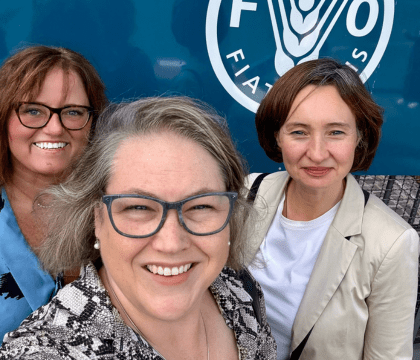 PHOTO: Janine Mitchell (centre) with VWB colleagues at the FAO Global Conference in Rome, September 2026.
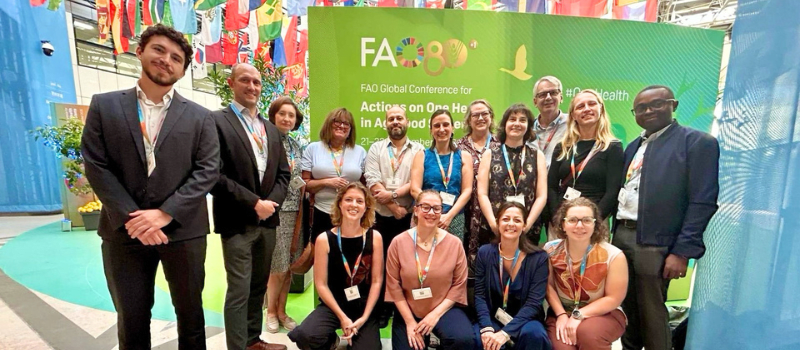
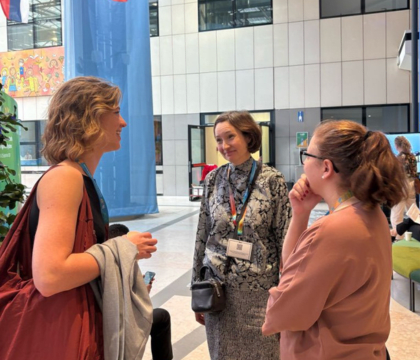 PHOTO: Conference participants exchange perspectives and build connections during the FAO gathering in Rome.
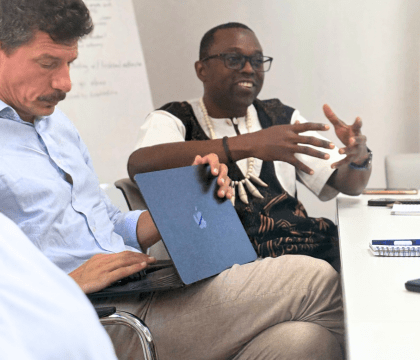 PHOTO: A participant shares perspectives during discussions at the VSF International General Assembly.
Nobody owns the whole problem
A farmer may see changes in the herd. A researcher may see a pattern across communities. A policymaker may see the wider implications for trade and livelihoods. A community organization may understand the barriers people face in acting on advice. Each holds part of the picture. One Health begins when they put those parts together.
Each perspective is partial. None is wrong. But when institutions work separately, the result is often delayed detection, duplicated effort, fragmented funding, and solutions that address one part of the problem while unintentionally creating another. This is why One Health is difficult. It asks organizations to share information, authority, resources, and sometimes credit. It asks funders to support work that does not fit neatly into one sector. It asks technical experts to listen beyond their disciplines. And it asks all of us to accept that the most important intervention may not be the most visible one.
The FAO conference did not pretend these tensions were simple. Instead, it created space to identify where collaboration could be practical: livestock health, surveillance, antimicrobial resistance, food safety, research, capacity development, financing, and coordinated responses to transboundary animal diseases. These are not challenges that any one profession or institution can resolve independently. They require different forms of knowledge and capacity to come together around a shared problem, with a clear understanding of what each participant can contribute.
People make One Health happen
Conferences are often described as networking opportunities, as if networking were separate from the real work. In One Health, it is part of the real work. The health challenges we face do not arrive neatly divided among sectors, and neither can the people responding to them. What emerged from the conversations at the FAO conference and VSF General Assembly was not simply a list of potential projects. It was evidence of people willing to make those connections: asking who else needs to be in the room, what information they hold, and what each could contribute that another cannot.
As FAO Director-General Dr. QU Dongyu emphasized in his opening remarks, One Health offers a way to work across those boundaries: “It allows us to think systemically, find solutions together, act jointly, and progress together.”
Effective collaboration does not happen automatically because people share a meeting room. It requires deliberate habits:
- Start with a shared problem, not a shared acronym. An emerging disease risk, unsafe food, rising antimicrobial resistance, or a community that lacks access to services can bring together people whose professional responsibilities might otherwise rarely intersect. A clearly defined problem helps different actors see why they belong in the conversation.
- Make complementary roles explicit. One partner may bring laboratory capacity or technical expertise, another community trust and local access, and another the financing or policy influence needed to support implementation. Collaboration works best when these contributions are understood and recognized as equally necessary.
- Invest in relationships before they are urgently needed. The most valuable outcome of a conference may be a conversation that continues afterwards: a contact who can be called when an unusual disease event occurs, a partner who can help interpret data, or a colleague who understands the local context. Trust built in calm periods becomes essential during a crisis. That trust also makes it easier to share information early, even when it is imperfect. One Health depends on early signals, whether unusual animal deaths, changes in disease patterns, environmental pressures, or community concerns. People are more willing to share incomplete information when they trust it will be used constructively, rather than to assign blame or compete for credit.
FAO's Policy Framework on One Health in Agrifood Systems and the Global Framework to Accelerate Action on Avian Influenza provide useful reference points for this work. But frameworks do not build trust, share information, or make phone calls after a conference ends. People do.
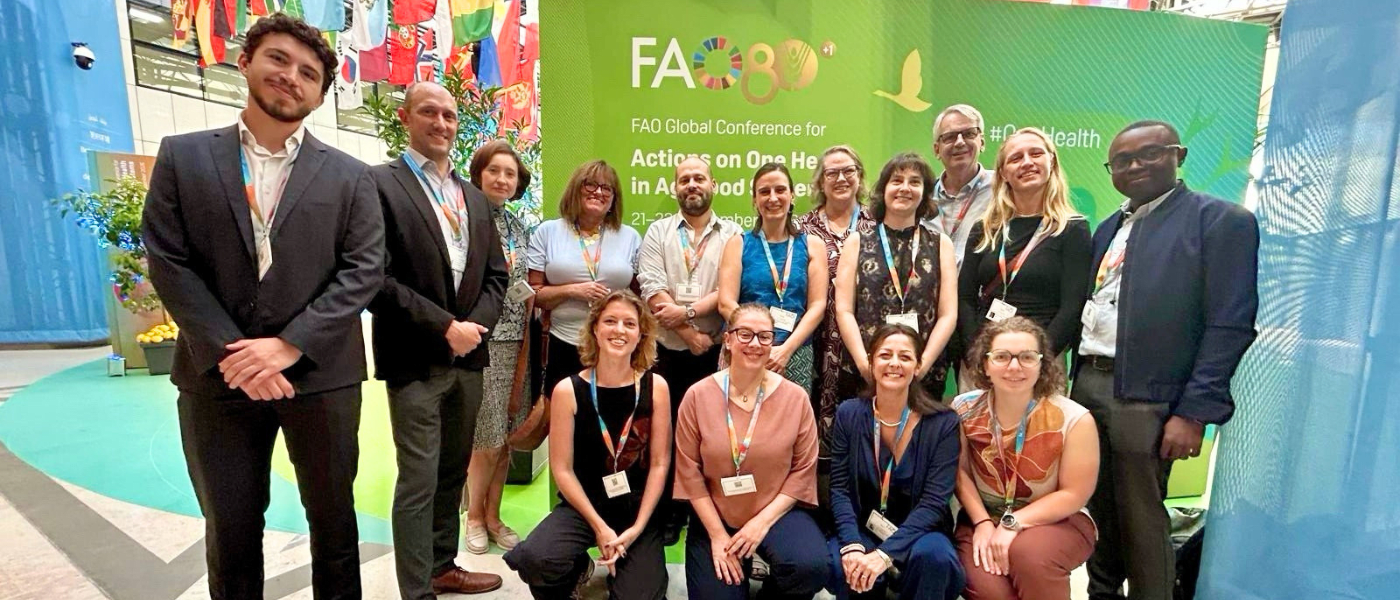 PHOTO: VWB North America colleagues and VSF International partners at the FAO Global Conference for Actions on One Health in Agrifood Systems, Rome, September 2026.
That is why the willingness to collaborate is not a soft outcome of a conference. It is an essential foundation for the surveillance systems, preparedness plans, financing mechanisms, and community-level action on which One Health depends.
Data should help people act
Relationships are essential, but they also need to be supported by systems that allow information to move across sectors and inform decisions.
One of the most promising developments was the launch of FAO's Sustainable Livestock Transformation and One Health Intelligence and Knowledge Hub. The Hub brings together livestock data, analytics, tools, knowledge, and activities in one place. Its dashboards and visualizations allow users to explore animal populations, production, health, climate, and other themes across countries and regions. It also includes an AI assistant designed to help users navigate complex information.
But the most important question is not whether a platform is impressive. It is whether a district veterinary officer, a farmer organization, a researcher, or a policymaker can use it to make a better decision. Data becomes useful when it helps answer practical questions: Where is risk increasing? Which communities need support? Where are laboratory or surveillance gaps? What interventions are feasible, affordable, and acceptable locally?
The Hub offers an opportunity to make evidence more accessible, but its impact will depend on whether that information reaches the people who need it, informs practical decisions, and is supported by local capacity to act. Better access to information is an important step; ensuring that it leads to better responses is the larger task.
Equity is not a side issue
The VSF International General Assembly brought a different but equally important perspective. It reaffirmed the network's shared identity and priorities, while also recognizing an uncomfortable truth: global networks are only as strong as the participation and capacity of their members.
The Assembly identified opportunities for joint programming, advocacy, and knowledge exchange. Most importantly, members acknowledged that larger and smaller organizations have different capacities and needs. A network that expects every member to contribute in the same way risks excluding exactly the organizations closest to communities, livestock keepers, and local health systems. This is a viewpoint worth carrying into every One Health partnership: equity is not a soft add-on. It is a condition for effectiveness. If local organizations lack resources, voice, or decision-making power, global strategies will struggle to translate into local change.
The same principle applies to the communities that One Health initiatives are intended to serve. Farmers, community health workers, veterinarians, and local authorities bring knowledge of the circumstances in which interventions must succeed. Their perspectives help identify practical barriers, shape appropriate responses, and determine whether proposed solutions can be sustained.
Global frameworks and international partnerships can set direction, but they succeed when local actors help shape the response. Those actors need to see their realities reflected in the plan, and they need the resources and authority to act on it. This also means being honest about capacity and constraints. Not every organization has the same staff, funding, technical systems, or influence. Effective collaboration acknowledges these differences rather than assuming equal capacity, and deliberately creates space for smaller or locally rooted organizations to participate meaningfully.
Equitable partnership is therefore not simply a matter of who is invited into the conversation. It is also about whose knowledge informs decisions, whose priorities are reflected in the work, and whether responsibilities and resources are shared in ways that make meaningful participation possible.
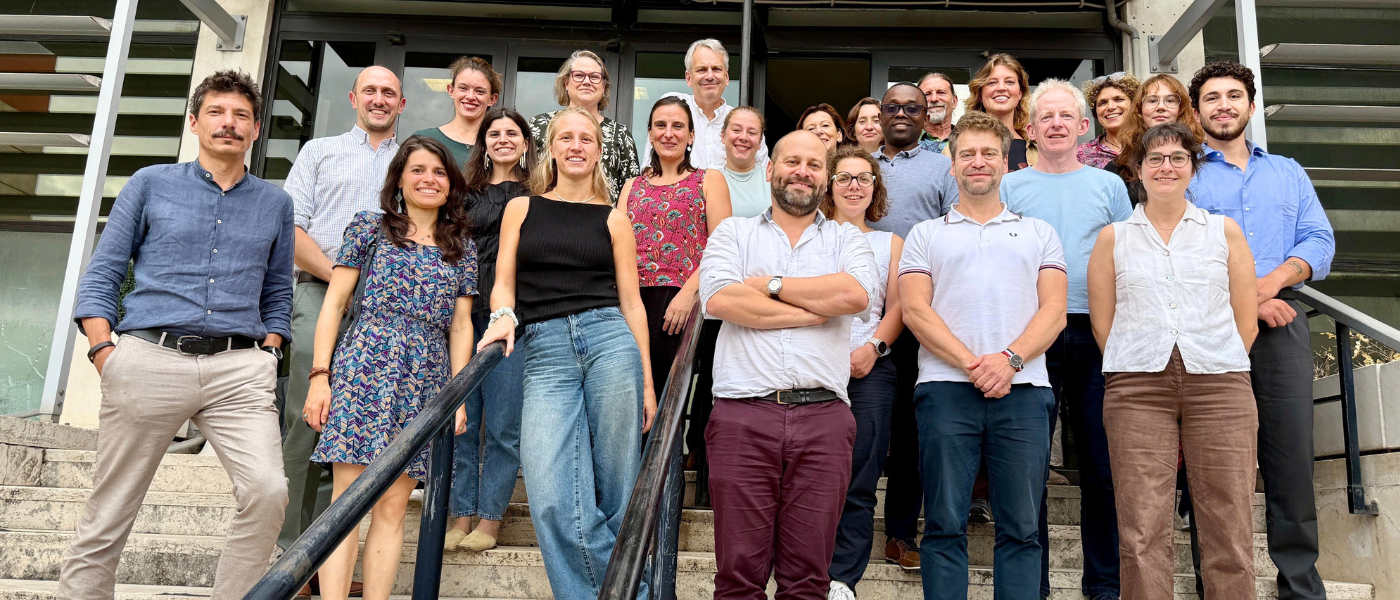 PHOTO: Representatives of the VSF International network gather for their September 2026 General Assembly to discuss shared challenges and strengthen collaboration.
Willingness needs structure
Across both events, the challenge was not a lack of willingness to collaborate, but how to convert that willingness into structures that survive beyond a meeting. That means being clear about who decides what, and how partners resolve disagreement. It means clarifying who contributes what, including funding, expertise, staff time, data, and local access. It means asking who benefits, especially smaller organizations, national institutions, farmers, and communities.
A good collaboration does not need to begin with a formal agreement. It can begin with a follow-up meeting, a shared note, a small pilot, a joint data request, or a clear commitment to reconvene. The important thing is that the willingness generated in the room is given somewhere to go. But sustaining that collaboration requires more than individual commitment. Partners need workable ways to coordinate, make decisions, share information, and follow through on what they have agreed to do. Without those arrangements, even promising relationships can struggle to produce lasting results.
It also means measuring success not only by funds raised or meetings held, but by stronger services, earlier detection, safer food, healthier animals, and more resilient livelihoods. Learning needs to be shared so that one country's experience can inform another without requiring every partner to start from zero.
Collaboration is not simply inviting more people to the table. It is designing the table so that everyone can contribute meaningfully, and ensuring that decisions do not consistently favour the largest or loudest actors.
What we should take into One Health Day
One Health Day should not be a day for general statements about interconnectedness. It should be a day to make specific commitments. For those working in agrifood systems, veterinary services, and community development, the priorities are clear:
- Invest before the next crisis. Strengthen veterinary services, laboratories, surveillance systems, and workforce development so that local professionals have the capacity to identify and respond to emerging health risks.
- Address connected risks through coordinated action. Treat antimicrobial resistance, food safety, and zoonotic diseases as challenges that require cooperation across human, animal, and environmental health, rather than separate institutional portfolios.
- Make information useful where decisions are made. Support shared data systems and early warning tools, while ensuring that local professionals and institutions have the capacity to use them.
- Build equitable partnerships. Distribute resources, responsibility, and recognition fairly, and ensure that smaller organizations and local communities have a meaningful role in setting priorities and shaping responses.
- Make collaboration accountable. Move beyond declarations and meetings to establish practical commitments, shared responsibilities, and measures of success that reflect improvements in health, livelihoods, and resilience.
One Health is challenging because it asks us to work across boundaries that institutions were not designed to cross. But the willingness is there. The tools are improving. The partnerships are expanding. The task now is to make collaboration practical, equitable, and accountable, so that One Health becomes not just a framework we describe, but a way we work.
 One Health works when people, organizations, and communities come together to turn shared commitments into meaningful action. Join VWB in strengthening locally led solutions that connect animal, human, and environmental health. Donate, volunteer, or subscribe to support collaborative approaches that improve health, protect livelihoods, and build more resilient communities.