
Our Theory of Change | Veterinarians Without Borders
Skip to Main Content

Our Theory of Change

Learn how VWB strives to integrate a sustainable approach to strengthening the health of animals, communities, and the environment.

VWB's Theory of Change revolves around the intrinsic value of animals and the interconnectedness of healthy animals, people, and environments.

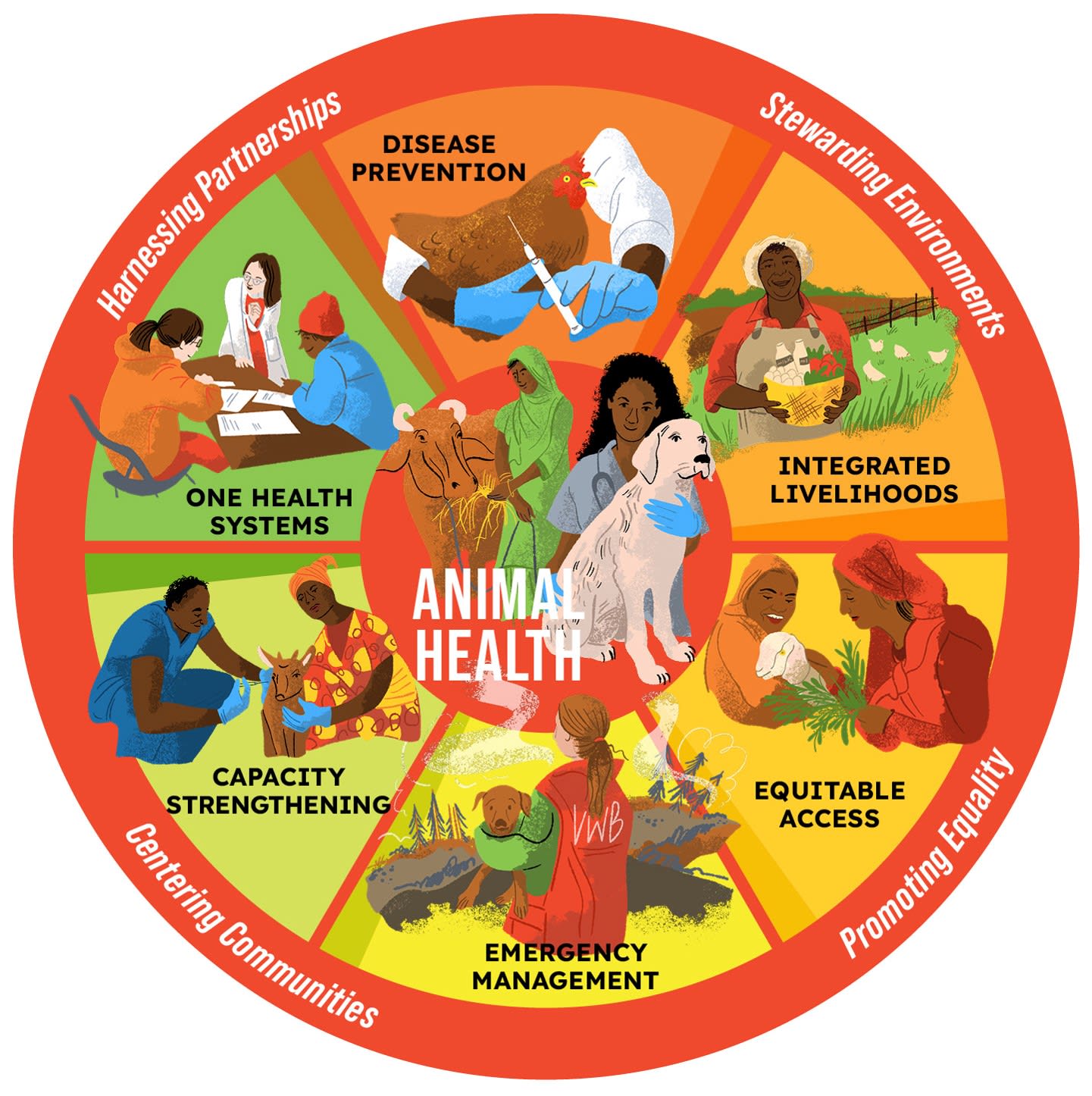
Our organization invests in sustainable, community-centered animal health systems, employing a One Health approach that acknowledges the positive impacts of healthy animals on human health, livelihoods, and wellbeing. To achieve our goals, we focus on animal health and address key, interrelated elements:

Disease Prevention: Through local surveillance, community education, and disease control measures, including vaccination and treatment, we strive to keep animals and communities healthy, reducing the risks of zoonotic diseases like rabies.

Integrated Livelihoods: Collaborating with communities, we invest in integrated livestock and agricultural livelihoods that enhance food security, improve quality of life, and are resilient to climate change impacts, such as drought.

Equitable Access: We ensure equitable access to animal health resources and services, addressing barriers like remote geographies, colonialism, and gender inequality, with a focus on responding to the needs of the most vulnerable, particularly women.

Emergency Management: We partner with government, local organizations, and communities to understand risk, prepare for and respond to shocks, and strengthen recovery capacity for animals, humans, and local environments.

Capacity Strengthening: Facilitating knowledge sharing and exchange, we empower communities to harness existing assets and strengthen capacity for animal, human, and environmental health.

One Health Systems: We invest in leadership, governance, information, financing, and coordination of local systems, recognizing and responding to the intersections between animal, human, and environmental health.

The outcomes we seek include communities having sustainable local capacity to meet animal health needs, implementing surveillance and disease control measures, fostering sustainable livelihoods, ensuring equal access to animal health services, having disaster risk reduction plans in place, and building the capacity to respond to local needs related to animal health.

Our Theory of Change is grounded in the belief that by investing in these areas, we contribute to improved health and wellbeing for animals, the people who depend on them, and the shared environments they inhabit.

Veterinarians Without Borders North America couldn't do the work we do without your support. Whether it's a financial donation or a donation of your time, by improving the health of animals you will be working to improve the health and quality of life for people throughout the world.

VOLUNTEER WITH US DONATE TODAY

Stories From Around The World

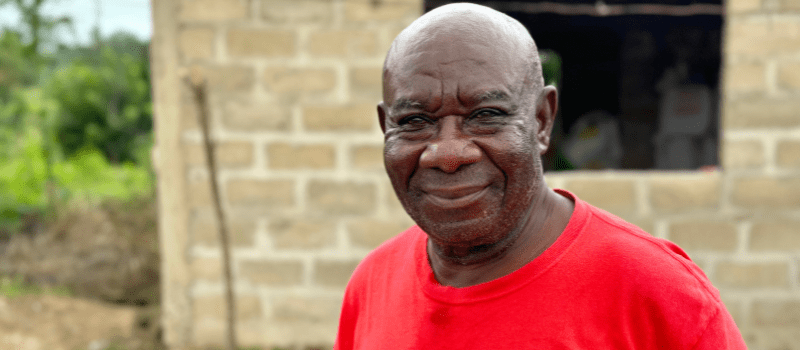
VETS Volunteer Voices: The Doctor Who Kept Coming Back to Ghana

VETS Volunteer Voices: The Doctor Who Kept Coming Back to Ghana

Posted Sep 3rd, 2026

#VETSVolunteerVoices brings you stories of our passionate VETS program volunteers from the field. Meet Dr. Joseph Ansong-Danquah, a Ghanaian-Canadian veterinarian who has volunteered with VWB in Ghana since 2017. In 2026, Joseph is completing his final VETS placement after nine years of supporting farmers, communities, partner organizations and fellow volunteers across the country.

Read more

Register now to join us for

Register now to join us for "VWB Live 2026: Stories, Impact and What’s Next"

Posted Aug 20th, 2026

Join the VWB community for a virtual look at the stories, people, partnerships and progress that shaped our work this year — and hear what’s ahead for Veterinarians Without Borders as we continue working for healthier animals, people and communities around the world.

Read more

Ask an Expert:

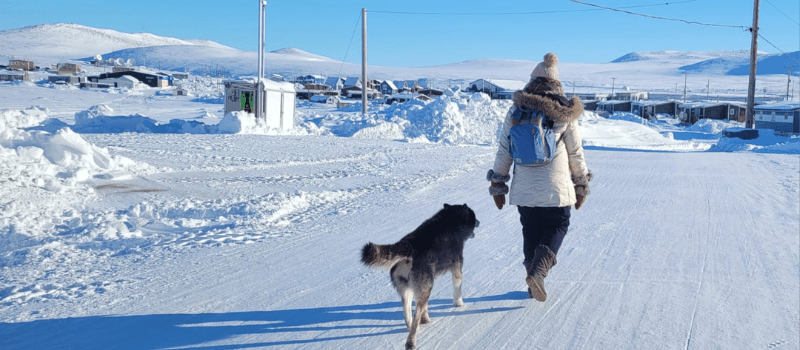
Ask an Expert: "What Does Sustainable, Community-Led Animal Health Care Look Like in Northern Canada?"

Posted Aug 17th, 2026

In this edition of Ask an Expert, we spoke with Hannah (Tsai-Ping) Liao, whose MSc research at the University of Guelph examined what decades of Community Animal Health Worker (CAHW) programs can teach us about building sustainable, community-led animal health systems in northern Canada.

Read more

  • The most rewarding part of my placements was helping others and seeing the many lives that are impacted along the way.
    - Nikki Sheedy

Become A Part Of The Big Picture

By supporting Veterinarians Without Borders through donations or volunteering, you become part of the Big Picture solution. 

Volunteer  Donate  

+1(343) 633-0272 Contact