#VETSVolunteerVoices brings you stories of our passionate VETS program volunteers from the field. Meet Dr. Joseph Ansong-Danquah, a Ghanaian-Canadian veterinarian who has volunteered with VWB in Ghana since 2017. In 2026, Joseph is completing his final VETS program placement after nine years of supporting farmers, communities, partner organizations and fellow volunteers across the country.
Protecting Life — and Protecting Investment
I have spent most of my life as a veterinarian, but some of the most meaningful years of my career came after I retired. Since 2017, I have returned to Ghana year after year with Veterinarians Without Borders (VWB), travelling to communities across the country to work with livestock and poultry farmers, veterinary professionals and other volunteers. Now, I am nearing the end of my final VETS program placement. When I think about what these nine years have taught me, I find myself coming back to something very simple: veterinary knowledge only has value if we can help people put it into practice.
That belief has shaped the way I work with farmers. When I visit a poultry farm, I look carefully at the small things: whether rodents or snakes can enter the poultry house, whether there is enough clean water, whether the birds have adequate ventilation and laying space, whether disinfectant is being used properly, and whether the surroundings are creating unnecessary risks. Then I sit down with the farmer and talk through both what is working well and what needs to change.
I often explain that biosecurity means “protecting life.” But over the years, I have added another way of describing it to farmers: protecting investment. For a livestock or poultry farmer, healthy animals represent much more than production. They can provide food, income and financial security for a family. When disease enters a farm, the farmer can lose much more than an animal or a flock.
This practical approach has guided much of my work with VWB over the past nine years. I have conducted farm inspections, developed training materials, trained farmers in animal health, welfare, production and biosecurity, and returned to farms and communities to see whether the knowledge we shared actually resulted in change. I have always believed that the purpose of training is not simply to deliver information. The real question is what happens afterward — and that question has become increasingly important to me over the years.
But my journey with VWB began with a different question: after a long veterinary career in Canada, what was I going to do with all the knowledge and experience I had accumulated?
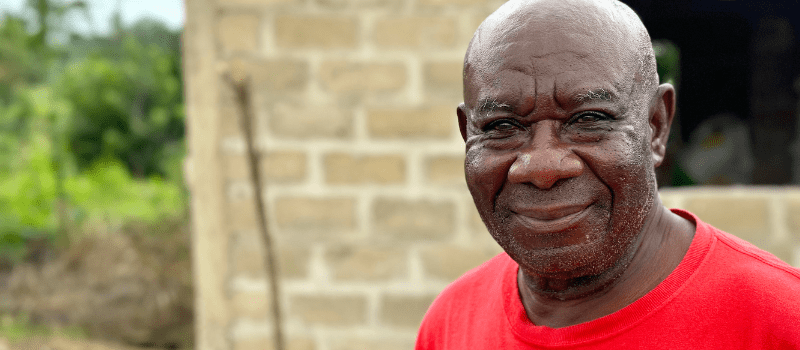
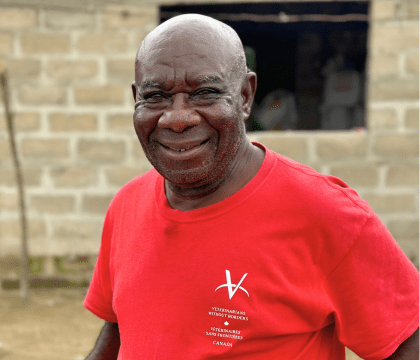 PHOTO: Dr. Joseph Ansong-Danquah, repeat VWB volunteer since 2017, including 8 VETS placements in Ghana.
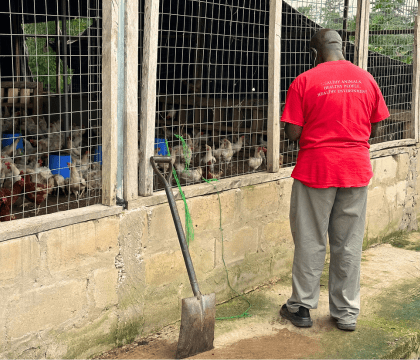 PHOTO: Joseph takes notes as he performs a biosecurity inspection of a poultry farm in Adarkwa, Suhum (2023).
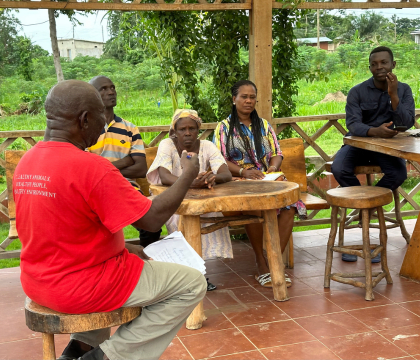 PHOTO: Joseph advises staff on improving poultry health and productivity at Abuk3 Farms in Amanhia, Suhum (2023).
A New Chapter After Retirement
I came to Canada from Ghana when I was a young man, around 23 years old, to study veterinary medicine at the Ontario Veterinary College at the University of Guelph. After graduating, I began my career in small-animal practice before joining the federal government. My work eventually took me into meat hygiene and inspection and animal health, with positions in Nova Scotia and New Brunswick and, over time, senior management responsibilities with what became the Canadian Food Inspection Agency.
When I retired in 2016, I found myself in an unfamiliar position. I was a retired veterinarian who didn’t know where to go. What I did know was that I still had something to contribute. I had accumulated many years of veterinary knowledge and professional experience, and there were communities elsewhere in the world where access to that kind of expertise was limited. So, I began looking for an organization through which I could continue to use what I knew in service to others.
Around that time, I saw an advertisement in a New Brunswick veterinary newsletter saying that VWB was recruiting volunteers to work in developing countries. I applied, and in January 2017, I travelled to Ghana for my first assignment.
My early work included developing training manuals on small ruminants and backyard poultry and sharing practical animal-production knowledge with rural smallholder farmers. Poultry and small livestock can be especially important for women who face barriers to owning land or accessing other economic opportunities, providing a way to build income and greater security for their families.
I expected to contribute my veterinary expertise. I did not know that I would still be returning to Ghana nine years later.
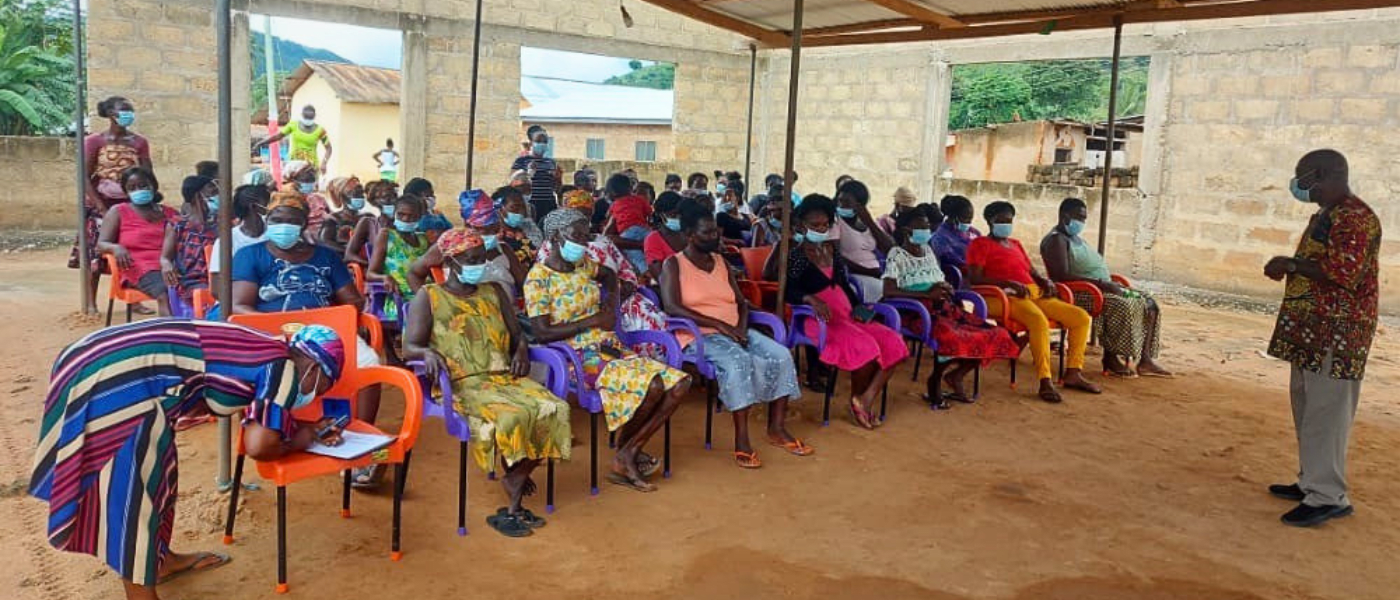 PHOTO: Joseph leads a training on poultry welfare and productivity for women engaged in animal production in Nsawam, Ghana’s Eastern Region (2021).
Returning to Ghana
Being Ghanaian-Canadian has shaped my experience as an international volunteer in ways that I came to appreciate more and more over the years. I was born and raised in Ghana, so I understood the culture, the food, the humour and many of the realities of daily life. I could communicate in local languages and often explain technical ideas in ways that were familiar and relevant to the people I was working with.
That cultural understanding is important. One of the things I have always told other volunteers is that you cannot arrive in another country expecting everything to operate as it does in Canada. You have to be patient and flexible, understand the culture and respect the circumstances in which people are living and working.
If a meeting is supposed to begin at nine o’clock and people arrive later, for example, becoming frustrated accomplishes nothing. You have to accommodate people and find a way to work together. For me, that also meant eating with people, talking with them and sharing jokes.
Over repeated placements, those relationships grew. I would return to communities and find that farmers remembered me, children recognized me and women I had trained in previous years welcomed me back. After so many years, I find it difficult to identify one community that has meant more to me than another. Every one of them made me feel at home. Many of the community members I have worked with came to feel almost like family.
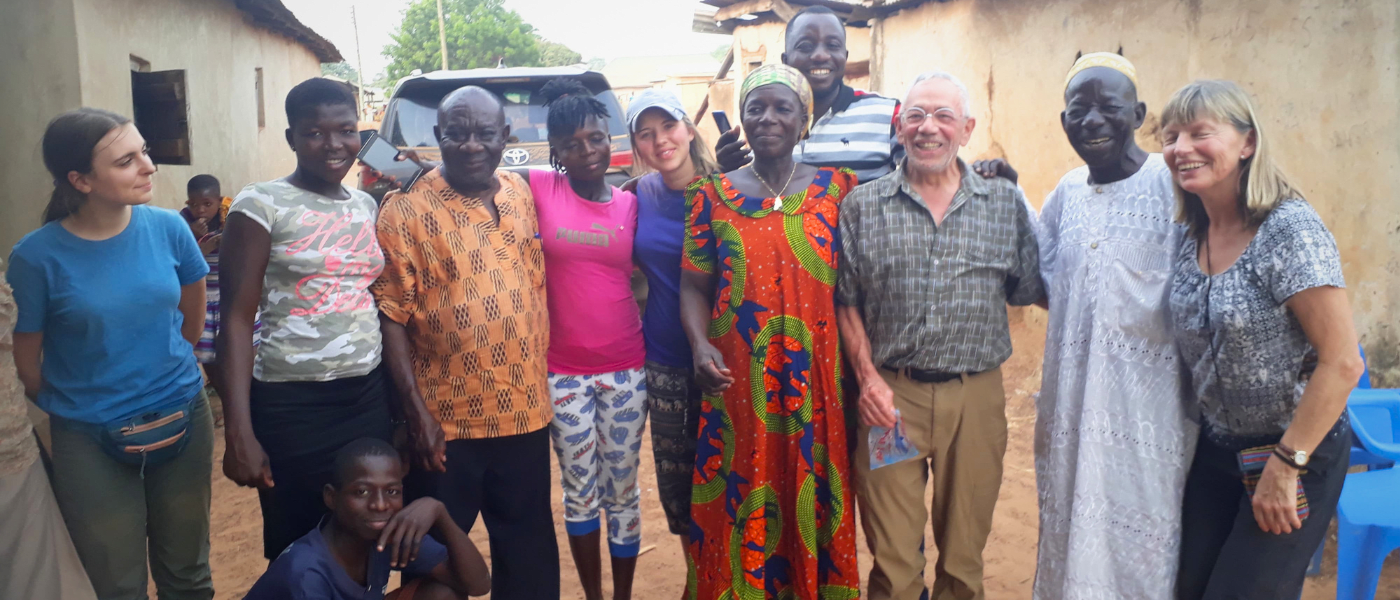 PHOTO: Joseph (third from left) celebrates with VWB volunteers and community members after completing vaccination and deworming activities in northern Ghana (2020).
A Contract With Your Chickens
My years in Ghana have also taught me a great deal about how technical information needs to be communicated. Veterinary knowledge is useful only if the person receiving it understands how it applies to the realities in front of them. When I train poultry farmers, for example, I tell them that they have a contract with their chickens. The chickens provide eggs or meat, but the farmer also has obligations under that contract: appropriate food, clean water, good housing, ventilation, protection from predators and disease, and conditions that allow the birds to remain healthy and productive.
Sometimes I ask farmers to imagine that they walk into their own bedroom and discover a snake. Would they sleep comfortably in that room? Of course not. Or I ask whether they would want to sleep on a wet mattress. Again, the answer is no. So why should we expect chickens to live comfortably with predators nearby or sleep on wet litter?
These are simple examples, but they help make animal welfare practical. I can explain the science behind stress, disease and productivity, but farmers also need to be able to look at an animal’s environment and understand what that animal is experiencing. As I have told farmers many times, the same comforts that you want and need, your animals need too.
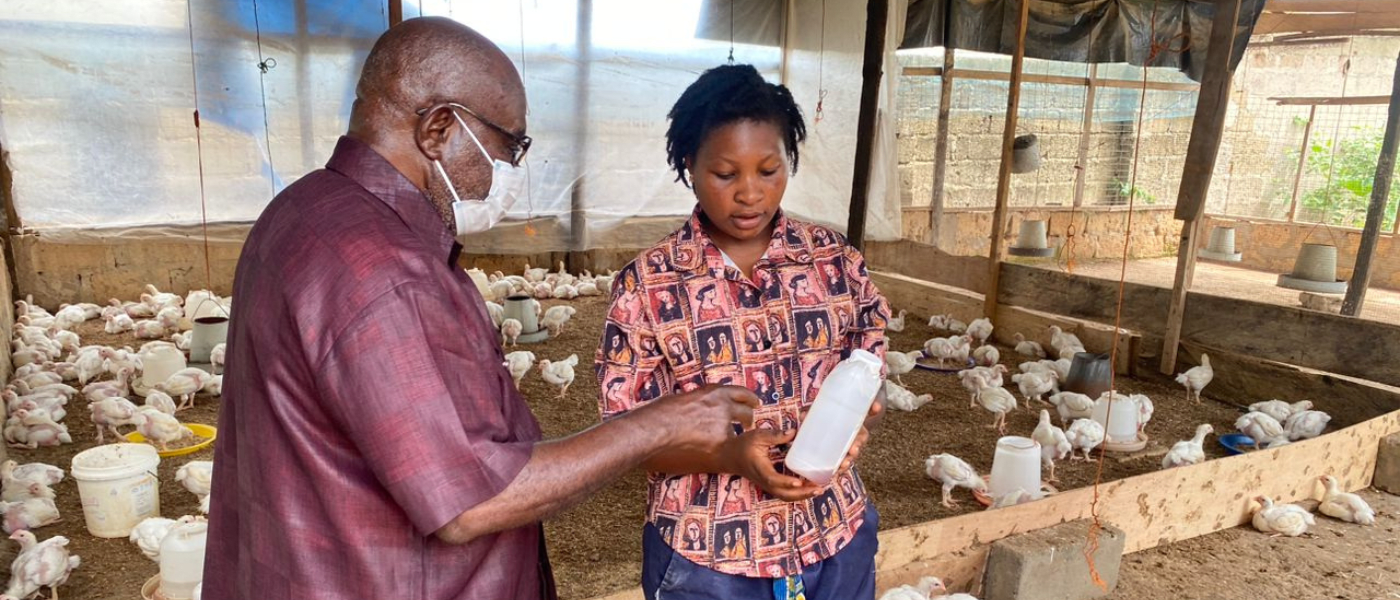 PHOTO: Joseph provides practical guidance to a poultry farmer during an on-farm inspection in Techiman, Ghana (February 2026).
When Knowledge Becomes Action
Over time, I have also learned that even good training does not necessarily lead to change. You can organize a workshop, have many people attend and provide good technical information, but that does not tell you whether anything changed six months or a year later. I have always wanted to see results that are measurable and sustainable.
During my current placement, one of my own learning objectives has been to better understand why some beneficiaries find it difficult to put what they have learned into practice. I have met farmers who participated in biosecurity training four or five times, yet when I visited their farms, many of the recommended practices were still not being followed. Sometimes people believe changes will require money they do not have; sometimes they are unconvinced the recommendations will make a difference. And sometimes the problem may be the way we have communicated the information.
That is why I place so much value on face-to-face farm visits. On one farm, I found that very few of the biosecurity measures covered in previous trainings had been implemented. The farmer and I walked through the farm together, discussing the risks and practical changes he could make, and I followed up with written recommendations. After he implemented the changes, I was told that his egg production increased by approximately 10 per cent.
For me, that is much more meaningful than being able to say that another person attended a training session. It shows that knowledge has been understood and put into practice.
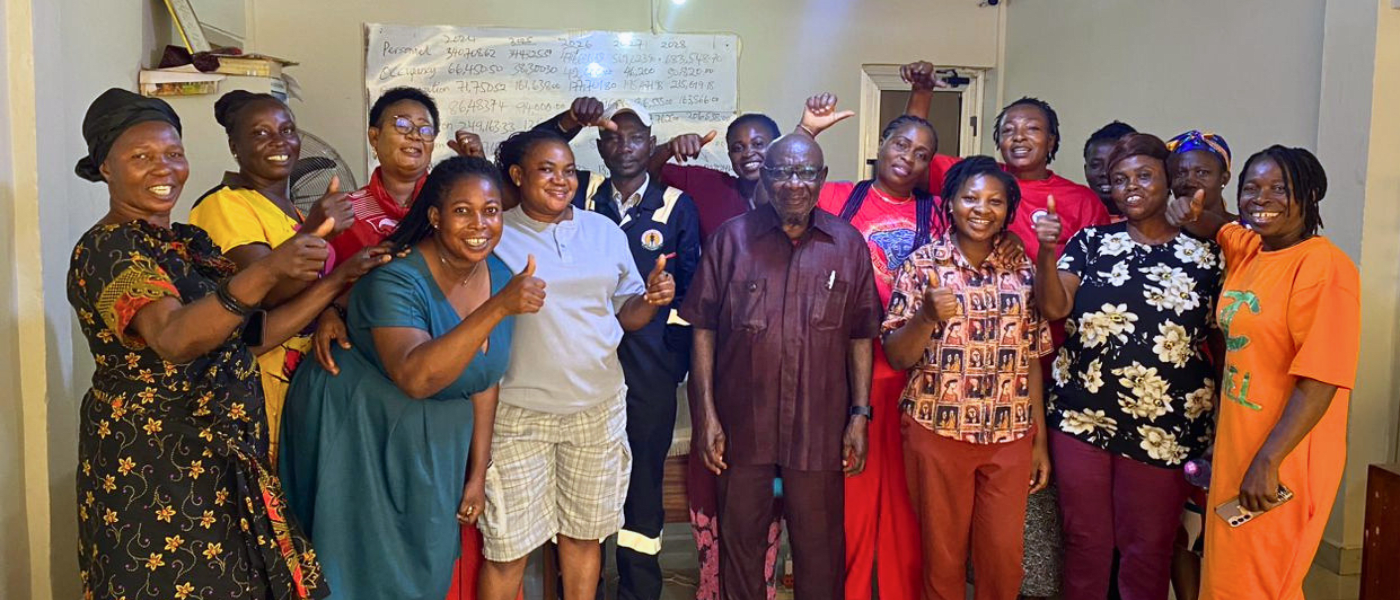 PHOTO: Joseph (centre) with poultry farmers following an animal health training session and farm visits in Techiman, Ghana (February 2026).
“Doctor, You Saved My Life”
Sometimes the results have reached much further than I could have anticipated.
During one of my earlier placements, I met a widow in northern Ghana who was raising four children. She participated in one of our animal-production trainings and began applying what she had learned to the care and management of her livestock. Over the next several years, she gradually built up her farm, including a healthy flock of about 25 sheep.
Then she became gravely ill. Her doctor told her that she needed surgery and that without it she would not survive. Finding the money for an operation was a serious challenge, but by then she had something of value she could draw upon. She sold several of her sheep and used the money to pay for the surgery.
When I returned and saw her again, she came to me and said, “Doctor, you saved my life.” At first, I asked her what she meant. She explained that the knowledge she had received through the training had helped her build a healthy flock. When she became seriously ill, those animals gave her a source of money when she desperately needed it. She was able to pay for the operation, recover and continue caring for her four children.
That experience has stayed with me because it demonstrates what healthy animals can mean in a person’s life. We may begin by talking about animal health and production, but the impact can extend into livelihoods, human health and the resilience of an entire family.
Passing Experience to the Next Volunteer
Another important part of my VWB experience has been supporting and mentoring Canadian volunteers coming to Ghana. Over the years, this became a regular part of my role as a Volunteer Technical Advisor, from helping prepare volunteers before their assignments to orienting them when they arrived and involving them in farmer trainings and farm inspections.
I tried to help new volunteers understand that technical qualifications alone do not determine whether someone will be effective in another country. You have to understand where you are, listen to people and be willing to adapt. I could introduce volunteers to communities, help them become comfortable with the culture and environment, and give them opportunities in the field to see how technical knowledge has to be adapted to local circumstances.
I have always believed that international volunteers need patience, flexibility, an open mind and respect for the traditions and cultures of others. You are there to contribute your expertise, but you are also there to learn.
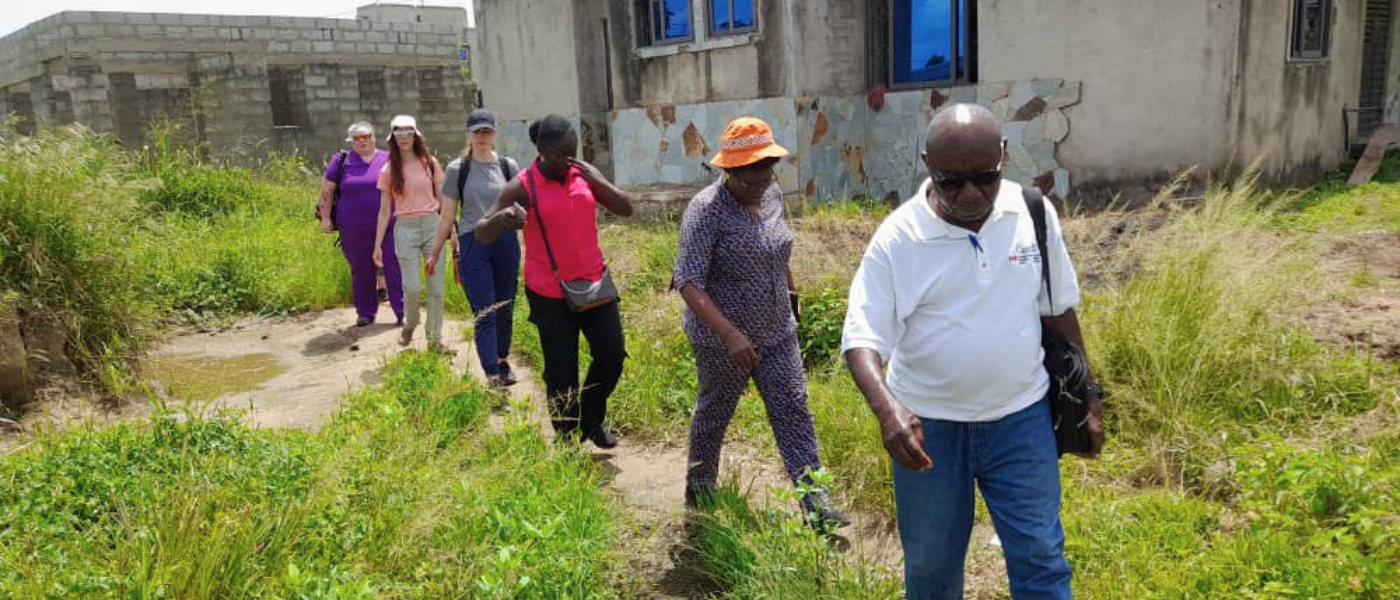 PHOTO: Joseph leads VETS volunteers and local partners to a poultry farm for hands-on biosecurity inspections (May 2024).
Nine Years, More Than 200 Communities
Since my first assignment in 2017, I have worked with VWB partners including SEND Ghana, the Ghana Poultry Network (GAPNET) and the Apex Body of Women in Poultry Value Chain (WIPVaC-Apex). Looking back across my records, I estimate that I have worked with more than 2,000 farmers in more than 200 communities over those nine years.
The numbers represent the reach of the work, but when I think about what I will remember, I do not think first about numbers. I think about people.
There are places I visited years ago that I can still picture clearly. Every place I have visited has left “a picture printed in my brain.” I remember the farmers and training sessions, but also the conversations, laughter and jokes we shared. I remember returning to communities and hearing people ask, “When is the doctor coming back?”
One of my most emotional experiences came after working with communities in northern Ghana. Local leaders told me that they wanted to install me as an honorary chief. I asked what I should bring back from Canada for the traditional process, because normally there would be an expectation to provide cash and cola or other customary gifts. They told me to come empty-handed. What I had already given the community through my knowledge and expertise, they said, was worth more than anything they wanted me to bring in return.
That day, I cried. To know that people valued what I had shared with them to that extent was overwhelming. It was never simply about delivering veterinary information. Relationships and trust had developed alongside the work.
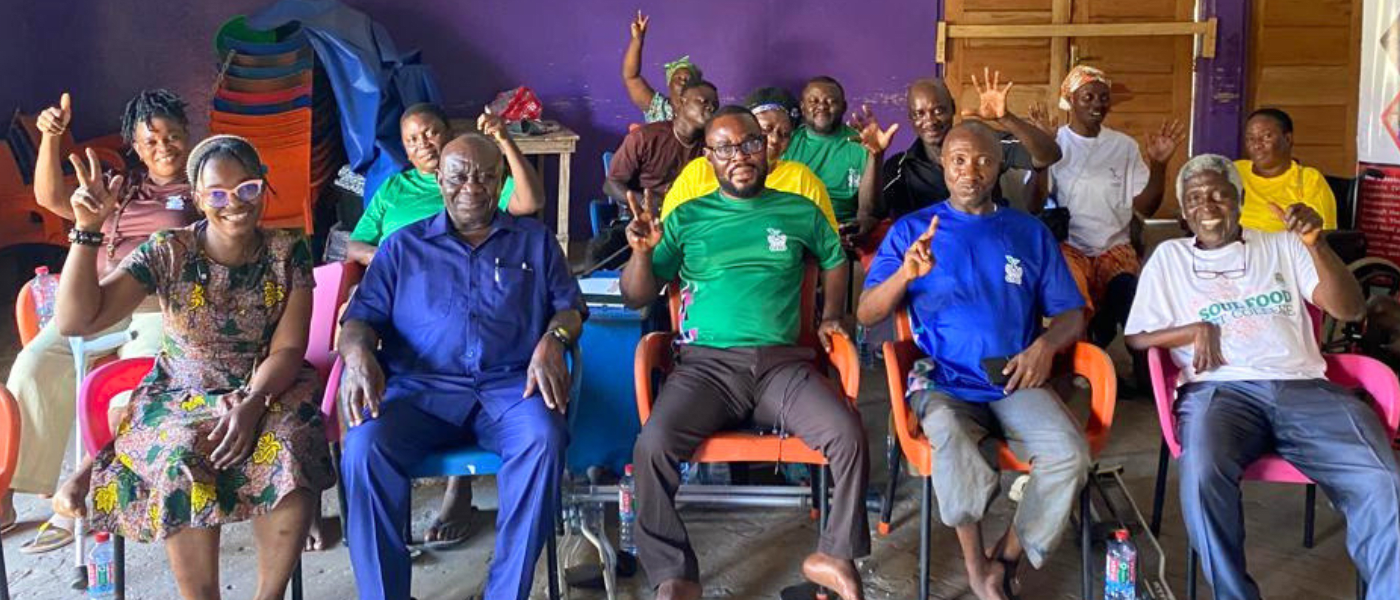 PHOTO: Joseph with members of the Tema Disability Group of AVARFA following a training session in Tema, Ghana (August 2026).
One Final VETS Placement
My current placement with WIPVaC-APEX began in January 2026 and has once again taken me into communities and onto farms to support women livestock and poultry farmers through training, farm inspections and practical guidance on One Health, animal welfare, productivity and biosecurity. Even after so many years, there are still things I want to understand better and ways I believe the work can improve.
But this placement is different. After nine years of volunteering in Ghana, it will be my final assignment through the VETS program.
After eight months away, I am looking forward to returning home to Canada. But I know what I will miss about Ghana: the people. I will miss standing in front of farmers and sharing knowledge with them, their friendliness and respect, and returning to communities where people know me and where we can laugh and joke together as well as work.
This may be my final VWB assignment, but I do not regard it as the end of my ability to contribute. I still have experience and knowledge to offer, and if another organization or project has a need for that expertise, I am always available.
The Measure that Matters
When I retired in 2016, I wondered where I could go next. I knew that the knowledge and experience I had accumulated over a lifetime in veterinary medicine could still be useful; I simply needed somewhere to put it. VWB gave me that opportunity.
Nine years later, I think about farmers who invited me onto their farms and trusted me enough to consider doing something differently. I think about women who used healthier livestock and poultry to strengthen their livelihoods and support their families, volunteers I had the opportunity to mentor, and communities that welcomed me back year after year until returning no longer felt like arriving among strangers.
What these nine years have taught me is that knowledge alone is not enough. It has to be shared in a way that respects the people receiving it, responds to the realities they face and gives them something they can actually use. Then you have to be willing to return, listen again and ask whether anything changed.
For me, that has always been the measure that matters.
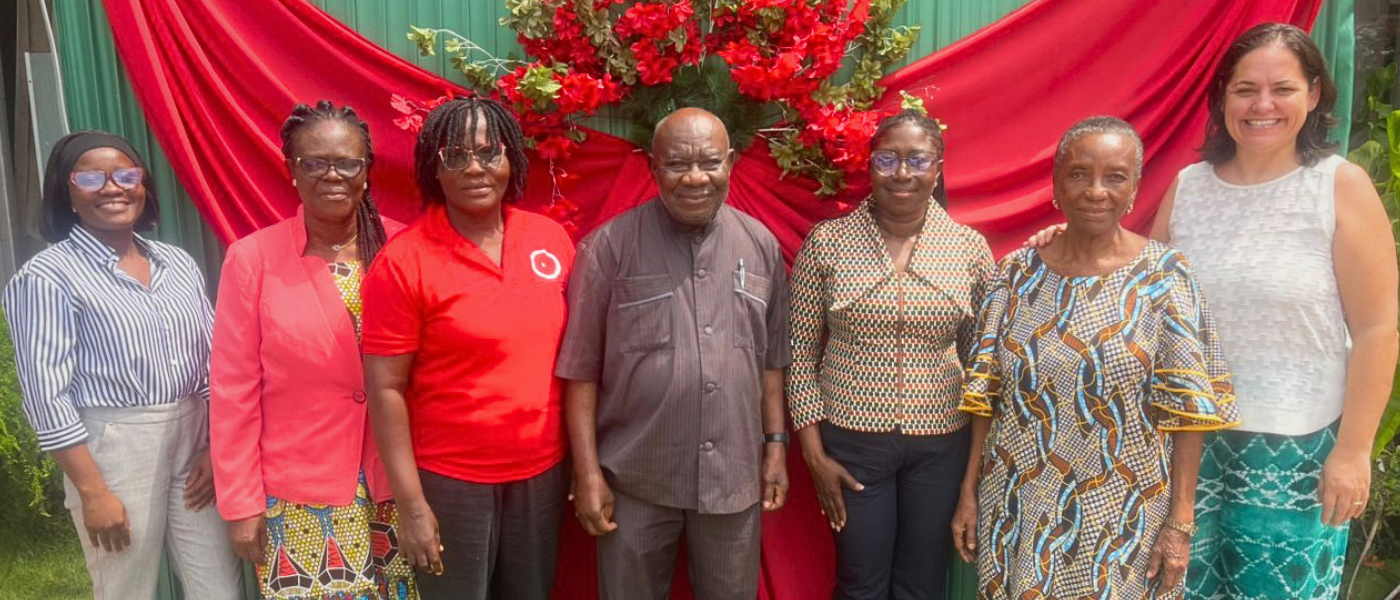 PHOTO: Joseph (centre) with WIPVaC-APEX representatives and VWB colleagues in Accra at the start of his final VETS placement (January 2026).
VETS is an 8-year initiative (2020-2028) to improve the economic and social well-being of marginalized people, particularly women and girls, in 6 countries across Africa and Asia. In collaboration with local partners, the program is implemented through 190 Canadian volunteers on international assignment and is generously funded by Global Affairs Canada. Learn more.