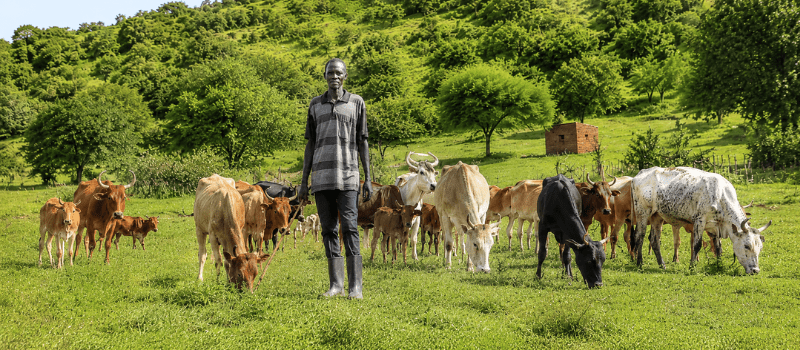
From Community Animal Health Workers to livestock keepers participating in the Passing-on-the-Gift model, communities across South Sudan are carrying forward the skills, knowledge, and systems strengthened through the 1-SHOP project. As the project concludes, we reflect on the lasting impacts of this community-led approach to resilience. For a deeper look at project activities and achievements, download the 1-SHOP Project Brief and Impact Infographic.
“I would rather lose sleep than let a sick animal die unattended.” For Suzan Ituari Benjamin, those are not just words—they are a reflection of how she serves her community.
In Nyong Payam, South Sudan, Suzan is often called upon when livestock become sick, injured, or struggle during birth. She is a trusted Community Animal Health Worker (CAHW), helping livestock keepers prevent disease, improve animal health, and protect the livelihoods their families depend upon.
Suzan estimates that she treats hundreds of animal sickness cases each month. A few years ago, however, she had neither the training nor the tools to do this work.
Nominated by her community, Suzan received training through VWB’s Strengthening One Health Systems for the Protection of Health and Livelihoods (1-SHOP) project. Through that training, she gained the skills, equipment, and confidence needed to support livestock keepers in her community.
Suzan's story is one example of a broader transformation that has taken place across Torit County over the past two years. From March 2024 to March 2026, VWB, with support from the Zoetis Foundation, partnered with communities across Eastern Equatoria State to strengthen animal health services, reduce the risks posed by zoonotic diseases and antimicrobial resistance (AMR), and improve livestock-based livelihoods.
Over the course of the project, 12,185 livestock keepers were reached, 47,730 animals were vaccinated, and community-led systems were established to support animal and human health long after the project ended.
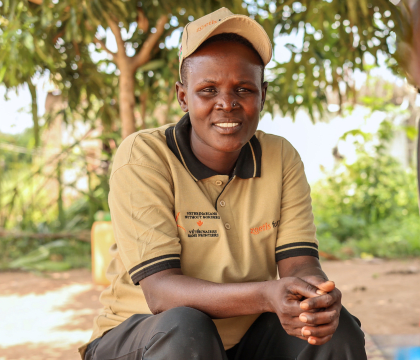 PHOTO: Suzan Ituari Benjamin, VWB-supported Community Animal Health Worker (CAHW).
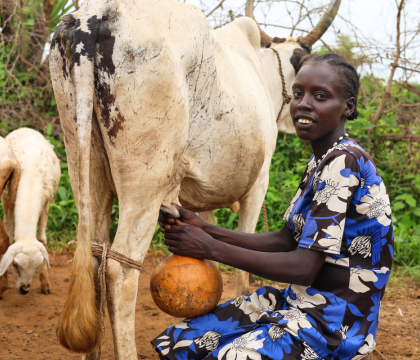 PHOTO: Livestock keeper milks her cow. Healthy animals support food security in South Sudan.
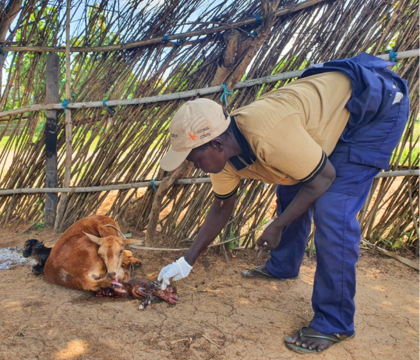 PHOTO: Suzan tends to a goat kidding during a community animal health visit in Torit County.
Building Resilience Through One Health
In South Sudan, livestock are far more than animals. They provide food, income, savings, transportation, and security. They help families weather economic hardship, pay school fees, and build more stable futures. When animals become sick, the effects can be felt throughout an entire household.
At the same time, some diseases can spread between animals and people. These zoonotic diseases create risks for both livelihoods and public health, particularly in areas where access to veterinary and healthcare services may be limited.
Recognizing these connections, 1-SHOP adopted a One Health approach grounded in the interconnectedness of animal, human, and environmental health. Rather than focusing on a single challenge, the project worked to strengthen the systems, knowledge, and services that help communities prevent and respond to health threats before they become crises.
Local Leaders, Lasting Impact
One of the project's most significant achievements was expanding access to animal health services through local leadership.
Twenty Community Animal Health Workers received training, mentorship, and equipment to improve livestock health services across Torit County. Working alongside government partners, they provided disease surveillance, vaccinations, treatment services, and livestock management education.
Suzan was one of those Community Animal Health Workers. Today, she is a trusted source of advice and support for livestock keepers in her community. Her work helps families identify health problems earlier, reduce livestock losses, and improve the wellbeing of their animals.
But Suzan's story is not unique.
Across Torit County, trained Community Animal Health Workers are helping bridge the gap between livestock keepers and veterinary services. By the end of the project, 91 percent of households reported receiving services from a Community Animal Health Worker—surpassing the project's target and demonstrating the growing reach of community-based veterinary care. For many families, this meant access to animal health support that previously did not exist within their communities.
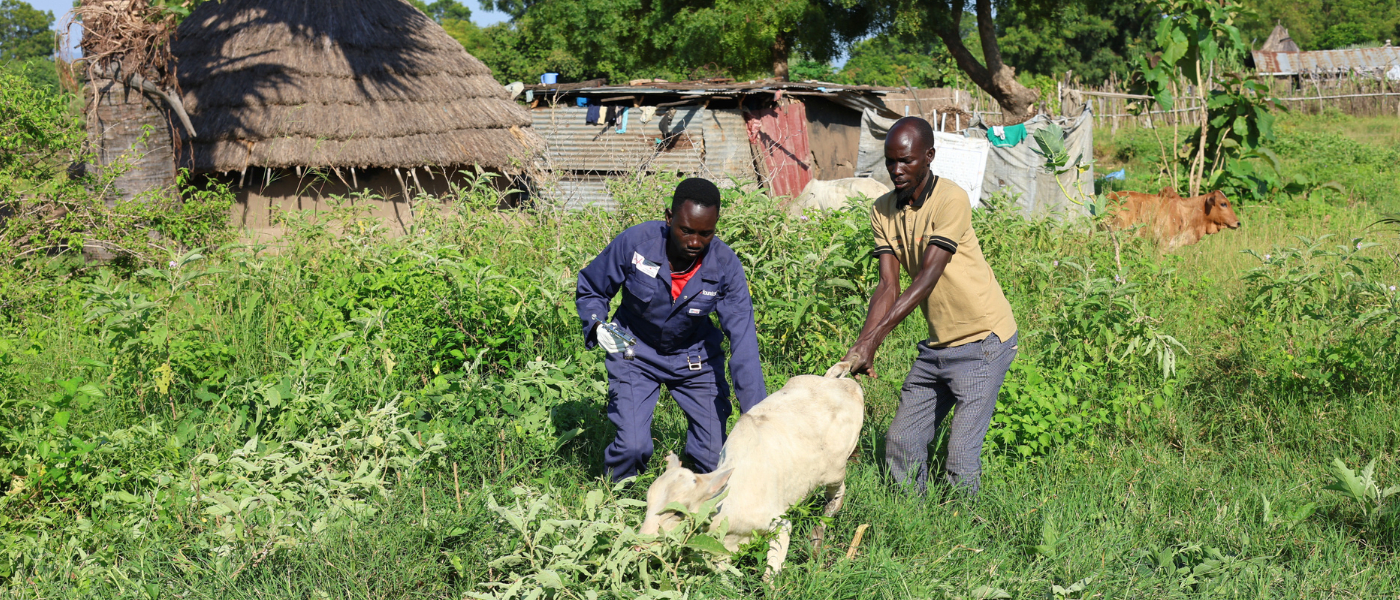 PHOTO: A Community Animal Health Worker trained through the 1-SHOP project works alongside a livestock keeper to vaccinate a cow in Torit County, South Sudan.
To strengthen these efforts further, the project established four One Health Teams composed of Community Animal Health Workers, healthcare workers, and government representatives. These teams were trained to identify health risks, share information, and coordinate responses to potential disease threats.
For perhaps the first time in many communities, animal health workers and human health professionals had a formal structure for working together around shared challenges. This strengthened local systems for disease prevention, detection, and response while helping reduce risks before they became larger outbreaks.
A Gift That Keeps Growing
For Christine Alonyo, owning goats once felt impossible. After participating in livestock management training through 1-SHOP, she was eager to put her new knowledge into practice. She gathered her savings and travelled to a livestock market hoping to purchase a goat of her own, but returned home disappointed. "All my savings could not afford me one goat," she recalled.
Then, through the project's Passing-on-the-Gift model, Christine received four goats from another participant who had previously benefited from the project. Like every recipient, she committed to passing on offspring to another family in her community. "Now that I have received four goats from a fellow woman, who am I not to work hard such that I could gift another less privileged person in my community?"
Christine's story illustrates one of the most important lessons of the project: resilience grows when communities invest in one another. The goal was never simply to distribute livestock. It was to create a community-led system that could continue generating opportunities long after project activities ended.
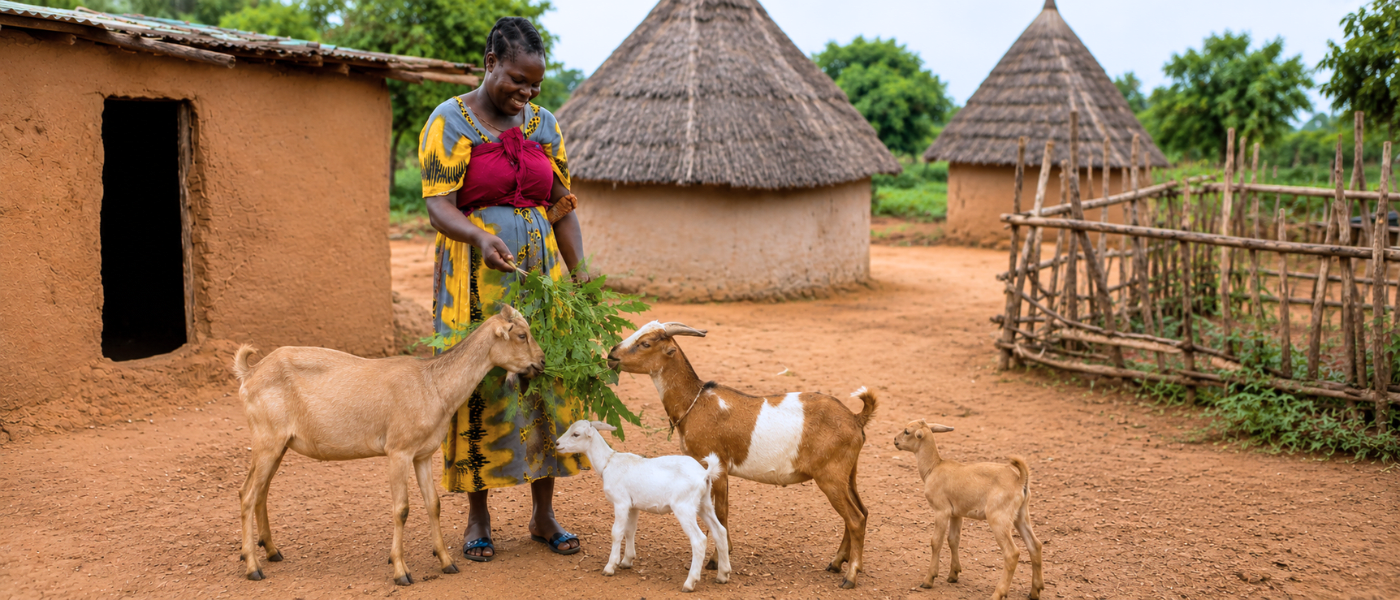 PHOTO: Christine Alonyo feeds her goats in Torit County. As her herd grew, she became part of a community-led system that helped other families access livestock.
Over the course of the project, ten Village Livestock Groups were established and 800 goats were distributed to 200 households, the majority of them women-led. Through the Passing-on-the-Gift model, those households later passed on 683 goat kids to 195 additional families.
The impact extended beyond livestock. Across participating communities, the Passing-on-the-Gift model encouraged neighbours to support one another, share knowledge, and invest in the success of future recipients. As goats were passed from one household to the next, so too were skills, confidence, and a sense of shared responsibility. The result was a growing network of livestock keepers working together to strengthen livelihoods and build resilience within their communities.
Women were central to this success. They represented 65.5 percent of livestock keepers reached through the project and played a leading role in adopting improved livestock management practices and sharing knowledge with others.
From Training to Transformation
While stronger veterinary services and improved livelihoods were important outcomes, the project's most significant achievement may have been the changes communities made themselves. Through awareness campaigns, community meetings, trainings, and practical demonstrations, more than 6,100 people learned about zoonotic diseases, antimicrobial resistance, food safety, hygiene, and livestock management.
An independent end-of-project evaluation found that 77 percent of households had adopted at least one One Health recommendation in their daily lives, significantly exceeding the project's target. Even more encouraging, 94 percent of livestock keepers reported adopting improved livestock management practices that reduce the risks associated with disease outbreaks, antimicrobial resistance, and other animal health threats. These changes included improvements in disease prevention, animal husbandry, hygiene practices, vaccination uptake, and treatment-seeking behaviours.
Taken together, these findings suggest that communities were not simply participating in project activities. They were changing practices in ways that strengthen both livelihoods and long-term resilience.
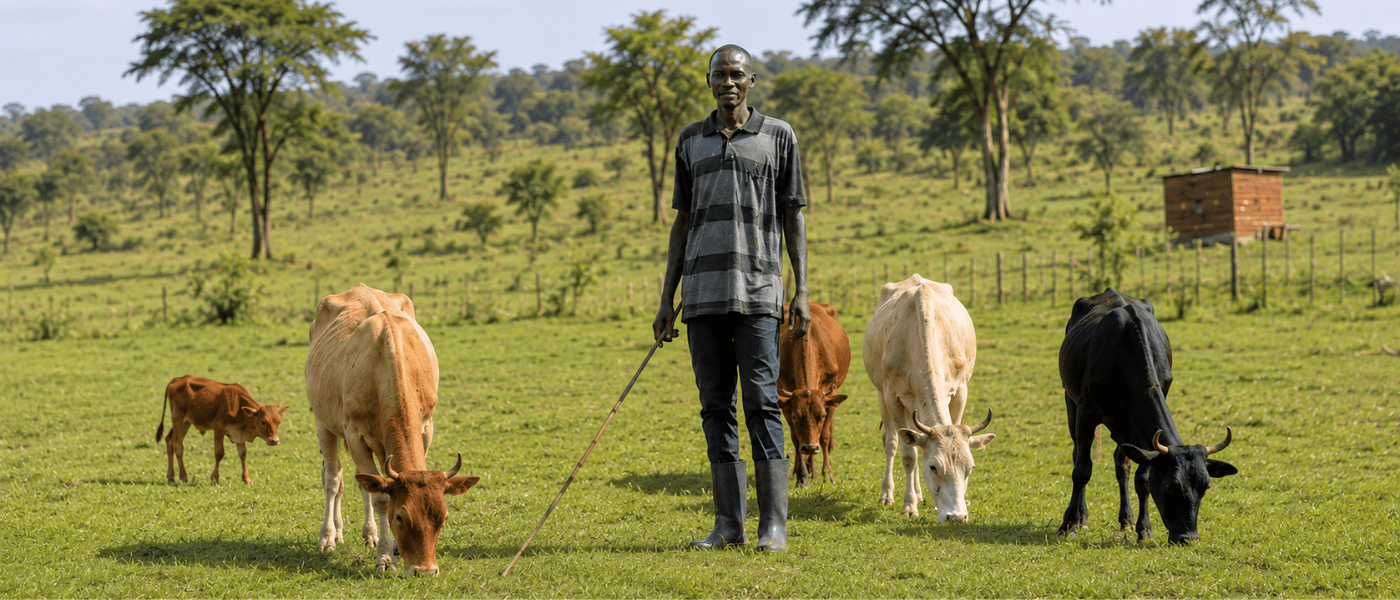 PHOTO: A livestock keeper oversees cattle and calves grazing near his community in Torit County, South Sudan.
The Work Continues
The true success of a project is not measured only by the activities completed or the number of people reached. It is measured by what remains afterward.
Today, Community Animal Health Workers continue providing veterinary services in their communities. One Health Teams remain active in supporting disease monitoring and awareness efforts. Village Livestock Groups continue implementing the Passing-on-the-Gift model. And Suzan continues answering calls from livestock keepers who need help.
The project may have officially ended, but the systems, skills, and relationships it helped build remain in place. Together, they are helping communities respond to animal disease, protect livelihoods, and strengthen the connections between animal, human, and environmental health.
For Suzan and Christine, that may be the most important outcome of all.
 When communities lead, lasting change becomes possible. Across South Sudan and around the world, VWB works alongside local partners, Community Animal Health Workers, and livestock keepers to strengthen animal health, protect livelihoods, and build resilience. Donate, volunteer, or subscribe to support community-led solutions and stay connected to our work.