#VETSVolunteerVoices brings you stories from the field shared by passionate VETS program volunteers. Meet Daniel MacIsaac, a Communications Advisor who spent six months in Cambodia (September 2025–March 2026) with our local partner, AVSF Cambodia, helping strengthen communications systems, build staff capacity, and support the organization in telling the stories behind its work.
Stepping into One Health
When people think about international development placements, communications may not be the first field that comes to mind. Veterinary care, agriculture, community health – those are often easier to picture. And before arriving in Cambodia, I might have thought the same thing.
From September 2025 to March 2026, I served as a Communications Advisor with Agronomes et Vétérinaires Sans Frontières (AVSF) Cambodia through the VETS program. Although I brought decades of experience in journalism and humanitarian communications, this was my first time working with an organization focused on agriculture and the One Health approach — recognizing the interconnectedness of animal health, human health, and the environment.
It was also my first time in Cambodia.
Like many volunteers, I arrived with expertise to share. But I quickly discovered that the most important part of the experience would be learning.
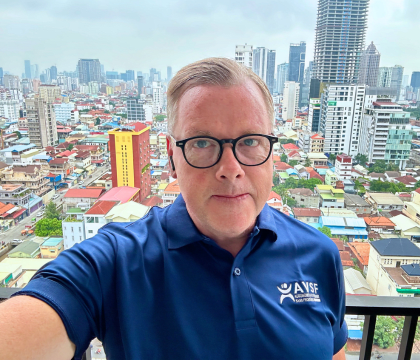 PHOTO: VETS Volunteer, Daniel MacIsaac in Phnom Penh.
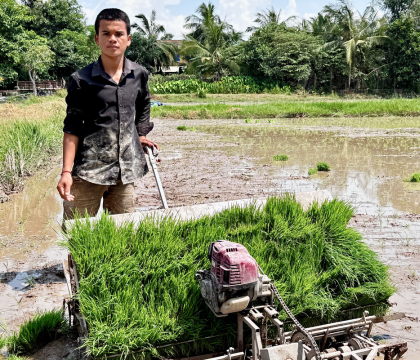 PHOTO: A young farmer in Prey Veng Province.
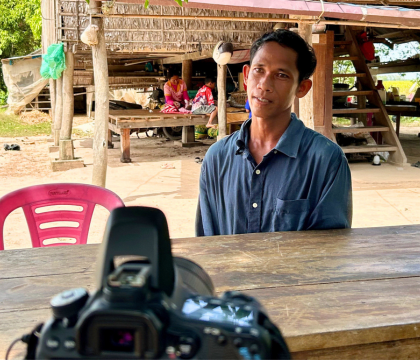 PHOTO: A rural farmer is interviewed by Daniel.
Learning Before Advising
AVSF Cambodia has been operating in the country since 1991 and will celebrate its 35th anniversary this year. Over those decades, the organization has developed deep expertise in areas ranging from animal health and zoonotic disease prevention to agroecology, farmer livelihoods, and agricultural cooperatives.
What AVSF Cambodia had never had before, however, was a dedicated communications advisor. That presented both an opportunity and a challenge.
Communications is often something organizations do alongside everything else. Staff members know they need photographs for an event. They know they should post updates on social media. They know donors and partners appreciate success stories and project visibility. But when resources are limited and programs are busy delivering results on the ground, communications can easily become reactive rather than strategic.
One of my first priorities was simply understanding the organization — its work, its people, and the communities it serves. That learning process took me beyond Phnom Penh and into rural Cambodia. Shortly after arriving, I was asked to support AVSF Cambodia's Youth & Smart Agriculture Project in Prey Veng Province. The project promoted environmentally sustainable rice-growing methods while creating opportunities for young farmers and agricultural entrepreneurs.
My assignment was to help produce a documentary-style video showcasing the project and the experiences of participating farmers. At first glance, it seemed like a straightforward communications task. In reality, it became one of the most valuable learning experiences of my placement.
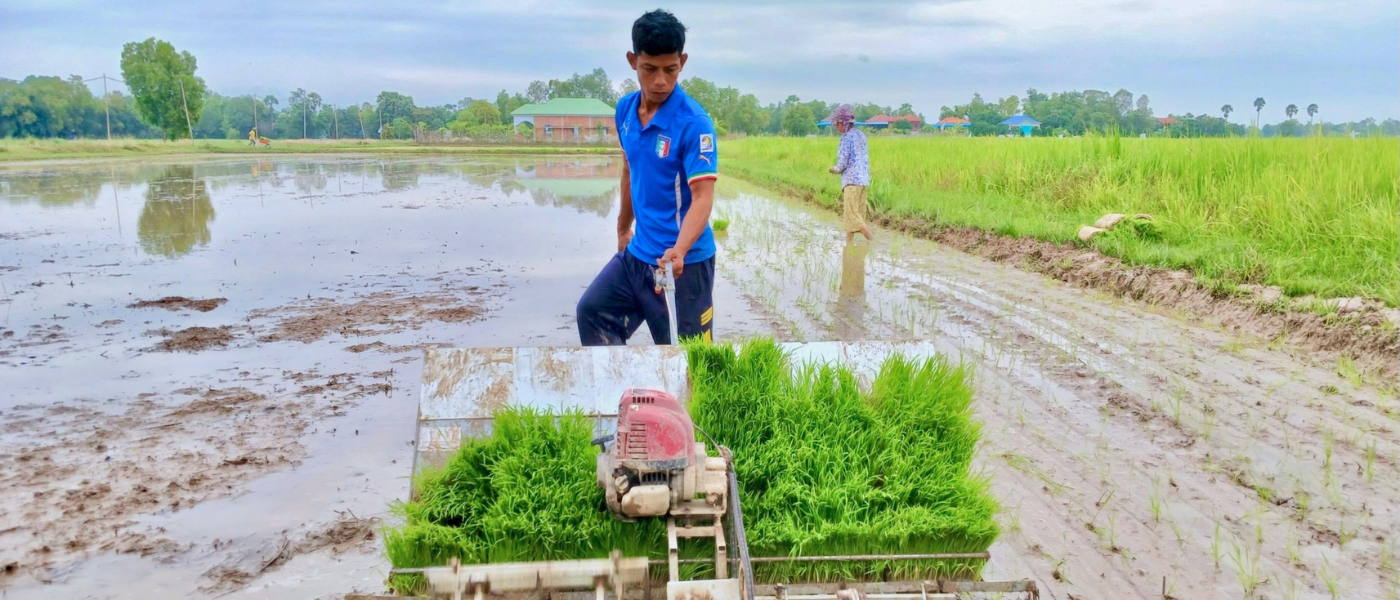 PHOTO: A rural farmer participant in AVSF Cambodia's Youth & Smart Agriculture Project in Prey Veng Province, Cambodia.
Creating the video required far more than filming interviews and editing footage. It meant spending time with project staff, visiting farming communities, listening to farmers describe their experiences, and understanding the broader challenges facing Cambodian agriculture. It also required collaboration.
Working alongside AVSF colleagues, we discussed everything from storytelling approaches and interview questions to filming locations, translation, editing software, and audience needs. Together, we transformed existing project photos and video clips into a longer story that could help share the project's impact with audiences in Cambodia and beyond. The final video was screened at the Cambodian Agricultural Forum and Exhibition (CAFE25), one of the country's largest agricultural events. Later, versions with English and French subtitles were shared through AVSF's international communications channels.
For me, however, the most meaningful outcome was not the finished product itself. It was everything I learned while creating it.
Communications as Capacity Building
One lesson that became clear during my placement is that communications is about much more than producing content. Good communications systems help organizations share knowledge, strengthen relationships, increase visibility, and demonstrate accountability. They help ensure that important work does not remain invisible. But communications capacity does not appear overnight. It requires people, processes, training, and planning.
As I became more familiar with AVSF Cambodia's operations, I began assessing opportunities to strengthen communications systems across the organization. Like many NGOs, AVSF already incorporated communications into its activities. Events featured banners and visibility materials. Staff documented projects and training sessions. Stories were being told. What was missing was a more systematic approach. That realization shaped much of my work during the remainder of the placement.
Alongside day-to-day communications support, I delivered training sessions for AVSF staff and partners on topics including photography, videography, video editing, and gender-responsive communications. These sessions were designed to be practical. Rather than focusing solely on technical skills, we explored how communications decisions influence whose voices are heard, whose experiences are represented, and how development work is understood by different audiences.
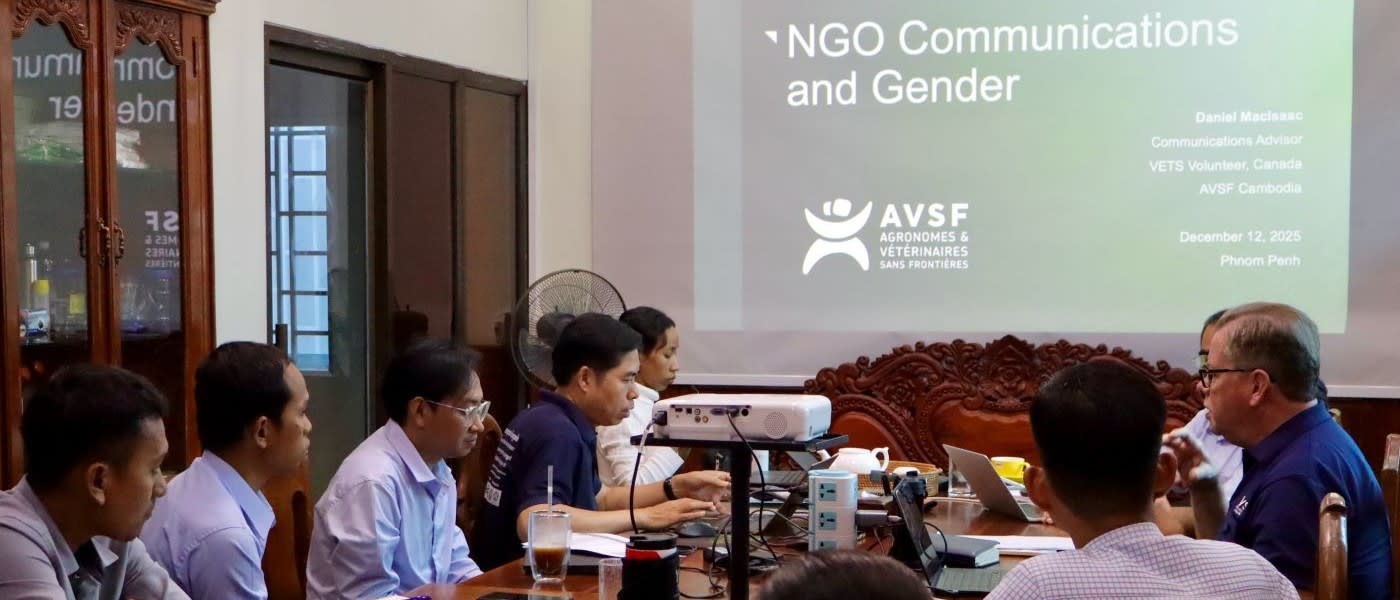 PHOTO: A communications and gender training session for AVSF staff led by VETS Volunteer, Daniel MacIsaac (right) in December 2025.
One particularly rewarding aspect of the placement was collaborating with VWB Gender Advisor Kavitha Misra while developing a training session on communications and gender. Drawing on her guidance and my own professional experience, I adapted the training to reflect both the realities of NGO communications and the goals of the VETS program. The conversations that emerged were thoughtful and encouraging.
In many ways, the training reinforced something I had already observed: AVSF Cambodia's staff were deeply committed to inclusion and gender equality. The goal was not to introduce entirely new concepts, but rather to strengthen existing practices and provide additional tools that staff could apply in their daily work.
Capacity building also extended beyond formal training sessions.
Throughout my placement, I worked closely with colleagues at AVSF headquarters in France as well as communications staff at Veterinarians Without Borders North America. These exchanges helped connect AVSF Cambodia to broader organizational resources, including communications templates, guidance documents, and strategic planning tools. The result was a collaborative process that extended well beyond my own role.
Building for the Future
One of the most significant projects I supported was the development of AVSF Cambodia's first formal communications strategy. Creating a strategy may not sound particularly exciting compared to filming in the field or visiting rural communities. Yet in many ways, it may prove to be the most enduring contribution of my placement.
The process encouraged staff to step back and ask bigger questions: Who are our priority audiences? What stories do we need to tell? How often should we communicate? What systems are needed to support consistent communications? How do we measure success?
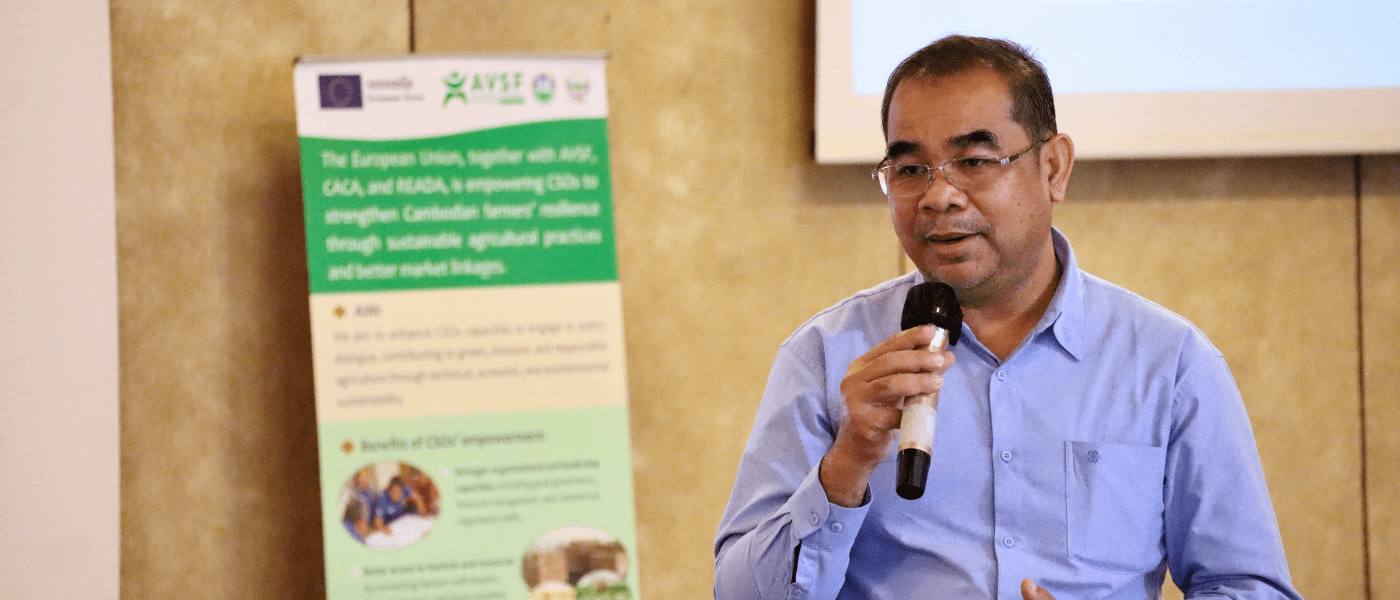 PHOTO: Sophoan Min, AVSF Cambodia Country Representative, worked with VETS volunteer Daniel MacIsaac to strengthen the organization's communications systems.
Working closely with AVSF Cambodia's leadership team, we developed a multi-year communications strategy alongside a detailed action plan designed to help guide implementation. Importantly, the strategy was never intended to become a document that sits on a shelf. It introduced practical actions, defined responsibilities, established timelines, and created a framework that staff can continue to adapt as the organization grows.
At the same time, we worked on other foundational tools, including updating AVSF Cambodia's organizational brochure and improving systems for managing photo and video archives. A designated computer was established to organize and store communications assets, helping ensure that valuable photographs, videos, and project materials remain accessible for future use.
These may seem like small changes individually. Together, however, they help create the infrastructure that supports stronger communications over the long term.
What I Learned
As volunteers, we often think about what we will contribute. What I appreciate most about my time in Cambodia is what I gained in return. I gained a deeper understanding of agricultural development and the One Health approach. I gained new perspectives from colleagues who have spent years working alongside farming communities. I gained an appreciation for Cambodia's resilience, hospitality, and complexity.
I also gained a renewed appreciation for the role communications can play in development work. Communications is sometimes viewed as something separate from programming. Yet during my placement, I saw how closely the two are connected. Strong communications helps organizations share knowledge. It helps partners learn from one another. It helps communities see themselves reflected in development efforts. And it helps ensure that valuable lessons are not lost. Most importantly, communications helps organizations tell their own stories.
Looking ahead, I am encouraged by the steps AVSF Cambodia has already taken to build on this momentum, including plans to recruit a dedicated communications specialist who can help lead future implementation of the strategy and continue strengthening the organization's communications capacity.
That is ultimately what sustainable capacity building looks like. It is not about a volunteer arriving with all the answers. It is about working together to create systems, skills, and relationships that continue long after the placement ends.
For me, that may be the most important lesson Cambodia had to teach.
VETS is an 8-year initiative (2020-2028) to improve the economic and social well-being of marginalized people, particularly women and girls, in 6 countries across Africa and Asia. In collaboration with local partners, the program is implemented through 190 Canadian volunteers on international assignment and is generously funded by Global Affairs Canada. Learn more.