#VETSVolunteerVoices brings you stories of our passionate VETS program volunteers from the field. Meet Donald Hilborn, an Agricultural Advisor from Ontario who recently completed his third VETS placement in Kenya (March–April 2026) with our local partner, Meru Dairy, supporting small-scale dairy farmers in building more sustainable and resilient feeding systems.
Returning to Kenya with a Familiar Purpose
When I returned to Kenya for my third VETS placement, there was already a sense of familiarity waiting for me. The landscapes, dairy farms, extension staff, and many of the challenges facing farmers were no longer entirely new. But what struck me most was that the conversations had evolved.
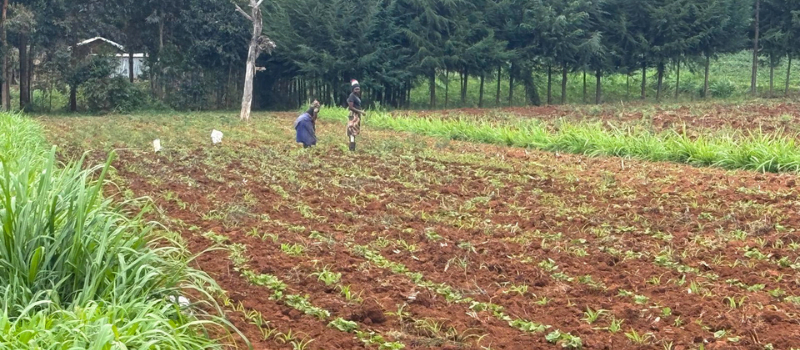
During previous placements, much of the focus had been on manure management, composting, and improving soil fertility. This time, the discussions naturally moved toward a related but equally important issue: how farmers could strengthen dairy feed systems while reducing dependence on expensive purchased supplements. For many smallholder dairy farmers in Kenya, feed costs are one of the biggest barriers to maintaining strong milk production. Land is limited, weather patterns are increasingly unpredictable, and commercial concentrates are often too expensive to rely on consistently. Farmers are constantly balancing productivity against affordability.
What I appreciated during this placement was that the solutions being explored weren’t highly technical or dependent on expensive imported inputs. Instead, they focused on practical improvements that farmers could realistically adopt using local conditions and resources. One crop in particular kept emerging in conversations with both farmers and extension staff: lucerne.
PHOTO:
PHOTO:
PHOTO:
A Practical Solution for Dairy Feed Challenges
Lucerne — commonly known as alfalfa in North America — is a high-protein forage crop that can play an important role in dairy nutrition. While many farmers in Meru rely heavily on Napier grass and maize silage as the foundation of their feeding systems, those crops alone may not always provide enough protein for strong and sustained milk production.
Introducing lucerne into the system offers farmers an opportunity to grow more of that protein directly on-farm rather than relying entirely on purchased feed concentrates. “Lucerne complements Napier grass and maize silage very well,” I explained during training sessions and farm visits. “Together, these crops create a much stronger balance of protein and energy in the ration.”
Lucerne also appealed to many farmers because cows respond well to it, the crop establishes quickly, and once established, it can continue producing for several years. As a deep-rooted crop, it is also somewhat drought resistant — an increasingly important advantage as farmers face less predictable rainfall patterns. With adequate moisture and staggered planting schedules, farmers may be able to maintain a more continuous supply of fresh forage throughout the year.
What made the topic especially interesting was that lucerne was still relatively new for many farmers in the area. Some had heard about it, while others were only beginning to experiment with small plantings. There was genuine curiosity about whether it could become a reliable part of local dairy systems.
At the same time, farmers and extension staff were realistic about the challenges. Lucerne requires good drainage, fertile soils, and a soil pH above 6 to establish successfully. Seed costs can also be high initially. But if the crop performs well over multiple years, it can become a worthwhile long-term investment that reduces ongoing feed purchases while helping maintain strong milk production.
Throughout the placement, I worked closely with Meru Dairy extension staff and fellow VETS volunteer Nacer Kafidi, whose focus was feed ration formulation for dairy cows. Our efforts naturally evolved into a collaborative approach during trainings and farm visits. I would often begin sessions by discussing the broader components necessary for good milk production — including crop selection, harvesting, storage, and soil management — before Nacer expanded on how different feeds could be blended economically within dairy rations. Working together allowed us to reinforce connected ideas without duplicating efforts.
That collaboration became one of the strongest aspects of the placement.
Learning from Farmers Already Leading Change
One farm that stood out during my placement belonged to Joyce and Jacob Kynyua in the Buuri Dairy Farm Society region. Like many dairy farmers in the area, the family traditionally relied on fresh Napier grass, maize silage, and purchased supplements to feed their cows. But Joyce had recently begun introducing lucerne into the farm’s feeding system as a homegrown protein source.
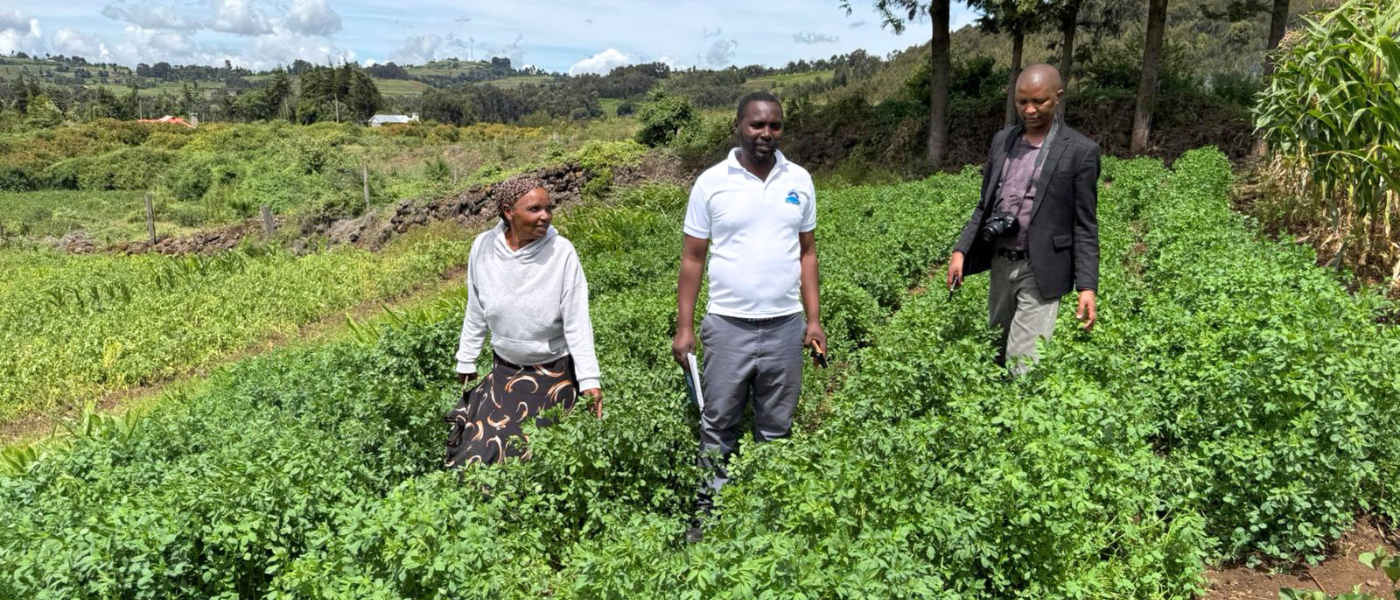 PHOTO: Caption here
When I visited the farm, Joyce walked me through two newly established lucerne plots planted several weeks apart. The staggered planting schedule would help create a more continuous supply of fresh forage throughout the season. What impressed me most was how thoughtful and practical the approach was.
The farm itself was very well maintained, with healthy-looking crops and fertile soils. More than anything, I was struck by how actively Joyce was looking for ways to progressively improve milk production and strengthen the farm over time. Rather than trying to completely transform their farming system overnight, the family was gradually integrating lucerne into practices they already understood well. We discussed harvesting intervals, crop management, and how stored maize silage could help support feed availability during drought periods when fresh forage becomes more difficult to maintain.
The visit also opened broader conversations about the realities farmers face when adopting new crops. Lucerne can offer major benefits, but it also requires the right conditions to thrive. During discussions with farmers and extension staff, I explained that successful lucerne production depends heavily on soil fertility, drainage, and proper soil pH. Some farmers had experienced challenges establishing lucerne successfully and were unsure why. Part of my role became helping them better assess soil conditions and understand how environmental factors influence crop performance.
Those conversations were important because they moved beyond simply promoting a new forage crop. Instead, they helped farmers think more holistically about the relationship between soil health, crop management, livestock nutrition, and long-term productivity.
Building More Resilient Farming Systems
One of the reasons I find this kind of work rewarding is that sustainable farming improvements are rarely about one single change. Progress usually happens when different parts of the farm system begin working together more effectively. Lucerne is a good example of that.
Beyond serving as a protein source for dairy cows, lucerne can also contribute to healthier soils. When properly inoculated at planting, it helps fix nitrogen from the atmosphere and make it available to the crop, reducing fertilizer requirements. Over time, it can also improve soil structure and benefit future crops grown in rotation. Combined with effective manure management practices — something I focused heavily on during previous placements — these approaches help create a more circular and sustainable system overall. “The crops support the cows, and the cows support the crops,” I often explained during discussions with farmers.
That idea resonated strongly because many farmers are already thinking carefully about how to maximize every resource available on their farms. Purchased fertilizer and feed supplements are expensive. Farmers want practical ways to lower costs while maintaining productivity and protecting the long-term health of their land.
In many ways, the placement reinforced that sustainability is not a separate concept from livelihoods. For smallholder farmers, the two are deeply connected.
Why Returning Matters
One of the most valuable aspects of participating in multiple VETS placements has been the opportunity to build continuity over time. When you return to the same region, you begin to better understand local farming realities, environmental pressures, and the practical limitations farmers are navigating every day. You also start building stronger relationships with extension staff and farming communities, which changes the nature of the conversations. Instead of arriving only to introduce ideas, you begin building on earlier discussions and experiences together.
That continuity also creates space for mutual learning. While I was sharing technical knowledge from my background in agricultural engineering and dairy systems, I was also learning from farmers themselves — especially how they adapt practices creatively within limited resources and changing climate conditions.
Throughout the placement, I was consistently impressed by how engaged farmers were during training sessions and farm visits. Many asked detailed questions about forage systems, soil conditions, and feed balancing. More than half of the training participants were women, and their participation and curiosity stood out strongly during discussions.
For me, that willingness to learn and experiment is one of the reasons I continue returning as a VETS volunteer.
Looking Ahead
This placement reinforced something I’ve come to appreciate more deeply with each volunteer experience: sustainable agriculture is built through steady progress, practical adaptation, and long-term knowledge sharing. The challenges facing smallholder dairy farmers are real — rising costs, climate variability, feed shortages, and soil pressures all continue to affect productivity and livelihoods. But farmers are also constantly innovating, testing new approaches, and building solutions that fit their local realities.
Programs like VETS help create opportunities for those conversations and exchanges to happen.
For me, there is something deeply rewarding about working alongside farmers and extension staff who are committed to strengthening their systems over time. Even relatively small improvements — a better forage crop, improved soil management, more balanced feed systems — can contribute to healthier animals, stronger milk production, and greater resilience for farming families.
And after three placements in Kenya, that ongoing process of practical, community-driven change is exactly what keeps bringing me back.
VETS is an 8-year initiative (2020-2028) to improve the economic and social well-being of marginalized people, particularly women and girls, in 6 countries across Africa and Asia. In collaboration with local partners, the program is implemented through 190 Canadian volunteers on international assignment and is generously funded by Global Affairs Canada. Learn more.