#VETSVolunteerVoices brings you stories of our passionate VETS program volunteers from the field. Meet Hiya Goyal, a Communications Advisor who spent five months in Laos (November 2025–March 2026) with our local partner, Health Poverty Action, strengthening communications and knowledge sharing while exploring how listening and storytelling can bridge gaps between policy, research, and community experience.
A Passion for Keeping People Informed
It was during my time as an undergraduate researcher at McMaster University that I first came to realize there was a considerable disconnect between the research community and the communities being researched. While academic institutions produced high-level dissertations and circulated policy recommendations intended to improve outcomes for vulnerable populations, I noticed that these same populations were often absent from the discussion table—reduced instead to a data point on a graph or a one-off quotation in the conclusion of a peer-reviewed paper.
From then on, I became committed to making knowledge more accessible by bridging the gaps between knowledge producers, policymakers, and the communities they aim to serve.
When I had the opportunity to work as a Communications Advisor for Health Poverty Action (HPA) in Laos through the Veterinarians Without Borders (VWB) VETS program, I wanted to build on this interest by strengthening how HPA communicated its work to improve health outcomes for Lao communities.
Over the course of my placement, my work focused on revising the organization’s existing communications strategies and integrating new processes. I supported improvements in how HPA leveraged digital platforms to share information both internally and with government and community stakeholders. This included conducting communications capacity-building workshops with staff, strengthening the organization’s brand identity, and increasing engagement with stakeholders on social media.
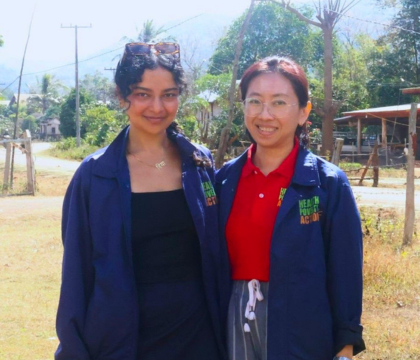 PHOTO: Hiya (L) and her HPA Supervisor, Vannapha.
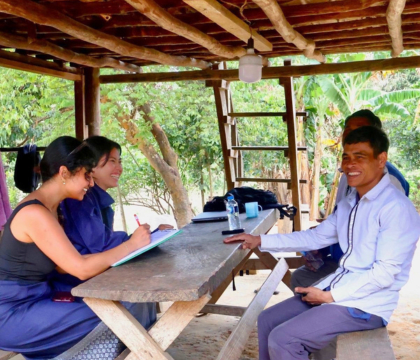 PHOTO: Hiya (L) conducting narrative interviews.
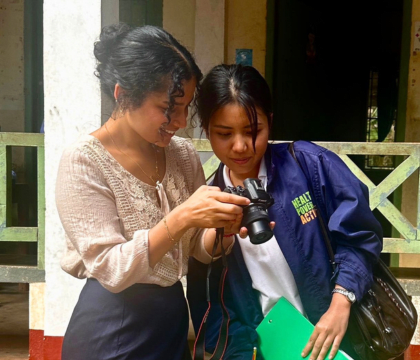 PHOTO: Hiya (L) sharing field photography tips.
The Learning Curve of Cross-Cultural Exchange
The first workshop that I led with HPA’s national staff taught me valuable lessons about cross-cultural communication. One of the most important shifts for me was recognizing that my role was not simply to create brand-aligned graphics or capture moments in the field, but to ensure that the information I was helping to shape was accessible and grounded in local knowledge systems.
This perspective informed the social media storytelling strategy I developed, which aimed to create narratives that could resonate with both local audiences and international stakeholders. The approach emphasized showcasing the impact of HPA’s partnerships with organizations such as GAVI, WHO, and UNICEF, while demonstrating how these collaborations supported vulnerable Lao communities.
In doing so, HPA was not only sharing updates, but also building a digital archive of its work—one that could keep stakeholders informed and engaged, while illustrating how their support contributed to meaningful progress alongside HPA and its partner organizations.
Comms in the Field: A Bottom-Up Approach
Joining HPA staff on a field mission to Seponh District in Savannakhet Province was an eye-opening experience. It offered a deeper understanding of how gaps in health policy affect rural communities and where organizations like HPA play a critical role in improving health outcomes.
With the support of a local translator, I conducted narrative interviews with health centre staff and village members to better understand their experiences navigating rural health systems. Through these conversations, I gained valuable insight into why government-run health programs can become bottlenecked in rural settings, and where HPA could adapt its approaches to better meet local needs.
After returning to Vientiane, I created an accessible digital hub of the photos and interview transcripts we had collected. This resource allowed HPA staff to draw on real field experiences when developing public-facing materials, and to continue building on this content through future initiatives.
Laos Outside the Office
Whenever anyone asks me about Laos, I describe it as an underrated, not-so-hidden gem of Southeast Asia. Guided by Buddhist and local Indigenous principles, Lao communities place great value on connection, care, and collective well-being.
Because of this, it was a privilege to experience the country both as a resident and a visitor. My days were spent at the HPA office, surrounded by colleagues who were eager to share their knowledge and culture. My evenings were often spent eating som tam and taking sunset walks along the Mekong River, or exploring the city’s vibrant night markets.
I formed meaningful friendships during my time there—with my landlady, Dalie, and my colleague Nao, who I worked with in the field and later shared late-night meals with after visiting Pha That Luang. I also remember how touched I was on my first day in Vientiane, when my in-country coordinator, Phet, gifted me a traditional sinh from her hometown of Luang Prabang, which I wore during my field visit to Seponh.
These moments—both personal and professional—shaped my experience in ways that extend far beyond the scope of my role.
Exercising Good Governance in International Development
My time with HPA Laos taught me a great deal about providing support within unfamiliar organizational and cultural contexts. It reinforced that strategic communications begins—and ultimately depends—on listening. In order to engage others meaningfully, we must first understand the perspectives and realities of the communities we aim to serve.
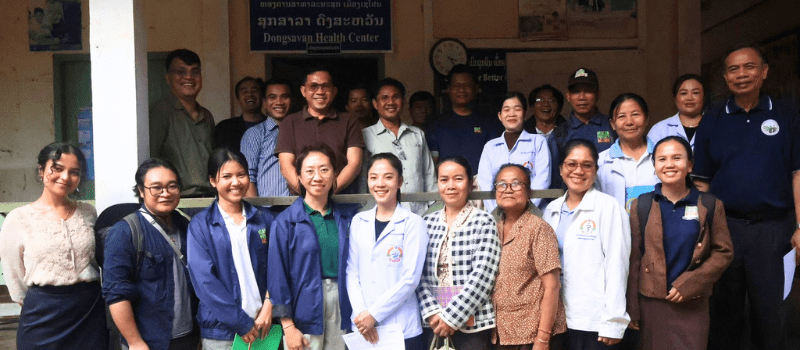
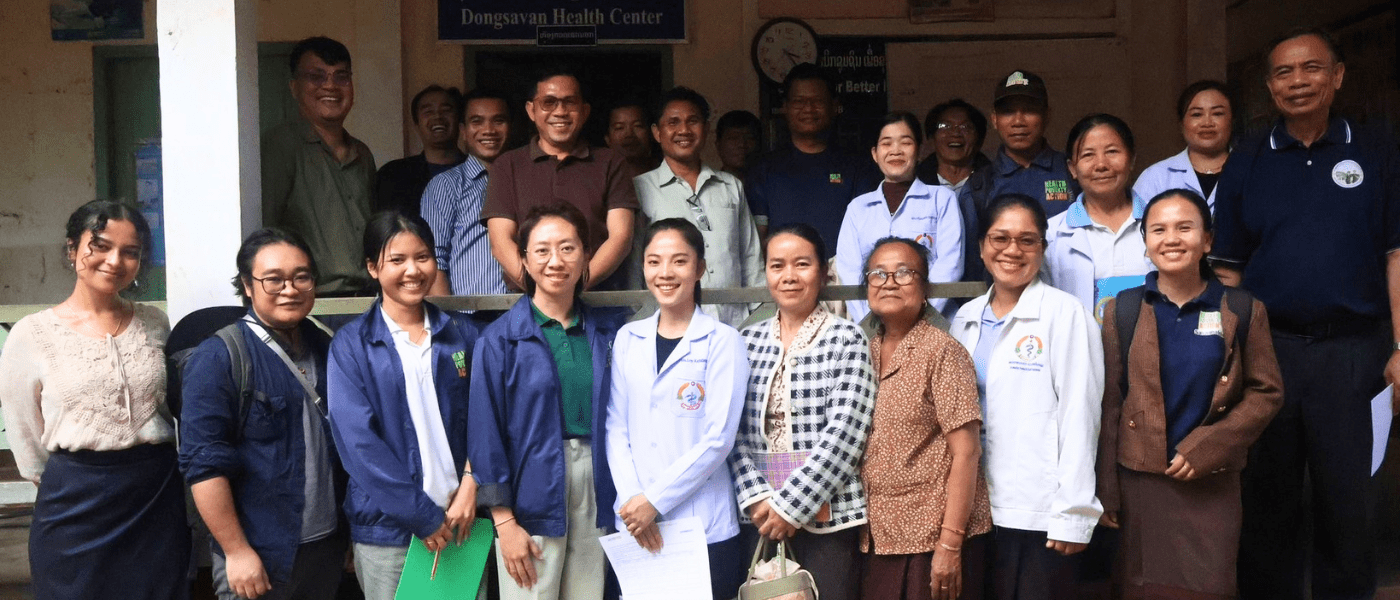 PHOTO: Hiya (left) with staff from Dongsavan Health Centre in Seponh following a conference on improving health outcomes for surrounding villages.
Working across areas such as malaria prevention, maternal health, youth vaccination, and health education also deepened my understanding of how cultural nuance shapes both program impact and policy development. As development practitioners, it is our responsibility to ensure that our work centres the communities we support.
Finally, I learned that the most essential part of the storytelling process is the storytellers themselves—the individuals and communities whose voices shape how knowledge is understood, shared, and acted upon.
VETS is an 8-year initiative (2020-2028) to improve the economic and social well-being of marginalized people, particularly women and girls, in 6 countries across Africa and Asia. In collaboration with local partners, the program is implemented through 190 Canadian volunteers on international assignment and is generously funded by Global Affairs Canada. Learn more.