In many of the communities Veterinarians Without Borders works alongside, animals are part of everyday life. They live near people, sharing homes, spaces, and environments. Some are companions. Some play protective roles. Others move freely through communities but remain connected to the people around them.
Despite these different roles, they often face the same challenge: veterinary care is not always accessible when it is needed.
When care is not easily accessible
This is not necessarily a question of whether animals are valued or cared for. In many cases, they are deeply important to the households and communities they are part of. The challenge is more practical. Care is not always nearby. It may require long travel, coordination, or resources that are not readily available. In some contexts, systems have been disrupted entirely.
The result is that when an animal becomes sick or injured, the outcome can depend less on the condition itself, and more on whether care can be reached in time.
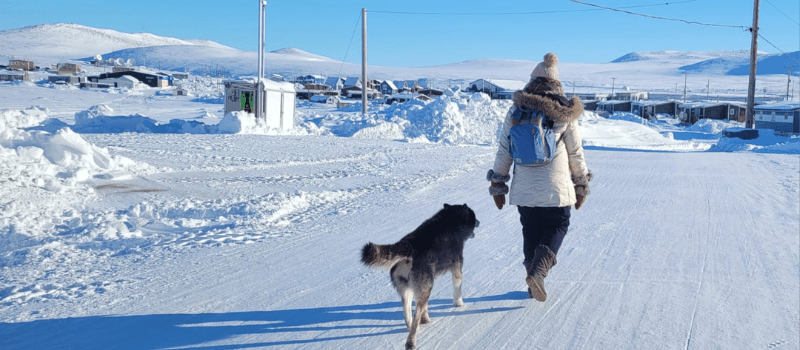
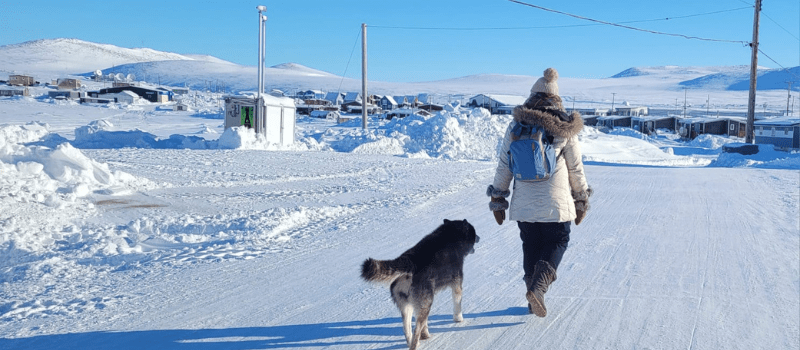
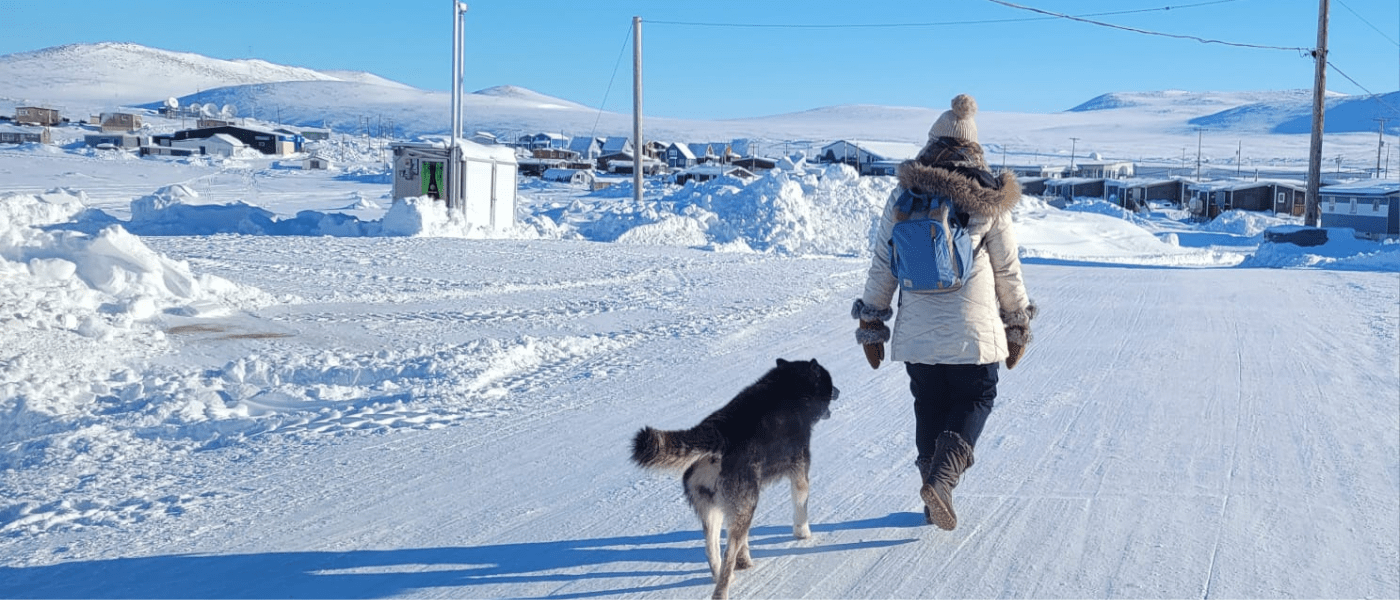 PHOTO: VWB's Northern Canada Program Clinic Officer walks through Qikquitarjuaq, Nunavut toward a VWB mobile veterinary clinic, accompanied by a local sled dog.
Different contexts, shared challenge
In Northern communities, distance is often the primary barrier. Veterinary teams travel into communities to provide care directly, reaching animals who would otherwise go without it. These visits are not only about treatment but about ensuring a baseline of preventive care that is otherwise difficult to access.
In Ukraine, access to veterinary services has been affected by ongoing conflict. Care is still being delivered, often through local partners, but the conditions under which it is provided are less predictable. In urgent situations, timing can be uncertain.
In parts of Ghana and Kenya, access often depends on whether a veterinary professional can be reached at all. This can involve travel over long distances or coordination to bring care into the community. Even routine treatment may require significant effort to arrange.
These contexts are very different, but the underlying issue is consistent.
In Fort McPherson, a sled dog named Jasper had never seen a veterinarian before a VWB team arrived in his community. Without access to routine care, even minor health issues can go unnoticed or untreated over time. When veterinary teams were able to visit, they provided vaccinations and basic treatment for Jasper and the rest of his team — care that had not previously been within reach.
In Ukraine, a dog named Sparrow was found injured in a conflict zone, unable to move. He remained there for days before help could reach him. By the time he was brought to a clinic, his injuries required surgery and ongoing care. His recovery was possible, but only because care was eventually able to reach him in time.
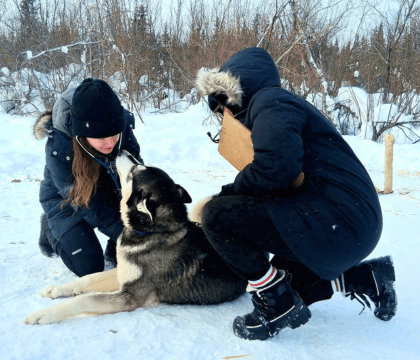 PHOTO: Jasper tended to by a VWB team in Fort McPherson.
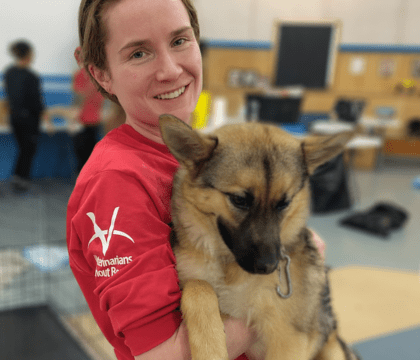 PHOTO: VWB volunteer, Dr. Regan McLeod at a NAHI clinic.
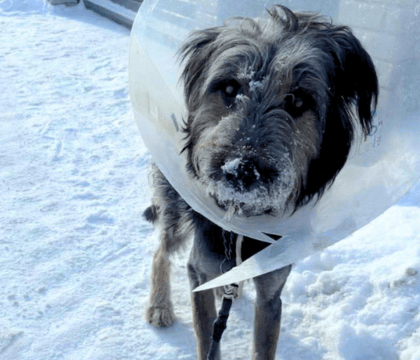 PHOTO: Sparrow recovering after surgery in Ukraine.
What changes when care is available
When care is available, the shift is often immediate. Animals can be treated earlier, before conditions worsen. Preventive measures, such as vaccination, can be delivered more consistently. Over time, this contributes to healthier animal populations and more stable community environments.
Just as importantly, it changes what people can rely on when something goes wrong. When care is within reach, there is a degree of certainty — an understanding that when something happens, there is somewhere to turn.
Access in practice
Access to veterinary care is often understood in terms of treatment, but it is equally about timing and proximity. It is about whether care can reach an animal at the moment it is needed, rather than after a condition has progressed.
Across the regions where VWB works, this remains a shared priority: ensuring that veterinary care is not only available in principle, but accessible in practice.
As part of our Spring Match campaign, you can help expand access to veterinary care. For a limited time, every gift is matched to reach more animals and communities where care is not yet within reach: 👉 Match your gift now
 PHOTO: VWB's Veterinary Specialist, Dr. Michelle Tuma, delivers vaccinations and wellness checks at a VWB mobile clinic in Gjoa Haven, Nunavut.