
This blog was written by Tanja Kisslinger, Director of Communications at VWB, in reflection of a trip to Senegal in October 2025 to document our Community One Health Empowerment in Rwanda and Senegal (COHERS) program. Photos by Jess Holing for VWB.
A life shaped by responsibility
Before the sun climbs too high, Khadia Diallo is already moving. She tends the fire where lunch will be prepared, checks on her children as they drift through the compound, and turns her attention to the animals waiting nearby. Cows shift in the shade. Goats wander between homes. Chickens scratch at the ground. The compound itself is alive — a shared space of joined homes where Khadia lives with her husband Assane, their four sons, Assane’s parents, his brothers and their families. Khadia’s own parents live just a short walk away.
This is not unusual. This is daily life in Thiangué village, in southeastern Senegal. It is also where Khadia’s work as a Community Animal Health Worker (CAHW) begins. “I am always watching,” she says. “The animals, the children, the home. You notice when something changes.”
Her responsibilities are many. Caring for the household. Feeding and monitoring animals. Supporting children and elders. And beyond the compound, responding when neighbours call — when an animal is injured, when illness appears, when advice is needed. “I have many duties,” Khadia says calmly. “Sometimes it is difficult to balance everything. But this work matters to me.”
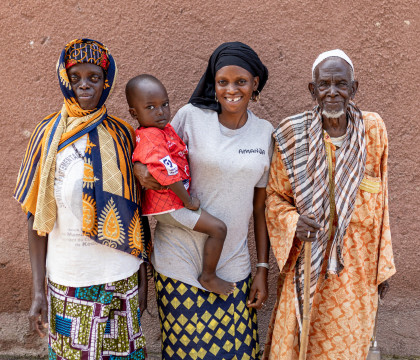 PHOTO: Khadia, her parents, and youngest son.
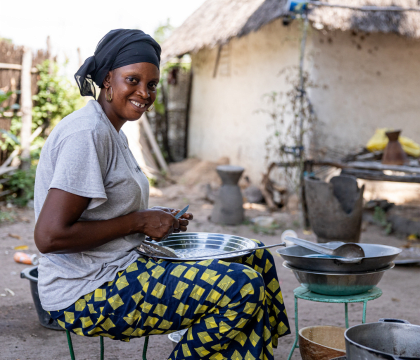 PHOTO: Khadia making lunch for her extended family.
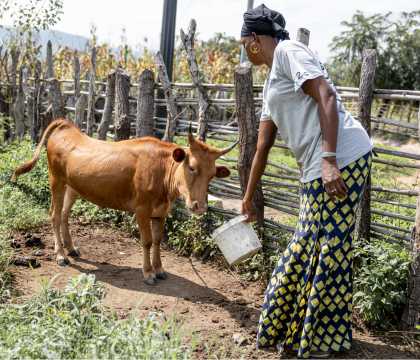 PHOTO: Khadia tending to the family's livestock.
Animals, livelihoods, and everyday prevention
Like most families in Thiangué, Khadia and Assane keep livestock primarily for household use. Their cows, goats, sheep, and chickens provide food security first; if school supplies are needed, a goat may be sold. A small sweet potato garden supplements what the animals provide. Here, animal health is inseparable from family wellbeing. “When an animal is sick,” Khadia explains, “it is not only the animal. It affects food. It affects money. It affects the whole family.”
As she feeds the cows and releases the sheep to graze, one small sheep is held back. It has persistent diarrhea, and Khadia wants to observe whether grazing worsens the condition. She explains her reasoning carefully — this animal will be monitored before any further decision is made. “If you wait too long,” she says, “the problem becomes bigger. Sometimes it is already too late.”
These choices are not lessons from a classroom. They are acts of prevention shaped by years of living closely with animals — noticing patterns, acting early, and understanding what delay can cost.
Becoming a Community Animal Health Worker
Khadia’s work as a Community Animal Health Worker did not begin with a uniform or a title. Long before she received formal training, she was already caring for animals as part of her daily responsibilities — like most women in her village.
Two years ago, she was formally trained as a CAHW through AFRICAM, which supports the development of community-based animal health workers across the region. “When cattle are injured or sick, people come to me,” she says. “I examine them. I try to understand the problem.” If she is unsure, she contacts a veterinarian or helps connect the owner with professional care. She describes this responsibility without drama — as something that simply needed doing.
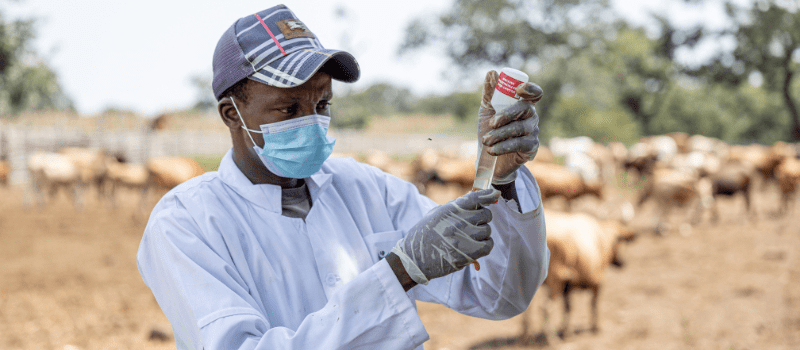
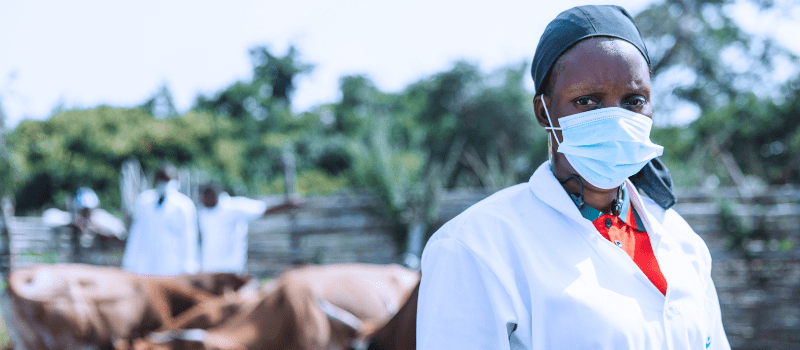
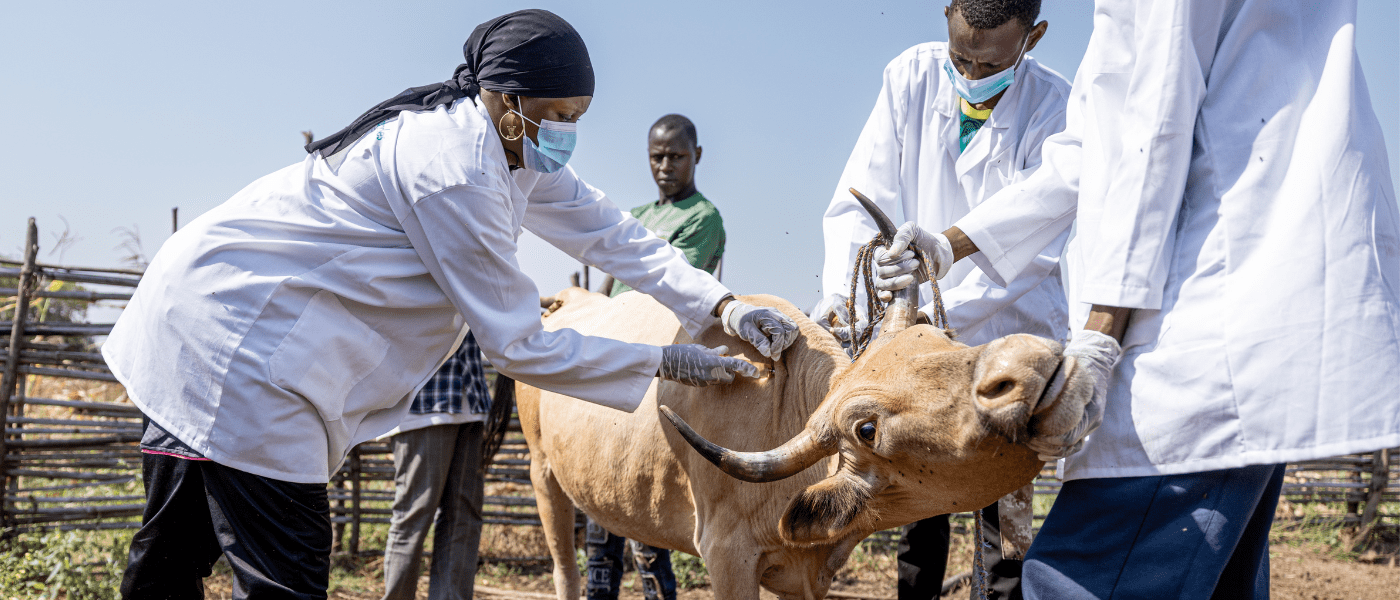 PHOTO: Khadia Diallo vaccinates cattle alongside fellow Community Animal Health Workers during a mass vaccination campaign in Dindefello municipality.
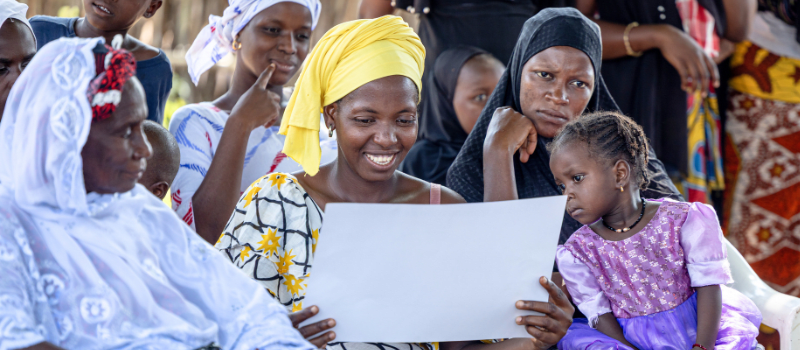
More recently, COHERS further strengthened her role and expertise through refresher training, veterinary kits, and integration into the local One Health Team (OHT). As part of this team, Khadia participates in mass vaccination campaigns, assists with animal health consultations, and helps lead community sensitization events — standing before neighbours to explain disease risks, prevention strategies, and why early action matters. “There are things people do not always want to hear,” she says with a small smile. “But when they know you, when they trust you, they listen.”
In Dindefello municipality, there are currently 15 CAHWs. Only four of them, including Khadia, are women — a shift that remains gradual, but essential.
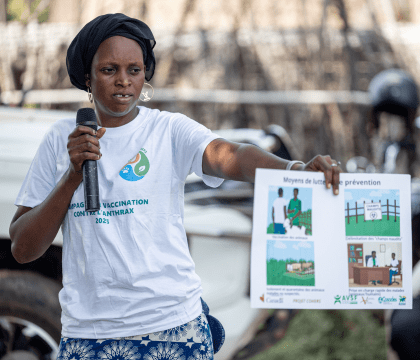 PHOTO: Khadia leading a community awareness event.
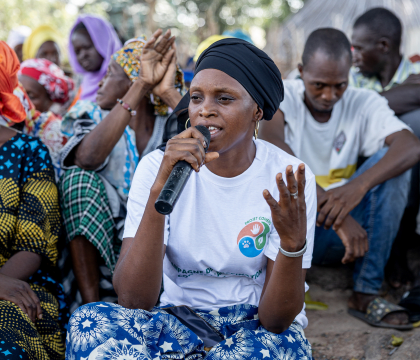 PHOTO: Khadia engaging with peers as an OHT member.
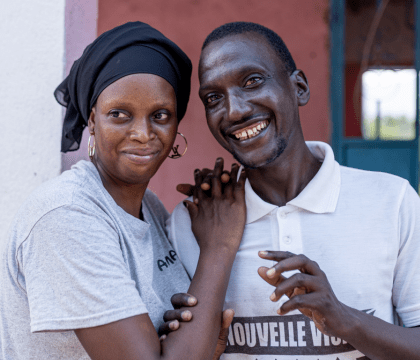 PHOTO: Khadia and her husband Assane.
Support that makes leadership possible
Khadia is clear that her ability to do this work depends on support at home — particularly from her husband, Assane. “He supports me,” she says simply. “That is what makes it possible.”
Assane speaks openly about this support. Sitting with other men in the compound, he talks confidently about his wife’s role. “I am proud of her work,” he says. “If she needs to go somewhere to help, I take her by motorbike so she is not late.” His support is practical and visible — ensuring she can attend trainings, respond quickly when called, and move beyond the household when her work requires it.
Assane’s pride is shaped by his own history in health. Before being elected to the Municipal Council in 2022, he worked for years as a Community Health Agent and served as Health Secretary for the municipality. Today, he is Head of the Aid and Health Committee in the Mayor’s office. “For me,” he says, “political roles mean nothing if they do not ensure public health.”
In a context where women’s mobility and leadership can be constrained by social expectations, men like Assane play a quiet but powerful role. By publicly supporting women CAHWs, they send a message — to other men, to leaders, and to children watching — about whose knowledge matters.
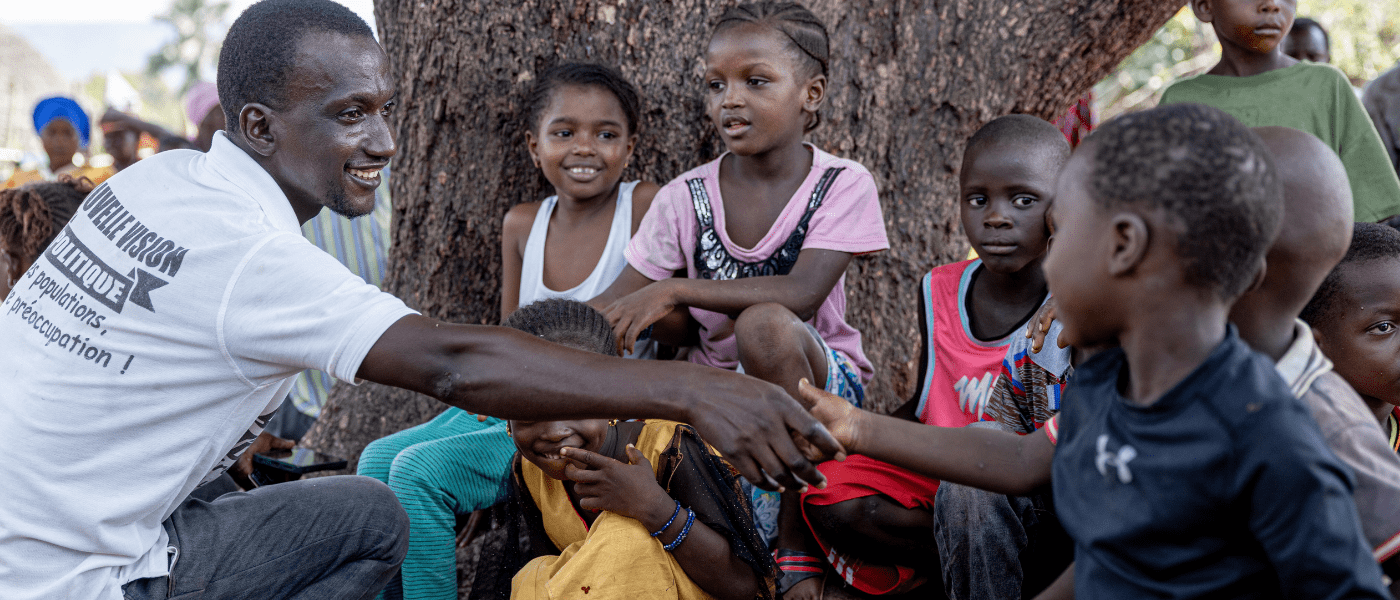 PHOTO: Assane Diallo greets children during a community sensitization event in Thiangué village — where Khadia is leading anthrax awareness alongside her One Health Team.
Women at the centre of prevention
Among the women CAHWs in Dindefello is another woman whose story circulates quietly among her peers — a CAHW who continued vaccinating animals while pregnant, and who later returned to work with one of her newborn twins strapped to her back. Her husband, like Assane, accompanies her to vaccination sites, holding the other child while she works.
These stories are not shared as exceptions. They are shared as proof of what is possible when women’s work is taken seriously — and when families make space for it.
Khadia feels the weight of responsibility clearly. “This work is not easy,” she reflects. “But when people call me, when they ask questions, when they act early because of what we shared — that is when I know it is important.” Managing household duties alongside CAHW responsibilities is demanding, especially in a context where expectations of women remain strong. But for Khadia, the value of the work outweighs the difficulty.
Prevention, practiced daily
Later in the day, Khadia knows her flock of sheep will return home on their own, as they always do — grazing, drinking, and settling back into the compound by evening. It is knowledge built through years of close observation.
Prevention, for Khadia, is not a campaign or a slogan. It is practiced daily — in how animals are handled, how illness is monitored, how decisions are made early rather than late. “This project has helped us understand the link between animal health and human health,” she says. “It has brought knowledge to the community.” She pauses, then adds, “I am grateful for the opportunity to learn.”
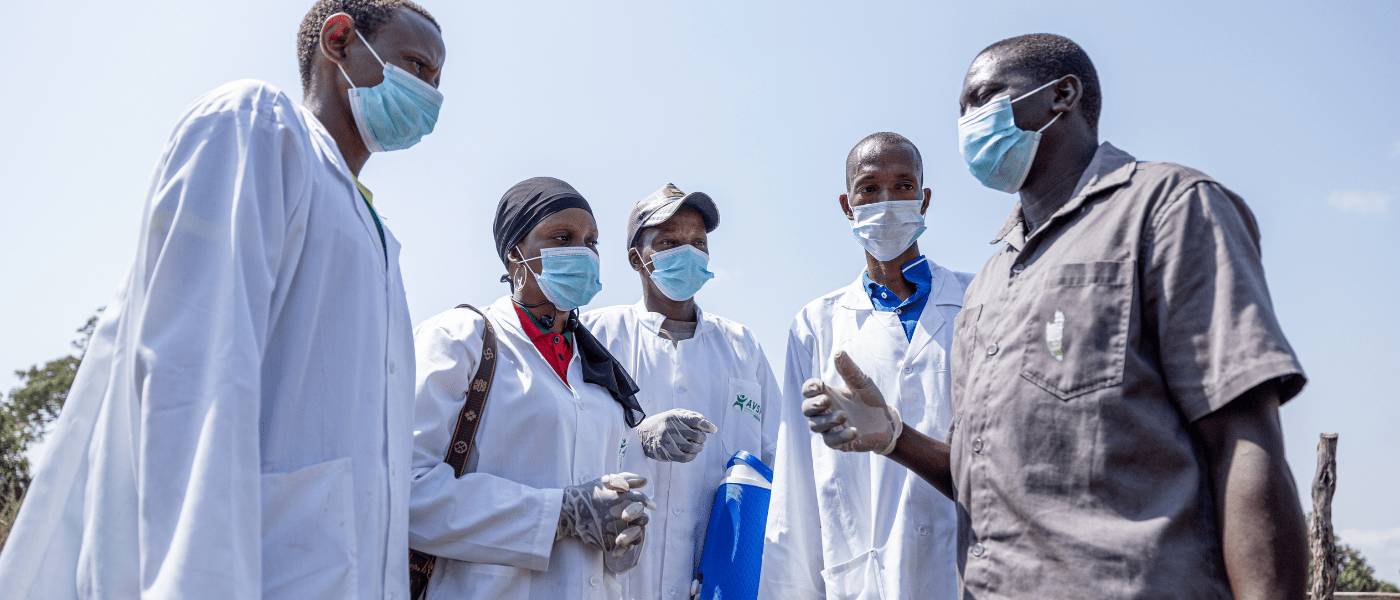 PHOTO: Khadia listens alongside fellow CAHWs as the local Animal Health Officer provides on-site guidance during a mass vaccination campaign in Dindefello commune.
A broader circle of care
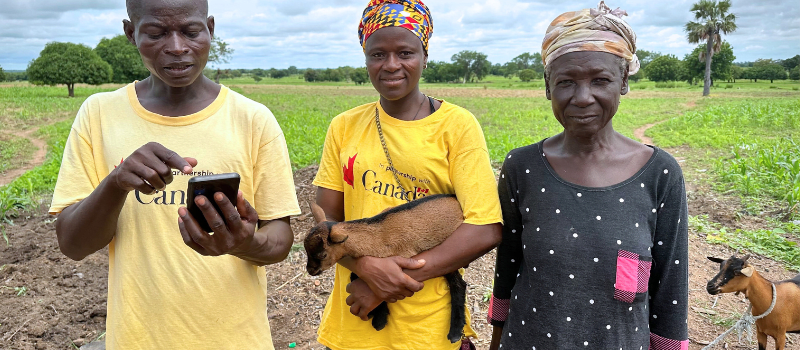
Khadia’s work as a mother, wife, herder, and Community Animal Health Worker extends far beyond her household. As a member of the local One Health Team, she works alongside other CAHWs, veterinarians, and health workers — caring for animals, sharing knowledge, and translating technical guidance into everyday practice that people trust and understand.
In Senegal, where veterinary services are limited and distances are long, this kind of local coordination is not a complement to prevention — it is the foundation of it. Early action can mean the difference between containment and loss, between a sick animal and a household pushed into crisis. Prevention begins where risks are first noticed: in homes where animals and people live closely together.
In Thiangué village, prevention is not something brought in from the outside. It grows from daily care, from knowledge passed hand to hand, and from women like Khadia whose work — long essential, now increasingly visible — helps protect families, livelihoods, and communities before crisis ever arrives.
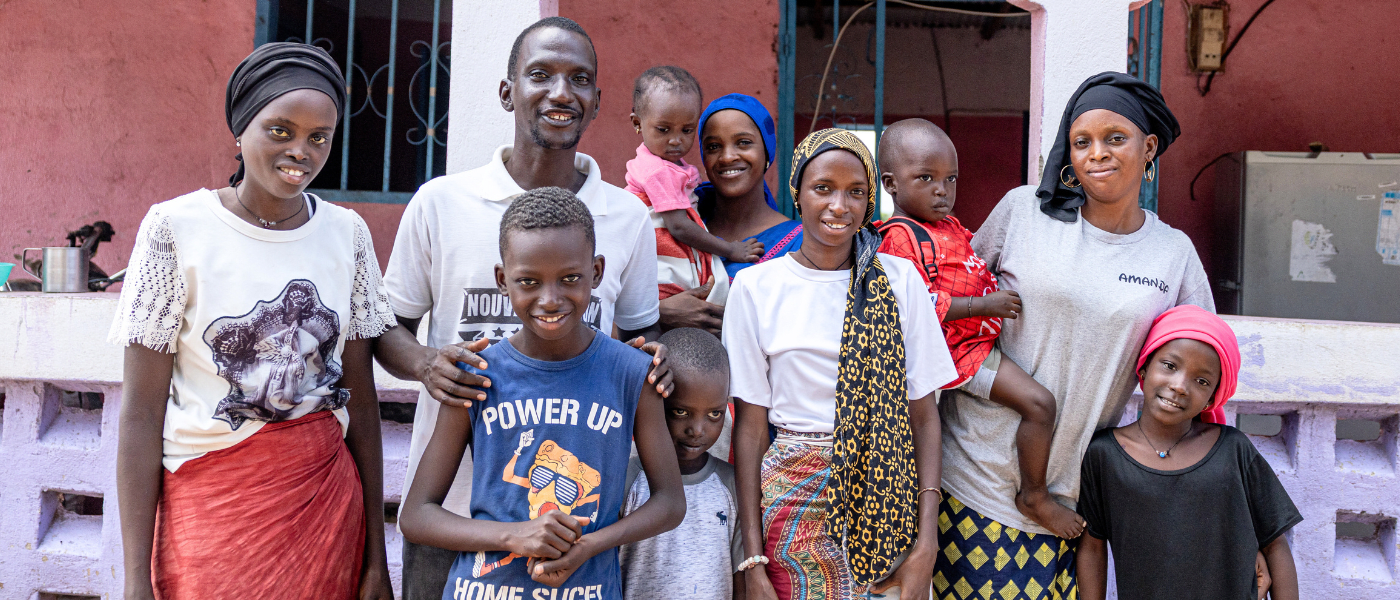 PHOTO: At her homestead in Thiangué village, Khadia stands with members of her extended family — the foundation of care, responsibility, and support that make her work as a CAHW possible.
COHERS is a four-year initiative (2023–2027) that strengthens community health systems to prevent zoonotic diseases in Rwanda and Senegal by uniting human, animal, and environmental health. Funded by Global Affairs Canada and led by VWB, COHERS is delivered with local and international partners including the University of Global Health Equity, WaterAid Rwanda, the University of Guelph, the Institute of Health Economics, and Agronomes et Vétérinaires Sans Frontières. Learn more.