This blog was written by Tanja Kisslinger, Director of Communications at VWB, in reflection of a trip to Senegal in October 2025 to document our Community One Health Empowerment in Rwanda and Senegal (COHERS) program. Photos by Jess Holing for VWB.
The road to Badiary village, in Senegal’s Dindifello commune, tells you almost everything you need to know about why prevention matters here.
Even in the dry season, the journey is slow and punishing — jagged, sharp, rocky tracks that test both vehicle and patience. During the rainy season, these roads are often impassable altogether. For communities living this far from municipal centres, waiting for veterinary services to arrive after disease has taken hold is not just risky — it can be catastrophic.
It is precisely for this reason that Badiary was chosen as the starting point for a mass vaccination campaign in late October, supported through COHERS and implemented with local partners, including Agronomes et Vétérinaires Sans Frontières Senegal (AVSF Senegal). The objective was both practical and preventative: vaccinate cattle against anthrax while offering free animal health consultations to herders across the area.
What unfolded over the course of the day revealed not only the physical demands of vaccination work, but the essential role that community-based animal health systems play in protecting livelihoods, preventing zoonotic disease, and extending public services into places formal systems struggle to reach.
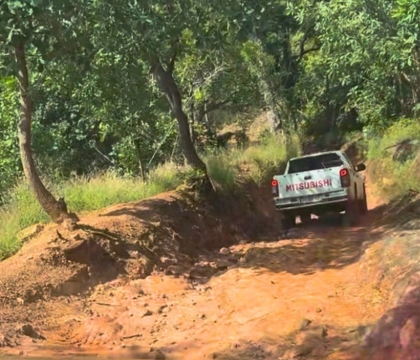 PHOTO: On the challenging road to Badiary village.
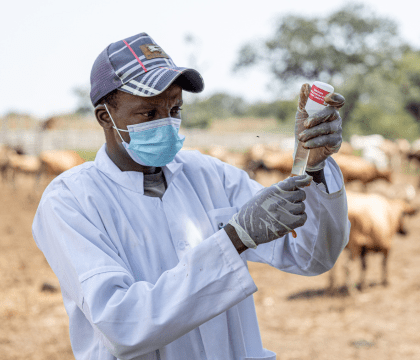 PHOTO: Local CAHW prepares for livestock vaccination.
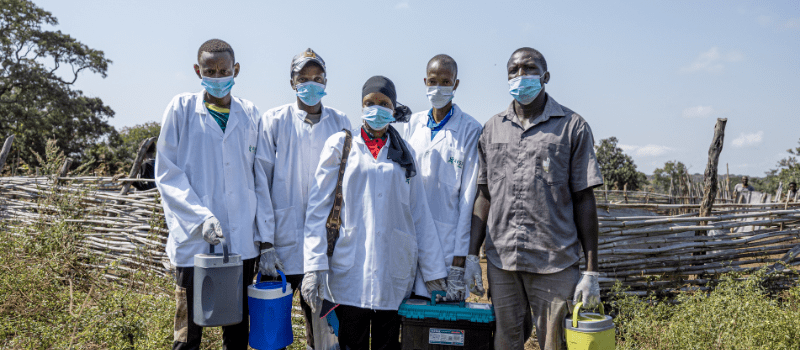
 PHOTO: Four CAHWs and the local Animal Health Officer.
Vaccination in practice: difficult, essential work
After greeting Badiary’s village chief, Sory Diallo, and local partners, we joined a small group of Community Animal Health Workers (CAHWs) as they moved between cattle enclosures to begin vaccinations. This subgroup included four CAHWs drawn from Thiamiage, Ibel, and Toupé Pillé villages across the commune — a reminder that these workers routinely travel significant distances to support animal health beyond their own communities.
Vaccinating cattle at this scale is demanding physical work. Cows are large, powerful animals, and each vaccination requires coordination and trust between CAHWs and herders alike. In the enclosures we visited, it took four to five people to restrain each animal safely: holding horns, stabilizing a rear leg, and administering injections to the neck in quick succession.
Once vaccinated, animals were marked with dung to indicate completion — a locally accepted practice adopted after herders expressed concerns about marker pens, rooted in cultural beliefs and superstition.
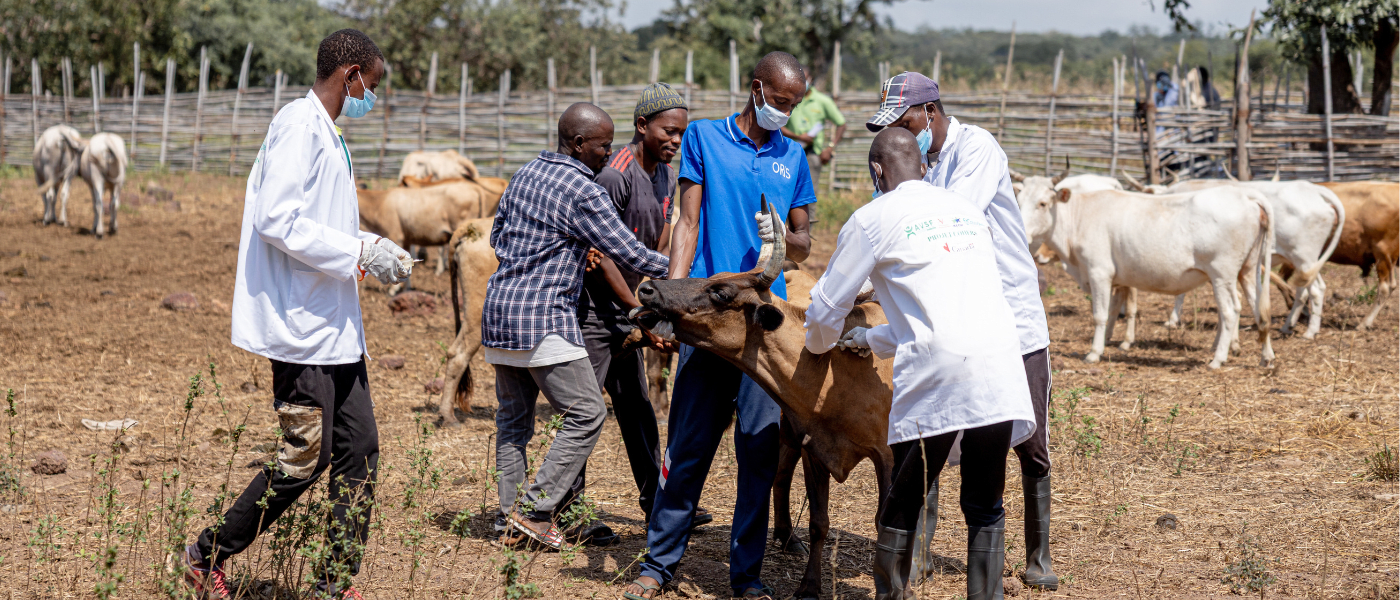 PHOTO: CAHWs and herders work together to safely restrain cattle during a mass vaccination campaign in Senegal’s Dindifello commune.
The cattle themselves told another story. All were of the N’Dama breed, known for their smaller stature and resilience — a breed well suited to this environment, but no less vulnerable to disease outbreaks that can wipe out herds and livelihoods with alarming speed.
Extending a stretched system
While the CAHWs worked, they were joined by Bosco Diedhiou, the Animal Health Officer (AHO) responsible for three entire communes — far more than the system ideally allows. In Senegal’s animal health structure, veterinarians operate at national level, veterinary technicians at regional level, and AHOs at the municipal level. In practice, shortages mean that officers like Bosco are stretched thin across vast areas.
“Before working with CAHWs, I could never reach all the villages,” Bosco explained. “During a national campaign, I would have to go village by village myself. Now, with trained CAHWs, we can reach six villages in a single day.” In Dindifello alone, there are currently 15 trained CAHWs supporting animal health services across the commune. This shift has fundamentally changed what is possible during national vaccination campaigns, allowing coverage that would have been unthinkable for a single officer working alone.
His role during campaigns like this one is no longer to vaccinate every animal personally, but to supervise, support, and train — a model of task-sharing that expands reach without sacrificing quality. At one enclosure, Bosco noticed a calf with a gum infection and pulled it aside. As the CAHWs gathered around, he demonstrated how to drain and disinfect the infection, turning a routine vaccination stop into a hands-on training moment.
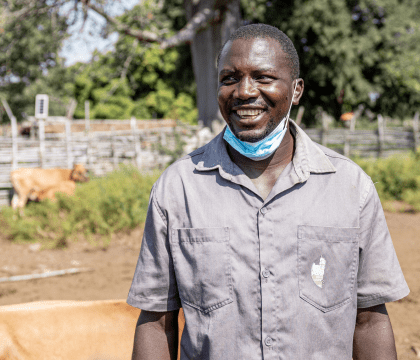 PHOTO: Bosco Diedhiou, Animal Health Officer.
 PHOTO: Bosco advises CAHWs during the campaign.
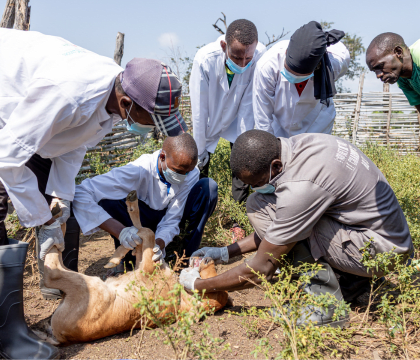 PHOTO: Bosco demonstrates treatment on a sick calf.
This is how capacity is built — not in classrooms alone, but in real time, under real conditions.
Filling critical gaps in prevention
The vaccination campaign we observed was part of Senegal’s annual national effort, which typically runs from October to March. However, not all vaccines are subsidized by the government. At present, subsidies prioritize other livestock diseases, leaving anthrax vaccinations in communities like Badiary dependent on targeted project support.
In Badiary, COHERS support helped close this gap in prevention. Bosco noted that starting vaccination campaigns in hard-to-reach villages like this one is a deliberate strategy. If anthrax were to spread here unchecked, the consequences would be severe — not only because of the disease itself, but because veterinary assistance might arrive too late, if at all.
In a commune without a local slaughterhouse and with limited infrastructure, prevention remains the most reliable form of protection.
“I don’t want to wait for help”
For Koly Kanté, one of the CAHWs working that day, the motivation to do this work is deeply personal. Being a CAHW, he explained, is a source of pride — not just because it provides skills and responsibility, but because it allows him to contribute directly to his community’s wellbeing. “I don’t like waiting for help after there is an emergency,” he said. “I want us to be able to act before that happens.”
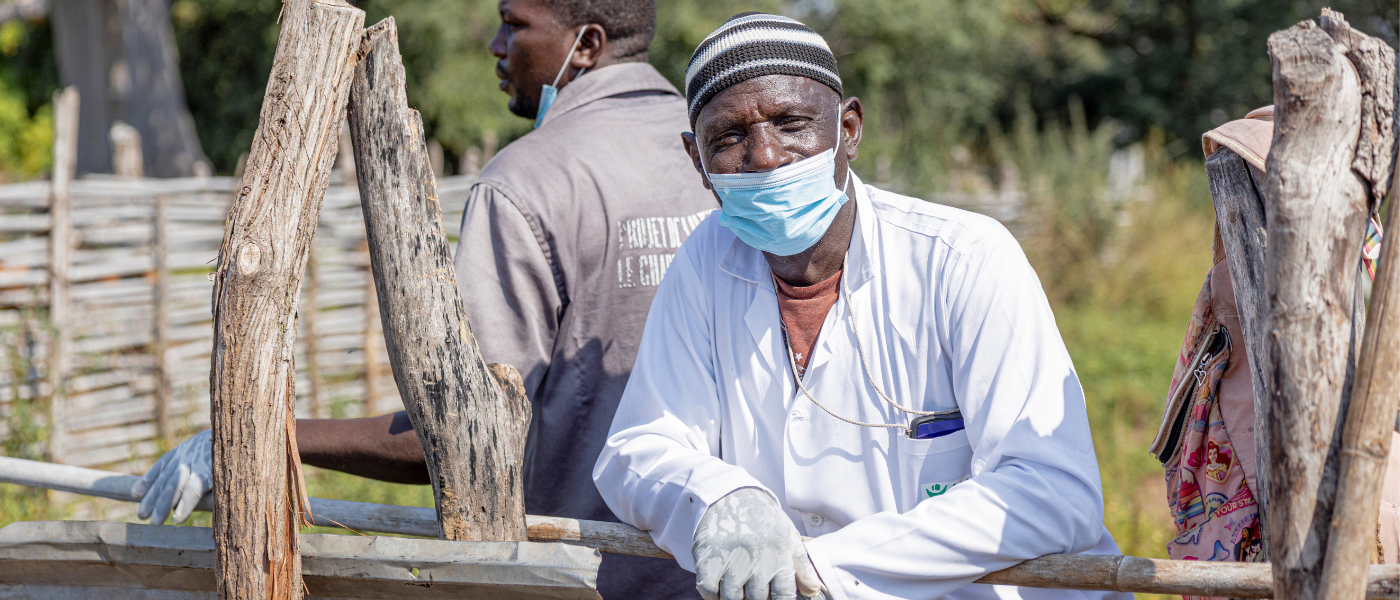 PHOTO: Community Animal Health Worker Koly Kanté pauses between tasks during a vaccination campaign in Senegal’s Dindifello commune.
In his village, Koly noted, major animal health problems are relatively rare — precisely because vaccination and prevention have become central to his work. What frustrates him most is the lack of accessible veterinary care when animals do fall ill. With so few AHOs and veterinarians, delays can mean loss of animals and income. While he wishes he had more training to treat disease, his role in prevention gives him a sense of purpose and agency.
Notably, every CAHW we met that day was trained through a partner initiative within the past 5 years. COHERS provided veterinary kits and additional training to build on their existing skills. Today, in this municipality, all trained CAHWs also serve as members of the local One Health Team, reinforcing coordination between animal health, human health, and community outreach.
Building systems that reach the margins
By the end of the day, as CAHWs continued moving from enclosure to enclosure, the logic of this model was unmistakable. In places where distance, infrastructure, and staffing shortages make centralized service delivery unrealistic, empowering local actors is not an alternative — it is the only viable path forward.
This is what prevention looks like in practice in rural Senegal: skilled community members, supported by overstretched but committed professionals, working together to protect animals, livelihoods, and public health before crisis strikes. In places where certain diseases can persist silently in the environment for years, waiting for an outbreak is not a strategy. Building local capacity to act early — even when there are no visible cases — is.
It may not look like prevention elsewhere — and that is precisely the point.
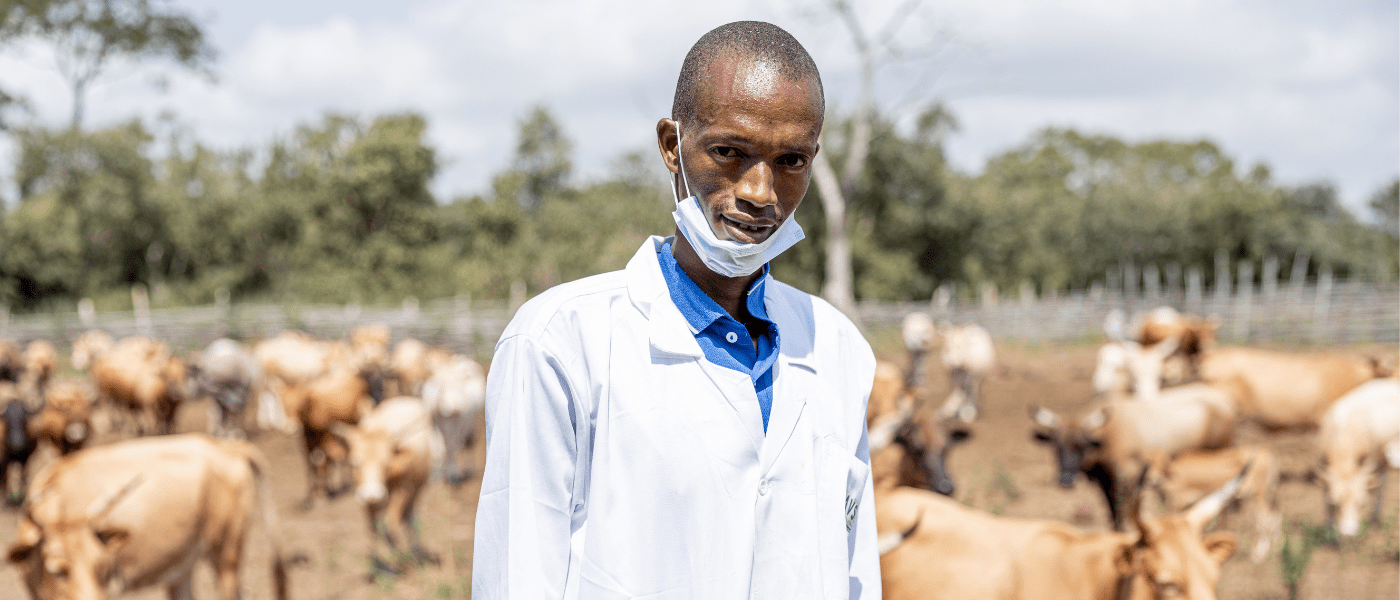 PHOTO: Madjou Kanté, CAHW and herder from Ibel village, is part of a local network trained to act early and protect community livelihoods — including his own.
COHERS is a four-year initiative (2023–2027) that strengthens community health systems to prevent zoonotic diseases in Rwanda and Senegal by uniting human, animal, and environmental health. Funded by Global Affairs Canada and led by VWB, COHERS is delivered with local and international partners including the University of Global Health Equity, WaterAid Rwanda, the University of Guelph, the Institute of Health Economics, and Agronomes et Vétérinaires Sans Frontières. Learn more.