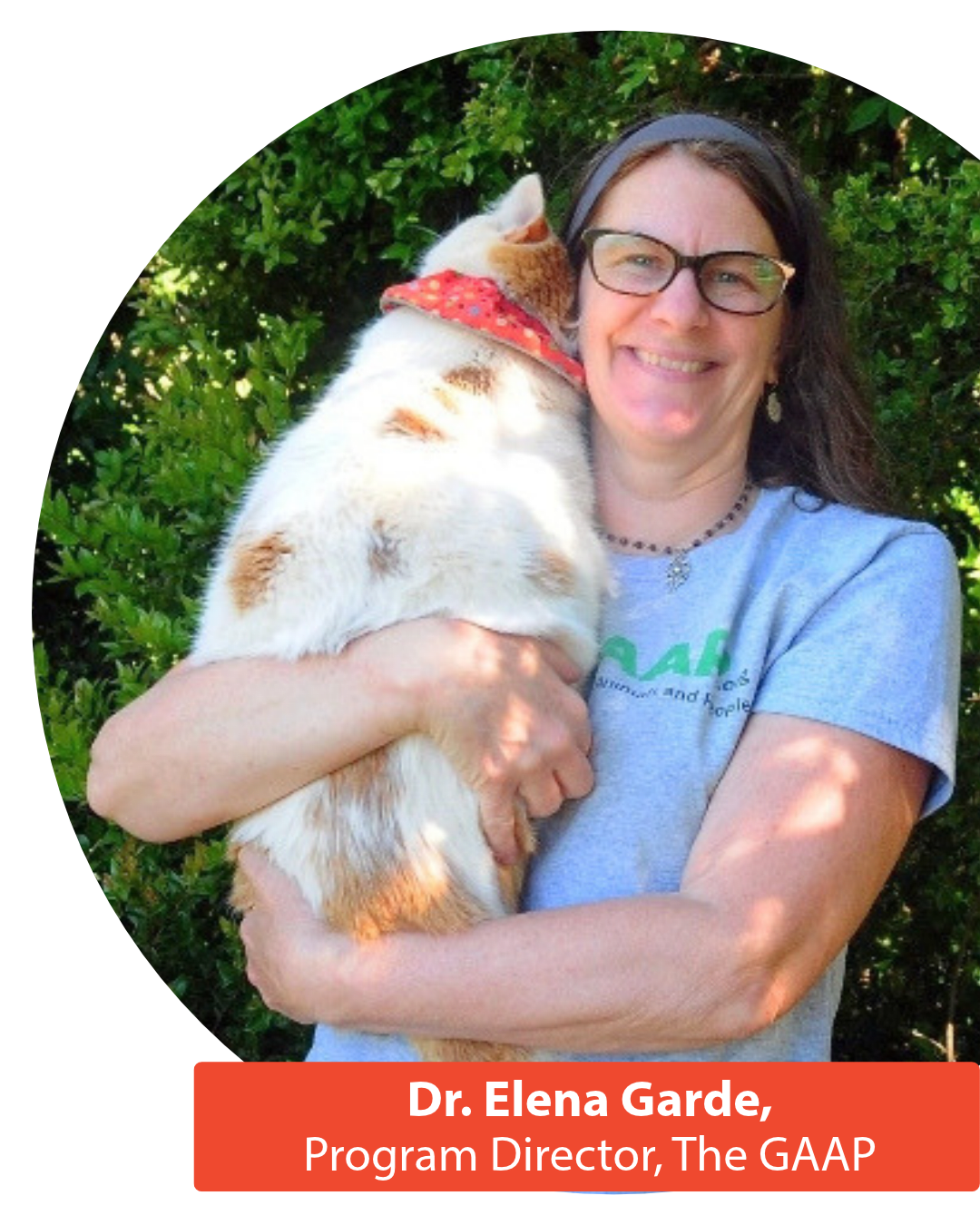
 In this edition of Ask an Expert, we spoke with veterinarian Dr. Elena Garde, whose career has spanned wildlife disease research, zoonotic disease, disaster response and community-based animal health across Canada, Latin America and beyond.
Veterinary medicine is often imagined as something that happens between a veterinarian and an animal. But many of the forces that shape animal health extend far beyond the walls of a clinic. Wildlife and domestic animals share landscapes. Migratory species move across vast distances. Environmental change can create new opportunities for animals, people and diseases to interact. Disasters can disrupt already fragile systems of care. And in remote or underserved communities, access to a veterinarian may be limited or absent altogether.
Few veterinary careers have crossed as many of these boundaries as Dr. Elena Garde's.
Originally from Canada, Elena began her career in wildlife health before moving to Chile with Veterinarians Without Borders in 2009. Her research and fieldwork have taken her from northern Canada and Latin America to Asia, exploring questions related to wildlife and domestic animal disease, animal movement, zoonotic risk, free-roaming dog populations, veterinary disaster response and access to animal health care.
She later co-founded the Global Alliance for Animals and People (GAAP), where her work has increasingly focused on community-based approaches to animal health, including locally delivered care and telemedicine in places where conventional veterinary services are difficult to access. Now based in Costa Rica after 16 years living and working in Chile, Elena has reconnected with Veterinarians Without Borders North America (VWB) as a veterinary consultant supporting its Northern programming.
In this conversation, we draw on Elena's research and experiences across very different animals, communities and environments to explore how animal health challenges—and the approaches needed to address them—change as animals, people and diseases move across the boundaries we create.
Q: You began your career in wildlife health in Canada, including research with Dr. Susan Kutz investigating whether a lungworm found in muskoxen could establish in Dall's sheep as the expanding range of muskoxen increased the possibility of contact between the two species. What prompted that research, what did you find, and what did it teach you about anticipating disease risks as wildlife populations and ranges change?
Elena: I've always been interested in what happens where different animal populations meet—whether that's wildlife and domestic animals, or animals and people—and the conflicts and health risks that can arise. I was a student working with Susan Kutz at the time, and this project was a really good fit for those interests. As muskoxen expanded their range, there was more potential for contact with wild sheep, so we wanted to know whether their lungworm could establish in Dall's and Stone's sheep.
We found that it didn't establish in either species. That was an important finding, especially given the large die-offs documented in bighorn sheep farther south following contact with domestic sheep, where respiratory disease involving parasites and bacterial infections had been a concern.
For me, it reinforced the value of investigating these risks before they become a problem. As animals change their geographical ranges, they can encounter species and infections they haven't been exposed to before. We need to understand what those new contacts might mean, and studies like this help us work out where the risks are.
🔗 Further reading: Muskox lungworm infection study
Q: You later led a broader assessment of disease transmission risks between wild Dall's sheep and mountain goats and introduced domestic sheep, goats and llamas in the Northwest Territories. What prompted that assessment, which risks emerged as the most important, and what did it reveal about managing animal health where wild and domestic species may come into contact?
Elena: It was a logical next step from the lungworm work. I was becoming more involved in the bighorn sheep issue in British Columbia and Alberta, and it was a very heated debate, with wildlife biologists and veterinarians often on one side and sheep farmers on the other. There were studies, but we wanted to bring the evidence across these species together and give people a more systematic way to assess the risks. There were also concerns about introducing livestock and pack animals into the Northwest Territories.
One key finding was the risk posed by pneumonia-causing bacteria carried by domestic sheep and goats, which could have serious, lasting effects on wild sheep populations. For llamas, the evidence was much more limited, so we couldn't confidently assess their risk.
The practical lesson was to prevent risky contact before disease was introduced. We recommended keeping domestic sheep and goats away from wild sheep and mountain goat ranges. For me, it also showed how useful a structured assessment can be in a contentious discussion—both for identifying real concerns and being clear about what we still don't know.
🔗 Further reading: Northwest Territories wildlife–livestock disease risk assessment
Q: Your research has also taken you much farther afield, including a study in Mongolia that used isotope signatures in feathers to investigate the origins and movements of migratory waterbirds. What were you trying to understand through that work, and what did you learn about the value—and limitations—of tracing animal movement across vast geographic areas? More broadly, why does knowing where animals move matter when we think about animal health?
Elena: In Mongolia, we were looking at whether the chemical signatures in feathers could help us understand where migratory waterbirds had been. A feather retains information about the environment where it grew, so it can give us clues about a bird's movements without having to fit it with a tracking device or catch it again.
The results were promising, but there were limits. We could identify broad regions where feathers had likely grown, rather than pinpoint exact locations or migration routes. We also needed better information on isotope patterns across Asia and when different birds replace their feathers.
For me, it connects very closely to the earlier work: when animals move, which other animals do they encounter, and what might they carry with them? Understanding migration helps us protect the habitats birds depend on, but it also helps us understand opportunities for infections to move between populations, including where wild birds and domestic poultry meet. The feathers themselves don't tell us whether a bird carried a disease, but they can help us understand those connections and where disease surveillance might be most useful.
[PHOTO PLACEHOLDER: Wildlife research or migratory waterbirds, if available.]
Q: Following the devastating 2010 earthquake and tsunami in Chile, reports of illness and deaths among dogs in Dichato led you to investigate what proved to be a canine distemper outbreak—a study that became part of your MSc research. What was happening in the community, what did your investigation uncover, and what did it reveal about the animal health vulnerabilities that can emerge or intensify following a disaster?
Elena: Dichato had been devastated by the earthquake and tsunami. People had lost their homes and moved into temporary camps, and many dogs were roaming freely. About a month later, reports started coming in of dogs becoming seriously ill and dying. Our investigation identified a canine distemper outbreak.
These dogs had experienced enormous disruption, with inadequate shelter, nutrition and access to care, alongside very low vaccination coverage. We suspected those stressors had resulted in a more vulnerable population, allowing an existing low-grade infection to become a full-blown outbreak. We couldn't prove that the disaster triggered it because we didn't have health data from before the earthquake, but that was our concern. To our knowledge at the time, this was the first documented distemper outbreak in domestic dogs following a natural disaster.
What struck me was the parallel with human health: displacement, disrupted services and difficult living conditions can amplify existing vulnerabilities. The effects continue long after the immediate injuries, which is why animal health needs to be part of preparedness and recovery.
🔗 Further reading: Canine distemper following the 2010 Chile earthquake and tsunami
Q: That experience led to further research on both the veterinary response to the Chilean disaster and the potentially overlooked zoonotic risks associated with free-roaming dogs following disasters in Latin America. Where did you see the biggest gaps in existing preparedness and response—and what would a better approach need to account for?
Elena: One of the biggest gaps was that companion animals weren't included in a coordinated national disaster response plan. There were people trying hard to help, but no shared system for organizing rescue, diagnosis, treatment or record-keeping. Damaged roads and communications made everything harder. Reading accounts of earlier human medical responses in Chile, I was struck by how many of the same problems we were encountering.
The other gap was the connection to public health. Distemper doesn't infect people, but free-roaming dogs can be involved in diseases that do, and those risks can become harder to manage when vaccination, sanitation and health services are disrupted. Our review highlighted how little attention this received in disaster planning.
A better approach starts before the disaster: routine preventive care, clear responsibilities, trained teams, shared records and plans for safely sheltering animals. Veterinary and public health services also need to work together on the risks relevant to that community. By the time everyone is responding to an emergency, it's much harder to build those systems.
🔗 Further reading: Veterinary disaster response in Chile and zoonotic risks from free-roaming dogs
Q: Years later, your review of Chile's national dog population management program identified an interesting disconnect: while its overarching goal was to reduce conflict between people and dogs, many of its interventions focused on the animals themselves, and its indicators did not consider public perceptions. Why does that matter, and what does it tell us about designing animal health programs that address both animal and human behaviour?
Elena: If the goal is to reduce conflict between people and dogs, we need to ask people whether things are actually improving. The program put a lot of effort into veterinary services and sterilization, but its indicators didn't tell us whether residents felt safer or whether the problems they experienced were being addressed.
For example, if a community's main concern is dog bites or rubbish scattered through the streets, counting sterilizations won't tell us whether we've solved those problems. Sterilization can be a useful tool, but it doesn't automatically change whether owners let their dogs roam or how those dogs behave around people.
For me, the starting point has to be understanding the local situation: what people value about their dogs, what concerns them, and what makes responsible care difficult. Then we can choose appropriate interventions, including veterinary care, education and enforcement, and measure changes that matter to that community. Human behaviour shapes so much of a dog's life that it really has to be part of both the solution and how we judge success.
🔗 Further reading: Evaluation of Chile’s dog population management program
[PHOTO PLACEHOLDER: Elena's work in Chile, if available.]
Q: In Todos Santos, Guatemala, you've also been involved in a very different approach to improving access to animal health care: training local community member Andrés Carrillo as an animal health care worker, supported by veterinary expertise and telemedicine. How did that model develop, and what have you learned from seeing it work in practice? What can someone rooted in the community provide that a visiting veterinarian cannot—and where does veterinary support remain important?
Elena: This is my heart project, and it grew out of a frustration with our own approach. We'd visit Todos Santos to do a sterilization or vaccination campaign once a year, care for people's animals and explain how important veterinary care was—but then we'd leave. What were people supposed to do for the other 51 weeks? We wanted to help make that care available throughout the year, and that's how the idea of training someone locally, with ongoing veterinary support, came about.
Andrés is what makes it work. He's from Todos Santos, speaks the language, and understands the families and their animals in ways we never could as visitors. He bridges those worlds for us, and he's become incredibly capable through training and experience.
Veterinary support remains essential, both for continuing his training and for cases that need a veterinarian's judgment or hands-on care. Through telemedicine, we can discuss what he's seeing and help determine the next step. We're also conscious of respecting professional and regulatory boundaries: the aim is to build local capacity within an appropriate role, with clear limits on what he can do and when a veterinarian needs to take over. It's that combination of local knowledge, everyday availability and veterinary backup that makes the model work.
🔗 Further reading: Andrés Carrillo’s animal health worker training
[PHOTO PLACEHOLDER: Andrés Carrillo, Elena and/or the community animal health initiative in Todos Santos, Guatemala.]
Q: Across your career, you've seen animal health challenges addressed in very different ways—from wildlife research and disease risk assessment to emergency veterinary response, national dog population programs, visiting veterinary teams, locally trained animal health workers and telemedicine. Looking across those experiences, what have you learned about what determines whether an animal health intervention actually works in the place where it is introduced?
Elena: For me, it comes down to the question you're trying to answer and the need you're trying to meet. With the wild sheep work in the Northwest Territories, we needed evidence about disease risks, so research was the right starting point. When we're trying to fill a gap in services for a community, we need to start by talking with the people who live there.
That's what a grassroots approach means to me: work shaped by local knowledge and priorities, with people involved in decisions from the beginning. We may know how to perform a surgery or which vaccine to use, but community members know far more about how a service could fit into their lives, who it needs to reach and what might stop people from using it.
And there has to be warmth and human connection. Getting to know people and their families, eating together, spending time together and staying in touch all help build the trust that makes those conversations possible. You learn so much through those relationships that you would never get from a questionnaire or from constantly shifting personnel. Long-term relationships are critical to the success of these programs.
The numbers, reports and evidence of impact matter. But I also want to know whether people find the service useful, whether they're reaching out for it, and whether they have a say in how it's delivered. Those relationships help us keep listening and adapting so the work continues to meet their needs.
Q: After many years working in Latin America, you're now bringing your experience back into northern Canada through your work with VWB. Which lessons from your previous research and field experience do you think may be relevant to the North—and where do we need to be cautious about assuming that an approach that worked in one place will work in another?
Elena: For the last few years, I've been offering telehealth to remote communities in northern Ontario, and now, working in the Northwest Territories and Nunavut with VWB, I've been struck by the similarities with my experiences in Latin America. Distance, cost, language and limited access to services can all create barriers. Histories of colonialism and experiences with outside organizations can also influence trust and how willing people feel to engage with someone coming into their community.
Of course, there's a lot that's different too—the diseases we see, the climate, how people live with their animals and what care is available and valued by local people. Something that worked well in one community might need a lot of rethinking in another, and that's where listening becomes so important.
The common thread for me has been spending time with people, getting to know them and listening. That's how you discover where your assumptions fit or don't. You also must be willing to be wrong, acknowledge mistakes and go back to the drawing board. Being transparent about what we can offer, what we don't know and what we need to work out together is an important part of building that relationship.
Q: Looking back across your career—from studying wildlife disease and animal movement to working alongside communities facing very different animal health challenges—has your understanding of what it means to be a veterinarian changed? If so, how?
Elena: Yes, I think it's changed quite a lot. When I first graduated, I wanted to do everything "the right way" — follow the science, find the answer, publish the findings, and provide the best possible care. Those things still matter to me, but I've learned that there isn't always one way to help, especially when the care an animal needs is difficult or impossible for a family to access.
Working with remote communities over the years has broadened my understanding of what it means to be useful as a veterinarian. Sometimes it means investigating a disease or treating an animal in the traditional way. Sometimes it means helping someone else build the skills to care for animals in their own community. And sometimes it just means staying on the phone with someone in a very remote village as their dog passes away, keeping them company and offering support through a heartbreaking moment.
There are times when that presence may be the most meaningful thing I can offer. I've come to see listening, compassion and simply being there for someone as essential parts of veterinary care. My scientific training still guides me, but the relationships I've built have taught me to recognize forms of care I didn't fully appreciate when I started.
 Protecting animal health means looking beyond individual animals to understand the connections between wildlife, domestic animals, people, and the environments they share. From disease prevention and disaster response to community-based veterinary care, VWB works with partners to strengthen animal health systems that respond to local needs. Donate, volunteer, or subscribe to support VWB's work protecting animal health and strengthening healthier, more resilient communities.