When an animal becomes sick or injured, most people expect help to be available. A veterinarian can be called, a clinic can be visited, and treatment can begin.
In many communities around the world, however, access to veterinary care is not so straightforward. The nearest veterinary professional may be hundreds of kilometres away. Transportation can be expensive or unavailable. In some places, conflict or other disruptions can make it difficult to access services when they are needed most.
Yet animals still need care, families still depend on healthy animals, and communities still need trusted sources of support and advice. That’s why Veterinarians Without Borders (VWB) works alongside communities and local partners to bring veterinary care closer to where it is needed.
How that happens can look very different from one community to the next. Sometimes it means bringing veterinary services directly to a remote community. Sometimes it means supporting local partners already providing care under difficult circumstances. In other cases, it means training trusted community members to help ensure that animal health knowledge and support remain close at hand.
Bringing care directly to Northern communities
In many Northern communities across Canada, distance remains one of the greatest barriers to veterinary care. For some families, reaching the nearest veterinary clinic requires extensive travel, making routine services such as vaccinations, wellness exams, and preventive care difficult to access.
That was the reality for Jasper, a two-year-old sled dog living with his team about 30 minutes outside Fort McPherson. Like many working dogs in remote Northern communities, Jasper was well cared for by his family. Yet he and his four teammates had never seen a veterinarian. Not because veterinary care wasn't valued, but because it simply wasn't readily available.
When a VWB mobile veterinary clinic visited the region, the team made a house call to see the dogs. Jasper and his teammates received their first vaccinations and deworming treatments, helping protect their health and prevent future illness.
Stories like Jasper's help illustrate why mobile clinics are so important. Rather than asking communities to travel long distances to access services, veterinary teams travel to the communities themselves, helping ensure that animals receive care that might otherwise remain out of reach.
Mobile clinics are not intended to replace permanent veterinary services. Instead, they help bridge an access gap by bringing veterinary expertise directly to communities where regular services may not be available. By providing preventive care, identifying health concerns early, and building relationships with local residents, these visits help improve animal wellbeing while strengthening connections that support future care.
Supporting local partners during times of crisis
In Ukraine, the challenge is different. The ongoing conflict has affected nearly every aspect of daily life, including access to veterinary care. Animals continue to require treatment, but the conditions under which care is delivered are often unpredictable.
In these situations, local veterinary and animal welfare organizations play a critical role. They know the communities they serve, understand local realities, and are often best positioned to respond when urgent situations arise.
One such story is Sparrow's.
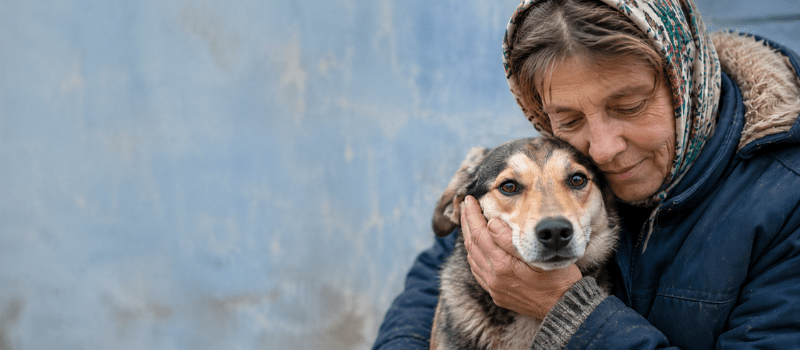
Sparrow, a friendly mixed-breed dog estimated to be between three and five years old, was discovered in late December during an evacuation from a frontline area between the cities of Druzhkivka and Kostiantynivka. The area was under constant artillery shelling.
When he was found, Sparrow had likely been lying injured and alone for nearly two days. He had suffered fractures to both front legs and a severe eye injury. Despite being in obvious pain and distress, he remained calm and allowed rescuers to bring him to safety.
After being evacuated from the conflict zone, Sparrow was transported to a veterinary clinic where he received emergency treatment, surgery, and rehabilitation. Today, he walks confidently on all four legs and enjoys a good quality of life. Although he lost one eye, his recovery has been remarkable, and he is now waiting for a foster or adoptive home.
Supporting local partners is a deliberate part of VWB's approach to access to care. Local veterinary professionals and animal welfare organizations have deep roots within the communities they serve. They maintain trusted relationships, understand local challenges, and remain present long after outside organizations have left.
By strengthening local capacity rather than creating parallel systems, VWB helps ensure that veterinary care remains available not only during emergencies, but throughout recovery as well. This approach recognizes that sustainable access to care depends on strong local organizations that can continue serving animals and communities over the long term.
Building care from within communities
Sometimes the most effective way to bring veterinary care closer is not by travelling to a community. It is by supporting people who already live there.
In Thiangué village in southeastern Senegal, Khadia Diallo's day often begins before sunrise. She helps care for her children, prepares meals for her extended family, and tends to the cows, goats, sheep, and chickens that share the family compound.
But Khadia's responsibilities extend beyond her own household. As a trained Community Animal Health Worker, neighbours regularly turn to her when animals become sick, injuries occur, or advice is needed. "I am always watching," she explained during a recent visit. "The animals, the children, the home. You notice when something changes."
Drawing on both formal training and years of experience caring for livestock, Khadia helps identify concerns early, shares practical animal health advice, and connects families with veterinary services when additional care is needed. In a region where veterinary services can be difficult to access, her presence helps ensure that support is available much closer to home.
While veterinarians may visit periodically, Community Animal Health Workers remain part of the community every day. They understand local conditions. They build trust over time. They help ensure that support is available between veterinary visits and long after individual projects have ended.
For VWB, Community Animal Health Workers represent one of the most effective ways to expand access to care in areas where veterinary services are limited. By training respected community members, animal health knowledge becomes embedded within the community itself. Families gain a trusted local resource, while veterinary professionals can extend their reach through stronger community networks.
The impact of this approach has led VWB to support Community Animal Health Workers and similar community-based animal health models in diverse settings around the world. From livestock-keeping communities in Ghana and Kenya to remote and Indigenous communities in Northern Canada, locally rooted animal health workers help extend the reach of veterinary services, strengthen trust within communities, and ensure that support remains available between veterinary visits. While the contexts may differ, the principle is the same: bringing knowledge, care, and support closer to where people and animals live.
For many families, the value of a Community Animal Health Worker is not simply the advice they provide in a moment of need. It is the reassurance that someone knowledgeable and trusted is nearby when questions arise and help is needed.
Different approaches, one goal
At first glance, the stories of Jasper, Sparrow, and Khadia seem very different. One involves a mobile veterinary clinic travelling to a remote Northern community. Another centres on local partners responding to the challenges of conflict. The third highlights a trained Community Animal Health Worker providing support close to home.
Yet all three stories point to the same idea.
Access to veterinary care is not simply about treatment. It is about ensuring that help is available when it is needed, creating pathways to care that reflect the realities of each community, and building trusted systems that continue supporting animals and families long into the future.
Whether that means a veterinary team travelling hundreds of kilometres to reach a remote community, a local partner responding during an emergency, or a Community Animal Health Worker supporting families close to home, the goal remains the same.
Making sure that when help is needed, it is possible to access it.
Thanks to supporters like you, VWB and its partners are helping make that possible—bringing veterinary care closer to animals, strengthening local systems of support, and helping communities build a healthier future for the animals they care for and depend on every day.