#VETSVolunteerVoices brings you stories of our passionate VETS program volunteers from the field. Meet Kavitha Misra, a Gender Advisor in Vietnam from February 2021 to October 2023. Drawing on her volunteer experience — and her ongoing role as VWB’s Gender Advisor — Kavitha reflects on how her placement shaped her confidence, perspective, and approach to gender-responsive One Health work.
The View from Here
When I arrived in Vietnam as a VETS volunteer Gender Advisor in early 2021, I didn’t think of the experience as something that would shape my career. I knew I was interested in gender equality and social inclusion, and I was looking forward to applying that interest in a practical setting. What I didn’t yet realize was how much I would learn simply by paying attention — to people, to patterns, and to the everyday decisions unfolding around me.
As my two-year placement unfolded, gender stopped being something I thought about mainly in reports or frameworks. It became something I noticed in ordinary moments: who cared for animals each day, who joined training sessions, who spoke up in meetings, and who carried responsibility without always being recognized.
I’ve shared the details of my work in Vietnam in an earlier blog, including the partnerships and activities that defined the placement. This piece looks back from a different vantage point. Today, as Gender Advisor with VWB, I’m reflecting on what stayed with me from that time — and how the experience continues to shape my confidence, my perspective, and the way I approach gender and One Health in my work.
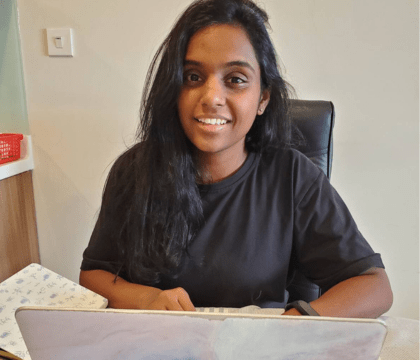 PHOTO: Kavitha Misra, VWB Gender Advisor
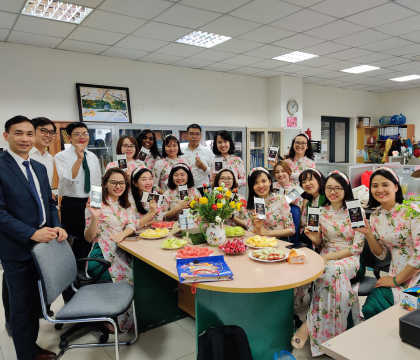 PHOTO: Kavitha with IEHSD colleagues on Women's Day 2021
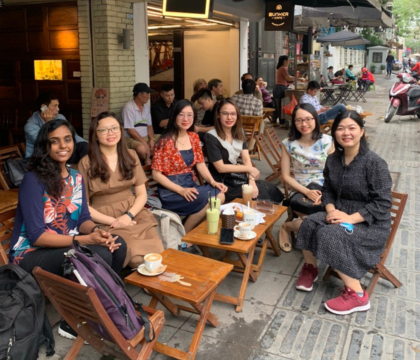 PHOTO: Kavitha with friends at a cafe in Hanoi
New connections — and new ways of thinking
One of the most lasting impacts of my placement was the network it created, and the ways of thinking it opened up. During my time in Vietnam, I worked closely with local partners, community groups, and program teams. Those relationships exposed me to different approaches to gender equality work and pushed me to think more creatively about how gender can be integrated into One Health and animal health programming.
I was also connected to colleagues working on similar challenges in other countries, including in Canada. That informal network became a space for knowledge-sharing and problem-solving — a reminder that many of the questions we grapple with are shared across contexts.
Some of the tools, approaches, and insights that emerged during my placement didn’t stay in Vietnam. They later informed organizational practices and helped shape gender initiatives I continue to support. That kind of cross-country learning wouldn’t have happened without being on the ground and embedded in the work.
What gender revealed — and how I apply it now
One of the most important things I learned during my placement was how deeply gender roles and power relations influence economic participation, particularly in rural and agricultural communities. In Vietnam, I observed how women often play central roles in household economies, animal care, and small-scale production. They are frequently responsible for managing day-to-day livestock health, yet their contributions can be undervalued or constrained by social norms that limit participation in training or decision-making spaces.
A clear example came from community livestock groups. When women were intentionally included in training and group activities — rather than being assumed to be peripheral — productivity increased. Households adopted new practices more consistently. Animal health improved. Engagement with markets became more stable.
What stood out to me was that inclusive decision-making didn’t just benefit women. It strengthened entire households and communities. That insight continues to guide my work. In my current role, I apply these lessons to strengthen gender-responsive approaches across programs, recognizing that inclusion is not only a rights-based principle — it is also an economic driver.
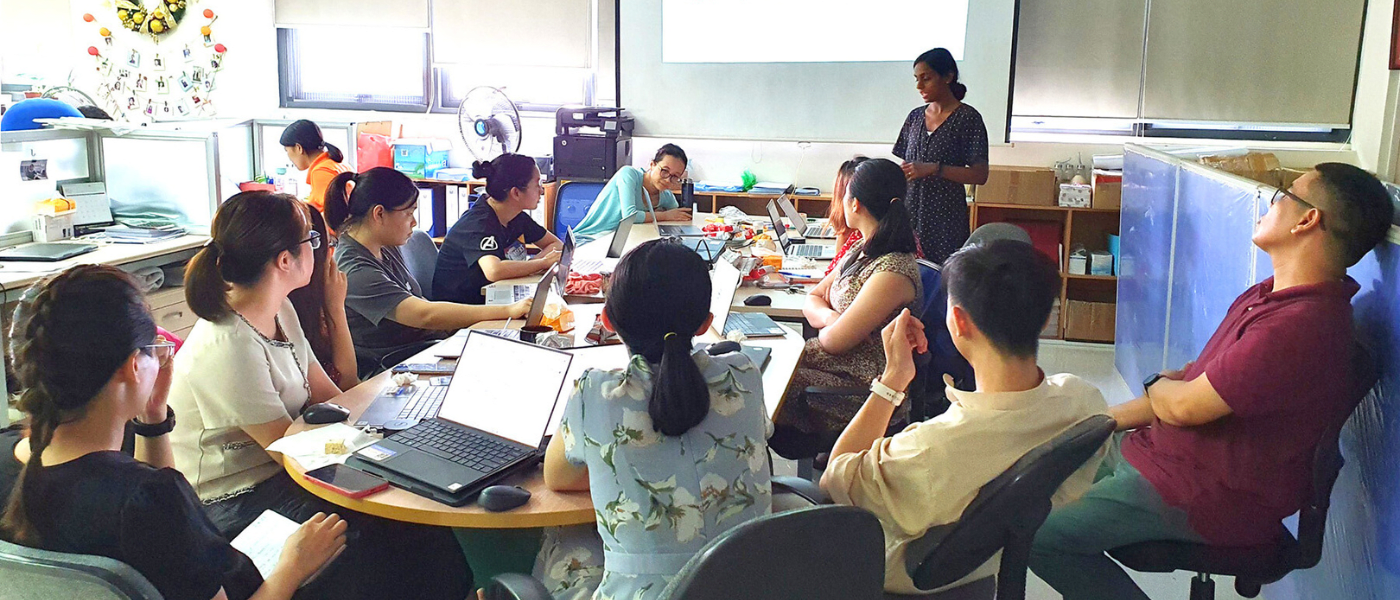 PHOTO: Kavitha facilitates a gender analysis training with staff from the Institute of Environmental Health and Sustainable Development (IEHSD) in Vietnam, strengthening inclusive approaches within One Health programming (2021).
I’ve also brought this thinking back to Canada. While the context is different, the underlying dynamic is familiar. Canada’s agricultural, animal health, and development sectors benefit when diverse voices shape decision-making, innovation, and policy. The lessons from Vietnam continue to inform how I advocate for equitable training models, participatory planning, and community engagement strategies here at home.
Perspectives and confidence I couldn’t have gained at home
My volunteer experience gave me perspectives — and confidence — that I don’t think I would have developed if I had stayed in Canada. Being immersed in a different cultural and community context pushed me to rethink how gender norms, power relations, and household dynamics shape everyday decisions. Seeing those dynamics up close helped me understand how social norms influence everything from animal health practices to economic resilience.
Professionally, the placement required me to adapt quickly. I facilitated conversations across languages and cultures, navigated sensitive discussions around gender and power, and designed gender-responsive activities that needed to resonate with local realities rather than external expectations. Working through those challenges strengthened my confidence in my ability to lead, collaborate, and problem-solve in complex environments.
One of the most influential shifts for me was recognizing how much we can learn from community-driven approaches to inclusion. The creativity and resourcefulness I saw among women’s groups, local partners, and field teams reinforced that gender equality work is strongest when it is grounded in local knowledge. That perspective continues to shape how I approach my work today.
Staying engaged — across borders and at home
My placement in Vietnam has had a lasting influence on how I stay engaged with both global and local issues.
The relationships I built with partners and colleagues didn’t end when the placement did. I continue to follow their work and stay connected where possible, which helps keep me grounded in the realities and innovations emerging at the community level. Those ongoing connections are a reminder that international cooperation is most effective when it is rooted in long-term partnership and mutual learning.
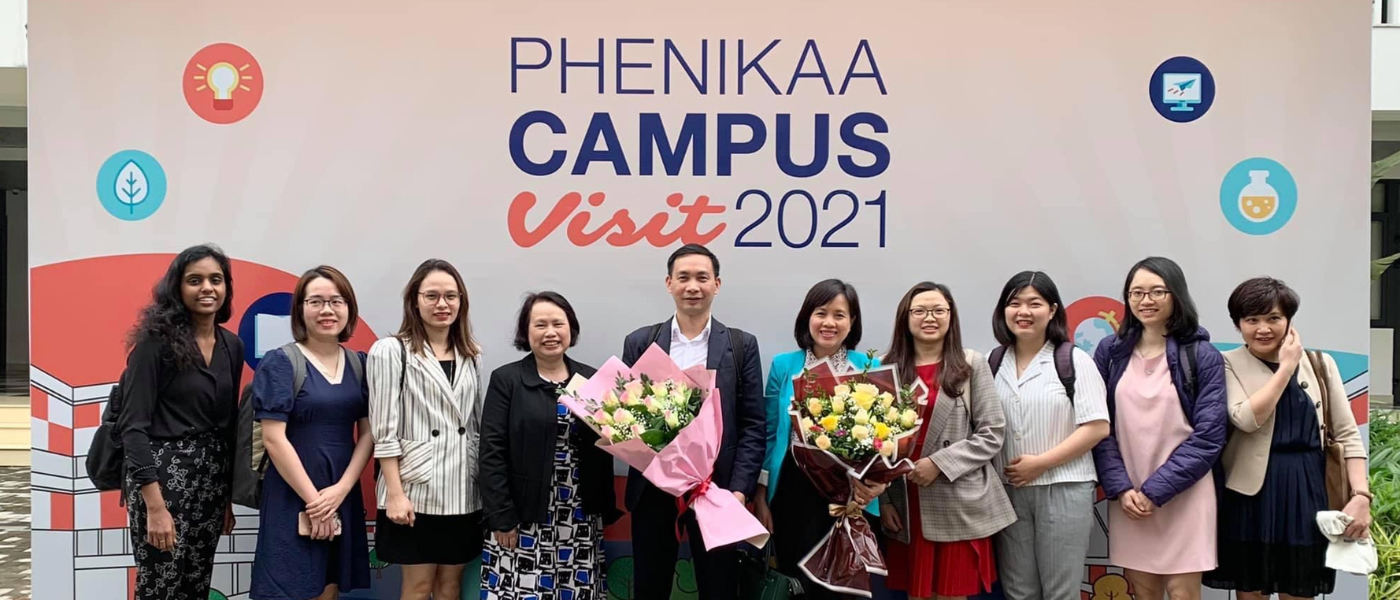 PHOTO: Kavitha with colleagues and partners during a 2021 campus visit in Vietnam, highlighting the long-term relationships fostered through collaboration with IEHSD and universities within the Vietnam One Health University Network (VOHUN).
The experience also strengthened my commitment to international cooperation more broadly. Seeing the value of cross-country learning — particularly around gender equality, animal health, and community resilience — motivated me to contribute more actively to Canada’s role in global development.
At the same time, the placement influenced how I engage locally. It encouraged me to bring an international lens into conversations about gender equality, newcomer inclusion, and equity in Canada — whether through community initiatives, professional spaces, or policy discussions.
A placement that didn’t end
I see myself as more globally connected — and more responsible — than I was before my placement. Having grown up living abroad, I was already comfortable navigating different cultures. But my volunteer experience in Vietnam deepened that understanding and made it more purposeful. It showed me how local issues — such as gender dynamics, animal health, and household resilience — are linked to broader global challenges.
More importantly, it reinforced that global connection comes with responsibility. Being globally engaged isn’t just about exposure; it’s about contributing to equitable solutions, fostering collaboration, and ensuring that diverse voices are heard and valued.
The placement didn’t end when I returned home. It continues to shape how I think, how I work, and how I engage with the world. And for that, I am grateful.
VETS is an 8-year initiative (2020-2028) to improve the economic and social well-being of marginalized people, particularly women and girls, in 6 countries across Africa and Asia. In collaboration with local partners, the program is implemented through 190 Canadian volunteers on international assignment and is generously funded by Global Affairs Canada. Learn more.