Written by Janine Mitchell, Executive Director of VWB, in recognition of World Zoonoses Day 2026, this article explores how community-centred One Health approaches can help detect, prevent, and respond to zoonotic diseases before they become global health emergencies.
On Where Pandemics Really Begin
The next pandemic may not begin with a coughing patient in an emergency room. It may begin on an ordinary morning, before anyone thinks to call it an outbreak.
A vendor unlocks a stall in a live-bird market and notices one chicken is quieter than the rest. Its feathers are ruffled. It does not move much. There are dozens of birds to sell, customers already waiting, and no obvious reason to stop the day.
On a nearby farm, a dairy cow's milk production drops. It could be feed. It could be heat. It could be one of the routine problems farmers manage every week. No one thinks of it as an early warning signal.
At the edge of a village, a backyard flock scratches in the same yard where wild birds landed the night before. A child throws grain. A dog wanders through. A cat slips between the house, the market, and the farmyard, moving through the spaces where people and animals meet without anyone paying much attention.
Later that week, a stray dog bites someone in a community where rabies vaccination is inconsistent and access to care is uneven. Somewhere else, a wastewater sample carries a faint genetic trace that no clinic has yet detected in a patient.
None of these moments looks like a pandemic. Each one looks local, ordinary, explainable.
That is why zoonotic diseases are so difficult to stop. They do not always begin with a dramatic event. They begin in the daily routines of food, work, movement, care, and survival. They move through the systems that connect animals, people, and the environment long before they appear in hospital data.
By the time hospitals sound the alarm, the pathogen may already have had a head start.
How Risk Takes Shape
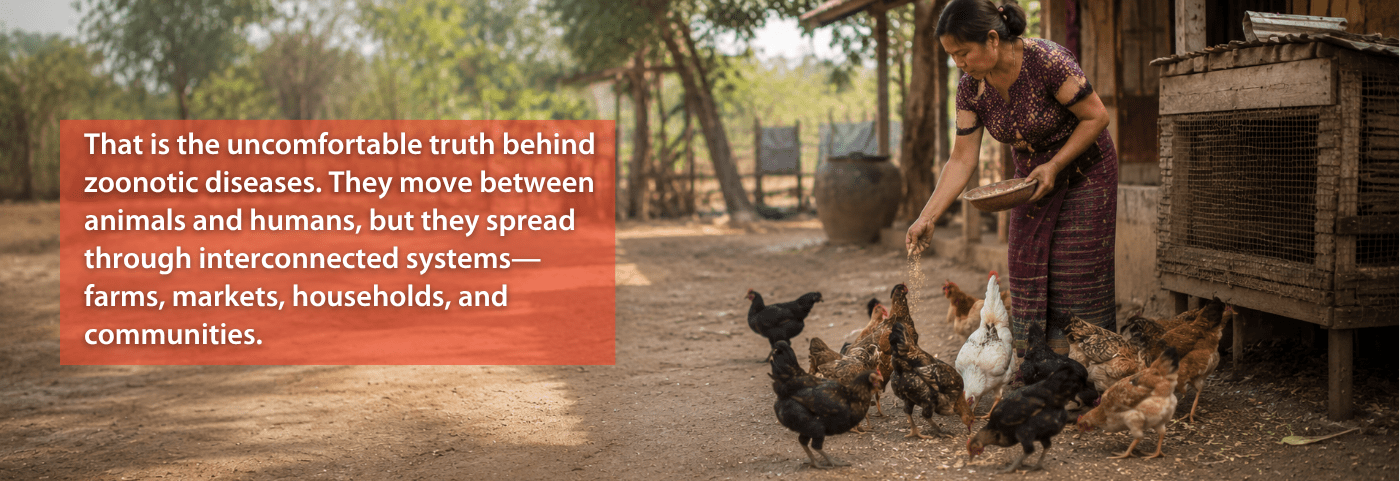
Zoonotic diseases are not random acts of nature. Risk accumulates in ordinary places and routine decisions: the movement of animals, the design of markets, the pressure on land, the handling of waste, the strength of surveillance, and the trust between communities and the institutions asking them to report early warning signs.
At GHS2026 in Kuala Lumpur, this upstream reality was hard to miss. The conference programme returned again and again to the places where pandemic risk can gather before it appears in hospital data. A virus may circulate first in poultry systems, exposing the people who raise, move, and sell birds. It may pass through markets where animals, workers, customers, waste, and surfaces meet in the ordinary rhythm of daily trade. It may travel along wildlife routes or leave a faint trace in wastewater before clinics recognize an outbreak.
The warning signs rarely announce themselves. They are easy to explain away: an animal looks off, a worker feels fine, a bite seems routine, a sample waits in a queue. The danger is not only in the pathogen, but also in the delay—the moment when no one reports, no one listens, or no system is ready to connect with what people on the ground already know.
That is why health security cannot begin only at the hospital door. Hospitals remain essential, but they are often where the system discovers it is already late. Preparedness has to begin earlier, at the human–animal–environment interface, where the first signs of zoonotic risk are most likely to appear.
Communities Are the First Line of Defence
There is a risk, however, in how this shift is being discussed. Too often, "systems thinking" is imagined from the control room, as if better platforms, faster alerts, and more sophisticated surveillance are enough. They are not. A system cannot detect what communities are afraid to report. It cannot interpret what local workers are never asked. And it cannot respond effectively if the people closest to risk are left outside it.
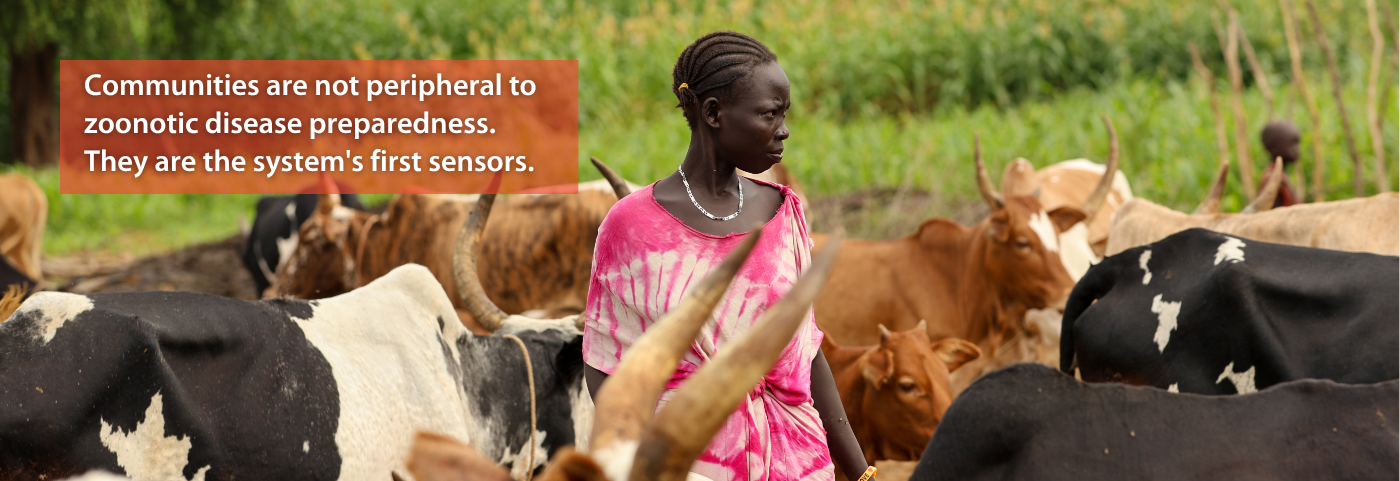
Before a signal reaches the laboratory, it often passes through ordinary hands. A farmer opening a barn door. A vendor sorting birds before the market gets busy. A neighbour warning others about a biting dog. A community health worker hearing, house by house, that the same fever is spreading. Technology can detect what the eye cannot, but people are often the first to sense that the pattern has changed.
This is a lesson we have seen repeatedly at VWB. Strong animal health systems are built on trusted local relationships—people who recognize when something has changed, know how to respond, and have the support to act. Pandemic preparedness is strongest when those local systems are recognized not as the end point of surveillance, but as its foundation.
There are places where this community-centred model is already visible.
Rabies control is one of the clearest. The disease kills about 59,000 people each year, and 99% of human rabies cases are linked to bites from infected dogs, according to the World Organisation for Animal Health. Yet rabies is also preventable when the animal source, the human exposure, and the community response are connected.
In East Africa, our VSF International network partner Vétérinaires Sans Frontières Germany / Tierärzte ohne Grenzen runs rabies vaccination campaigns through a four-part model: planning with local authorities, public education, vaccination and treatment, and monitoring. In Kenya's Machakos County, a partnership with Boehringer Ingelheim is working toward vaccinating at least 70% of dogs in target hotspot areas over three years while strengthening education and community awareness.
In practice, that is One Health at street level: dogs are vaccinated, children learn what to do after a bite, local authorities help communities prepare, and monitoring systems track where risk is rising.
Communities in Action
Avian influenza offers a second example. When sick or dead birds are reported early, authorities can test, restrict movement, protect poultry workers, and strengthen farm biosecurity before the virus spreads further.
During Western Australia's 2026 H5N1 response, public hotline reports of sick or dead birds helped trigger risk-based testing and precautionary biosecurity measures before any commercial poultry cases had been confirmed, according to The Guardian. The lesson is not that hotlines alone stop outbreaks. It is that community reporting becomes an effective early-warning layer when it is connected to veterinary testing, coordinated action, and clear public guidance.
Brazil's 2025 commercial poultry outbreak reinforces the importance of speed. Analyses found that even short delays in detection could have resulted in significantly more infected farms. The difference between a contained outbreak and a wider crisis can be the speed with which local warning signs move into coordinated action.
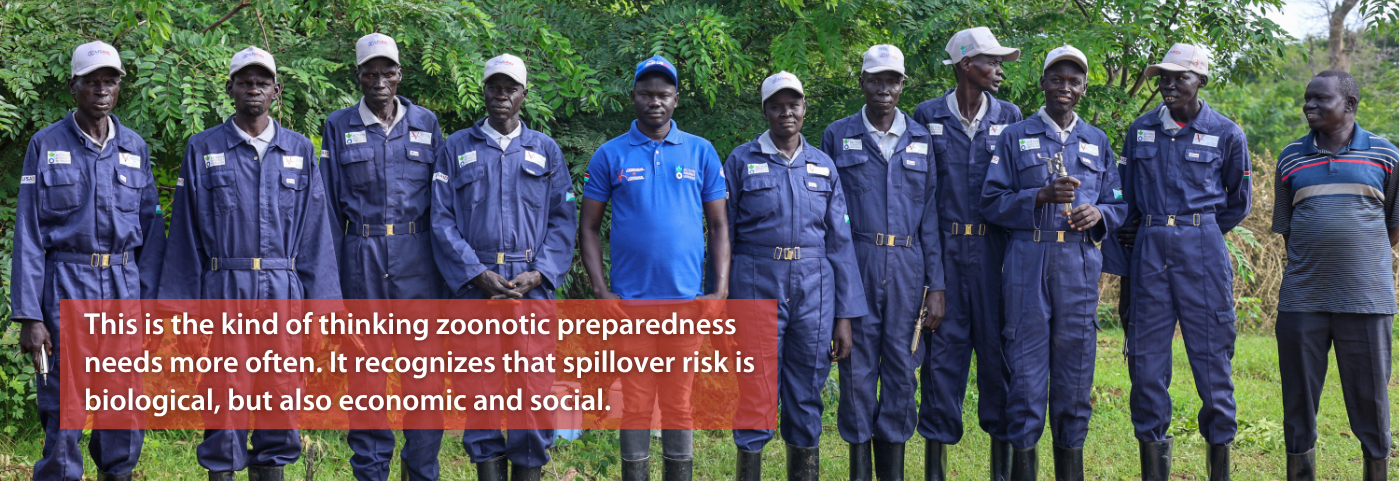
Together, these examples point to the same conclusion. Communities cannot be treated only as audiences for risk communication after decisions have been made. They need to be built into the system from the beginning—as reporters, partners, messengers, and decision-makers. That means trusted reporting systems, community animal health workers, school-based education, vaccination campaigns, worker protections, and feedback loops so people know what happened after they raised the alarm.
Preparedness Depends on Trust
Live-bird markets illustrate why this matters. They are often portrayed as danger zones, but they are also workplaces, food sources, and community institutions. If public health authorities treat vendors as the problem, they may drive risk underground. If they work with vendors, they can improve cleaning practices, animal handling, ventilation, routine testing, reporting systems, and compensation mechanisms when animals must be culled.
The same principle applies to poultry workers and farming communities. Surveillance that tests birds but ignores workers is incomplete. Surveillance that monitors workers but offers no protection, sick leave, compensation, or communication is extractive. People are less likely to report risk if reporting means lost income, stigma, or punishment.
A credible One Health system must therefore include economic safeguards. If reporting unusual animal deaths leads only to uncompensated losses, silence becomes rational. Preparedness depends on changing those incentives.
Wastewater and environmental surveillance add another dimension. These tools can provide valuable early warning, but even here, communities matter. Data raise questions about privacy, interpretation, and communication. Are local health systems prepared to respond, or are communities simply being monitored from a distance?
The gap, then, is not only technological. It is relational.
Measuring What Really Matters
Many countries now endorse One Health. Far fewer have built the everyday systems that make it work. Human, animal, and environmental data often remain fragmented, while local knowledge never reaches decision-makers in time.
This is where GHS2026's emphasis on integrated surveillance is important. The promise is not simply more data. It is better connection: from sample to signal, from signal to decision, and from decision to trusted action on the ground.
The gaps are clear. Community reporting is underfunded. Veterinary systems remain weaker than human health systems in many settings. Wildlife surveillance is fragmented. Community engagement is too often treated as risk communication after decisions have already been made, rather than participation in designing the system itself.
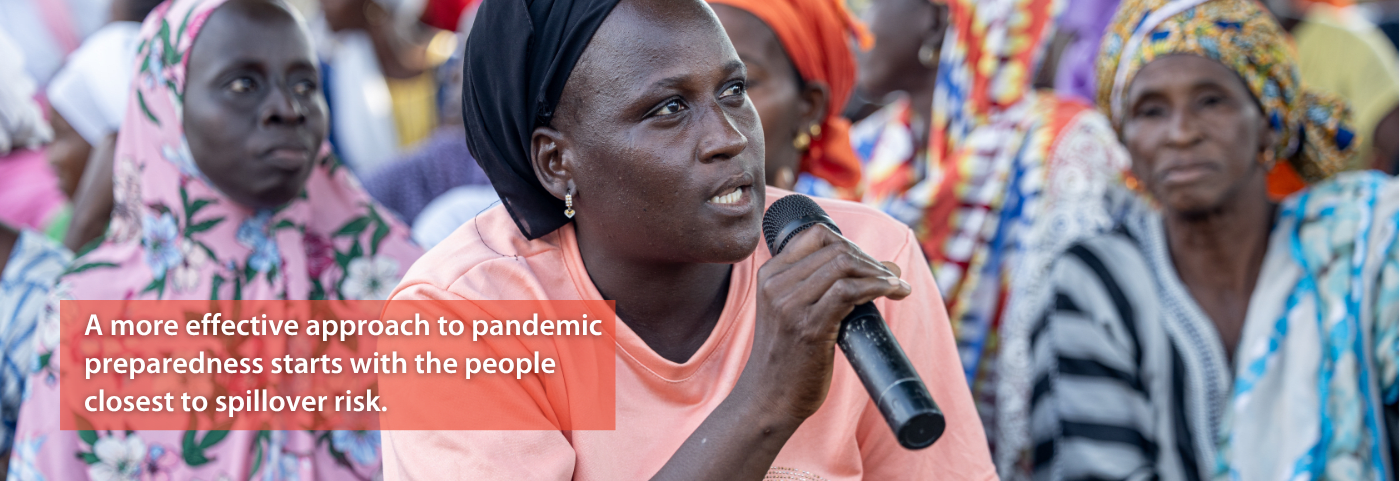
A more effective approach to pandemic preparedness means investing in community animal health workers, involving market vendors in surveillance design, linking community, veterinary, and environmental health systems, creating safe reporting channels, and using trusted messengers so communities know what happened after they raised a concern.
It also means measuring preparedness differently. Not only by how quickly a national laboratory can sequence a virus, but by how quickly a farmer's report reaches that laboratory. Not only by whether a country has a One Health strategy, but by whether communities know whom to call when animals die unexpectedly. Not only by how many dashboards exist, but by whether those dashboards trigger action that local people understand and trust.
Moving Pandemic Preparedness Upstream
The next pandemic threat may still surprise us. Its exact source, timing, and trajectory may be impossible to predict. But the conditions that allow spillover are not invisible. They are present in the ways humans raise animals, trade wildlife, expand cities, alter ecosystems, and build surveillance systems that either include or exclude the people closest to risk.
The lesson from GHS2026 is not that hospitals matter less. They will always matter. The lesson is that hospitals are too late to be the first line of defence.
The first line is a market vendor who reports sick poultry. A community health worker who recognizes a strange fever cluster. A dog vaccination team that prevents a fatal bite from becoming a death sentence. A forest-edge community that has the tools and trust to reduce disease risk for people and wildlife. A wastewater signal that leads to local action rather than distant observation.
Pandemic preparedness has to move upstream. But it must not move upward into technical systems that leave communities behind.
The future of zoonotic disease preparedness depends on building systems that can see across humans, animals, and the environment—and on trusting the people who live where those worlds meet.