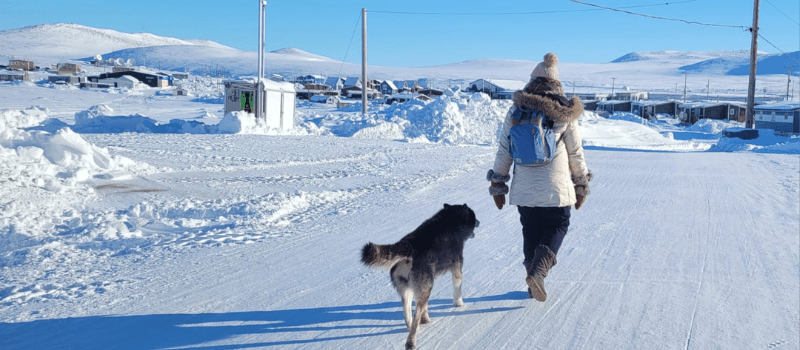
In early January, team members from Veterinarians Without Borders North America (VWB) made an inaugural visit to the North, heading to the snowy state of Alaska. While VWB’s Northern Animal Health Initiative (NAHI) has been operating temporary veterinary clinics across remote communities in northern Canada for years, this trip marked VWB’s first clinic in remote Alaska. While there, VWB joined Colorado State University and University of Alaska Fairbanks’ incredible Hub Outpost Project (HOP), a veterinary program that provides accessible veterinary care to remote communities in Alaska. HOP has been running for approximately six years in the Yukon-Kuskokwim Delta, and similar to NAHI, provides communities with access to vaccinations for animals, spay/neuter programs, general veterinary wellness checks, and training.
According to a study published in The Journal of Pediatrics, Alaska Native children face a disproportionately high risk of dog bite injuries. The study found that the average annual hospitalization rate for dog bites among American Indian and Alaska Native (AI/AN) children in Alaska was 6.1 per 100,000 population, significantly higher than in other regions of the U.S.
 PHOTO: A puppy visits the remote HOP clinic.
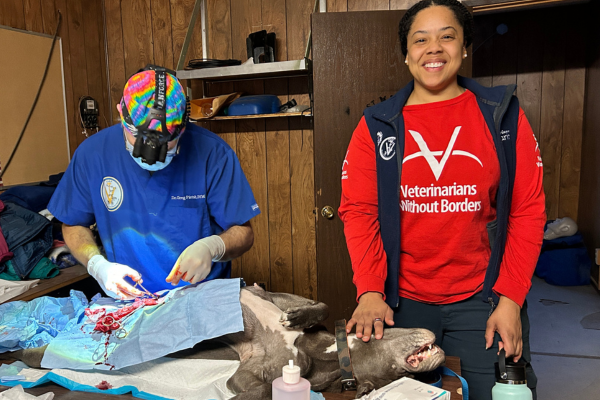 PHOTO: Dr. Greg Pietsch from the University of Alaska Fairbanks & VWB's Genevieve Douyon perform a spay at the HOP clinic.
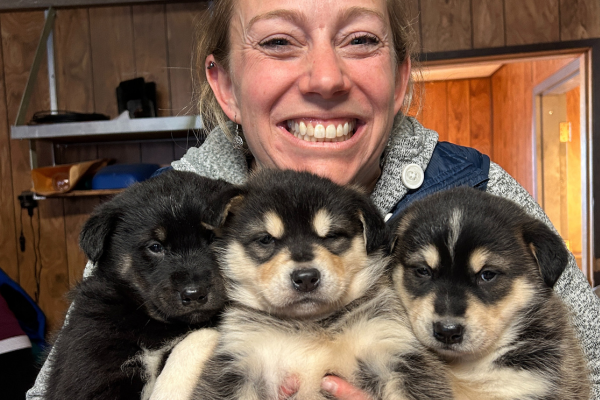 PHOTO: Dr. Danielle Frey from Colorado State University holds pups at a remote clinic.
Furthermore, like many other northern communities, rabies remains a very real threat in Alaska. As the Alaska Department of Fish and Game reports, rabies is endemic in arctic and red fox populations along the state's coastlines. These animals can transmit the virus to domestic dogs, which increases the risk of human exposure, especially in rural areas where interactions between wildlife and domestic animals are more common.
While in Alaska, VWB joined the HOP team on a visit to St. Mary’s, a remote community of fewer than 600 residents, accessible only by plane or boat. Setting up a temporary clinic in the local fire hall, the team—comprised of six veterinarians and one veterinary technologist—provided vital care to the community’s animals, vaccinating 28 dogs and performing spay/neuter surgeries on 18.
Beyond the clinic, the team visited local high and middle schools, engaging students in discussions about animal health, responsible pet care, and career opportunities in veterinary medicine. By inspiring the next generation of animal health professionals, they helped strengthen long-term solutions for animal welfare in rural Alaska.
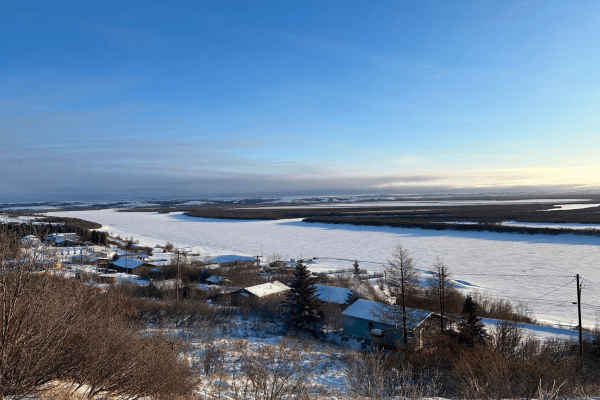 PHOTO: Overlooking Saint Mary's, AK
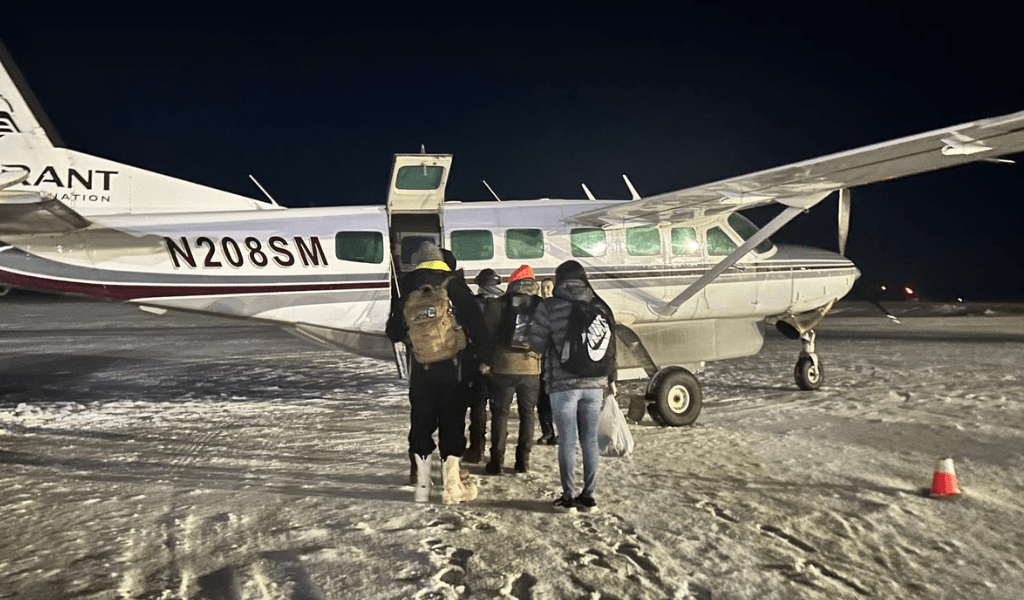
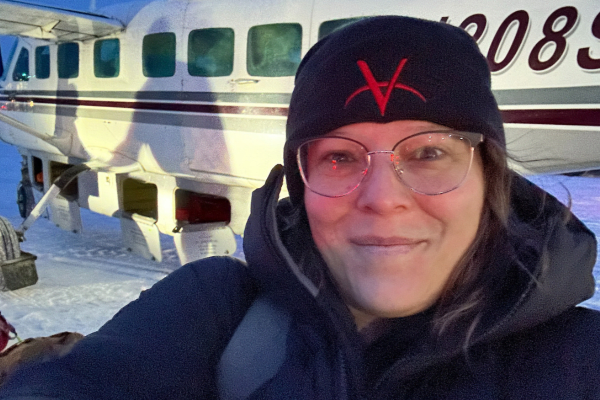 PHOTO: VWB's Valli Fraser-Celin waits to board a chartered flight to a small community.
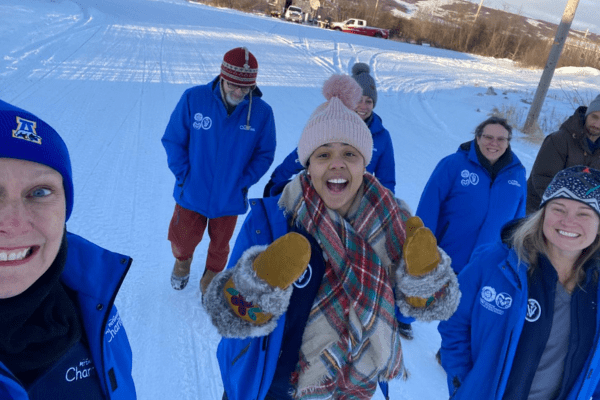 PHOTO: The remote clinic team visiting the community of Saint Mary's.
“We had an amazing time with the folks from HOP!,” said Valli Fraser-Celin, VWB’s Companion Animal Manager. “We were able to connect with likeminded veterinarians who have dedicated their time and efforts to providing accessible veterinary care to remote communities in the YK Delta. By bringing together expertise and passion, we are able to learn from each other and grow as providers of these essential veterinary services that undoubtedly support both animal and community health in Alaska," she added.
In Bethel and Anchorage, VWB and HOP team members met with local animal health organizations, Indigenous leaders, and the Alaska State Veterinarian. These discussions focused on the current challenges of accessing veterinary care in remote regions and explored sustainable, community-driven solutions to improve animal health services across the state.
Providing remote communities in Alaska with access to veterinary clinics is a crucial step in mitigating these risks, and part of VWB’s mission to enhance One Health worldwide. By offering services such as vaccinations, spaying/neutering, and general wellness checks, these programs can not only improve animal health but also enhance public safety.
The pilot collaboration between VWB and HOP represents a significant advancement in addressing the unique challenges faced by Alaska's remote communities. By combining resources and expertise, these programs aim to create sustainable solutions that will have a lasting positive impact on animal and public health in the region. We look forward to helping to continue bringing access to animal health care across Alaska in the future.