
Cambodia | Veterinarians Without Borders
Skip to Main Content

Cambodia

Our work in Cambodia focuses on climate-smart farming and agricultural best practices as well as supporting related income-generating work for women in rural communities. 

Donate Now

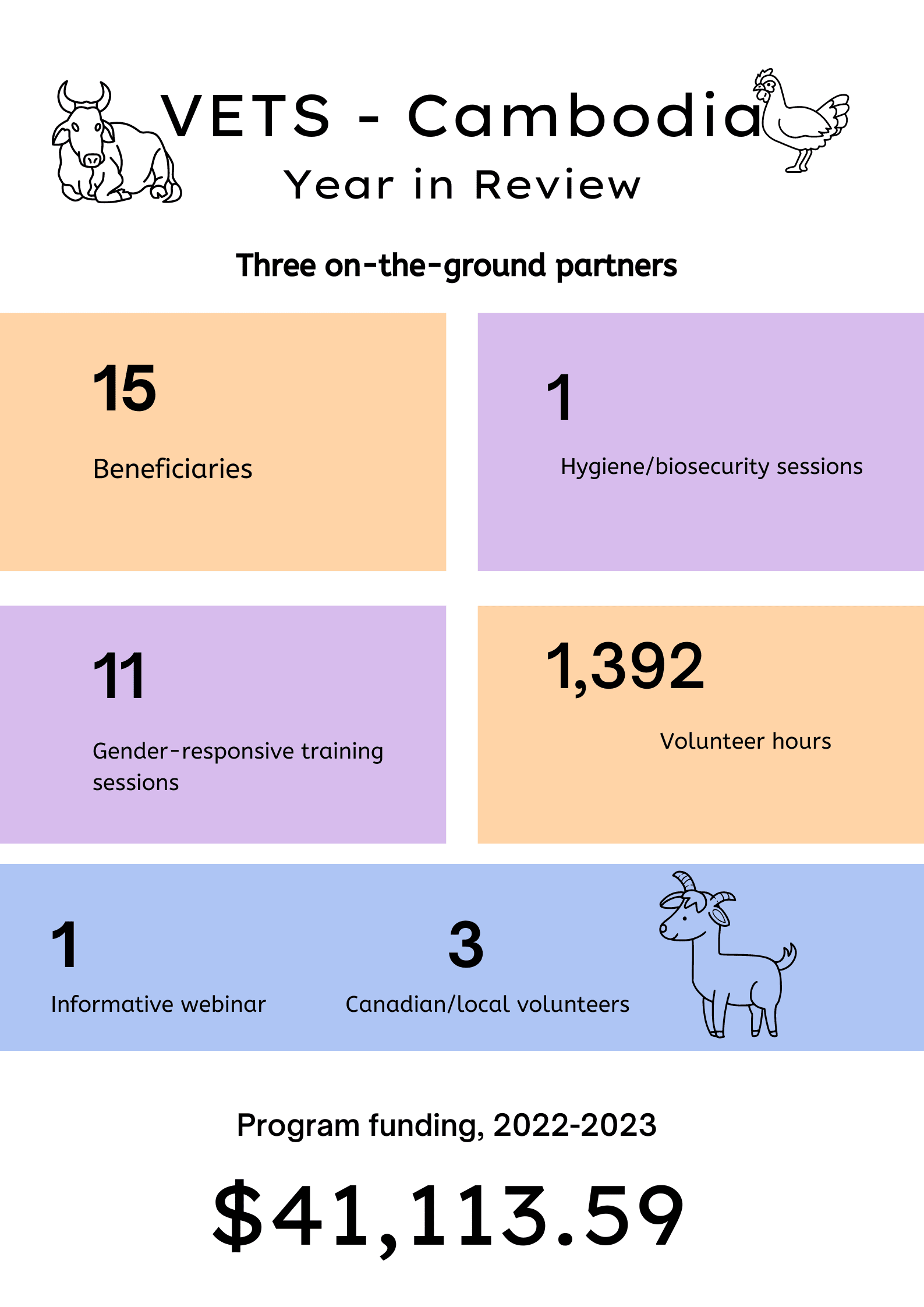
cambodia stats

Cambodia: An Overview

In Cambodia, farming and agriculture is the largest source of employment, yet agricultural production is impacted due to climate variability (flooding and drought) and smallholder livestock farming is often affected by infectious disease.

Compounding these local challenges is limited veterinary care and community animal health workers available to treat animals and reduce disease transmission.

Women and girls are responsible for the majority of unpaid domestic and care work in households and communities, restricting their ability to participate in paid work, education, and training opportunities.

Cambodia | Veterinarians Without Borders

Veterinarians Without Borders North America couldn't do the work we do without your support. Whether it's a financial donation or a donation of your time, by improving the health of animals you will be working to improve the health and quality of life for people throughout the world.

VOLUNTEER WITH US DONATE TODAY

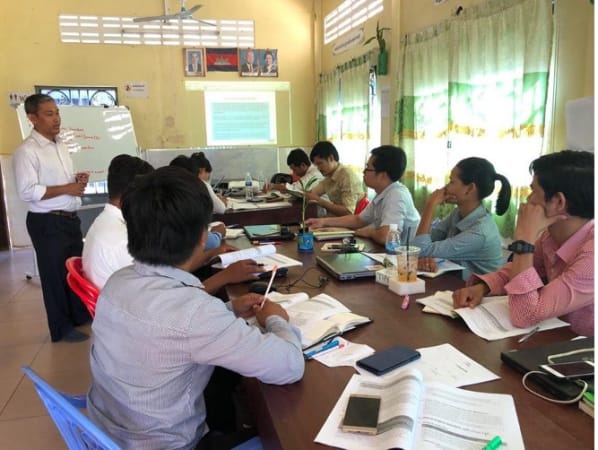
A group of people sit around a tables, classroom style. They are taking notes and listening to a man teaching at the front of the room.

Why We Are Here

Timber harvesting, as well as clear-cutting for agriculture, has led to the third highest deforestation rate in the world which has destroyed habitats and disrupted the balance of delicate tropical soils. Limited rice production and other income-generating opportunities have created out-migration of youth and men to work in the industrial and construction sectors. 

Working with farming groups, agroecology is a strong component of the work VWB/VSF volunteers undertake in Cambodia. 

This includes training activities with farming cooperatives with a focus on climate-smart farming and an overarching goal to increase crop yields to combat food insecurity in the region.

Current Projects in Cambodia: VETS

One Health Demonstration sites will be built in the target communities to promote agricultural best practices and their positive impacts on the environment. The project will also provide training on animal waste and fodder management for chicken, cattle, and small ruminants.

To support income generation activities for women, the project will explore both the poultry and cattle production value chains as well as target female community members to train as Community Animal Health Workers.

CAHWs are selected by the community as animal health care champions and are then provided training by volunteers that enables them to provide much-needed local veterinary services in areas where there are no veterinarians. These CAHWs earn a small income from their animal health care services, while animal health and welfare are improved, and the smallholder farmer receives greater animal by-production returns.

View Project Page

VETS Partners in Cambodia

VETS Partners in Cambodia: Agronomes et Vétérinaires Sans Frontières (AVSF)

AVSF Cambodia (Agronomes et Vétérinaires Sans Frontières AVSF) is part of an international coalition of locally-ran NGOs that has an overarching focus to increase agriculture education, health, animal health and welfare.

AVSF has operated in Cambodia since 1991, providing technical support to the Chamkar Dong Royal University of Agriculture.

Since 1998, AVSF in Cambodia has focused its activities on animal husbandry and improving food security for rural farm families, while also promoting agroecology and natural resource preservation.

AVSF also offers services relevant to smallholder families, such: reparation of small irrigation systems, creation of village rice banks, market gardening production, creation of small shops, small-scale processing, and the spreading of agroecological techniques.

« Go Back

Stories From Around The World

VETS Volunteer Voices: Returning to Kenya to Grow Sustainable Dairy Solutions

VETS Volunteer Voices: Returning to Kenya to Grow Sustainable Dairy Solutions

Posted May 27th, 2026

#VETSVolunteerVoices brings you stories of our passionate VETS program volunteers from the field. Meet Donald Hilborn, an Agricultural Advisor from Ontario who recently completed his third VETS placement in Kenya (March–April 2026) with our local partner, Meru Dairy, supporting small-scale dairy farmers in building more sustainable and resilient feeding systems.

Read more

Healthy Rangelands, Healthy Communities: Biodiversity Beyond Wilderness

Healthy Rangelands, Healthy Communities: Biodiversity Beyond Wilderness

Posted May 21st, 2026

In recognition of International Day for Biological Diversity 2026, VWB reflects on how healthy rangelands, community-led animal health systems, and pastoralist knowledge help sustain resilience across working landscapes worldwide.

Read more

Inside the Household: How Gender Integration Is Strengthening One Health in Senegal

Inside the Household: How Gender Integration Is Strengthening One Health in Senegal

Posted May 13th, 2026

Based on field insights from Senegal, this blog examines how VWB’s COHERS program is helping drive early gender-transformative change at the household level — reshaping who decides, who acts, and how families respond to risks affecting both human and animal health.

Read more

  • The most rewarding part of my placements was helping others and seeing the many lives that are impacted along the way.
    - Nikki Sheedy

Become A Part Of The Big Picture

By supporting Veterinarians Without Borders through donations or volunteering, you become part of the Big Picture solution. 

Volunteer  Donate  

+1(343) 633-0272 Contact